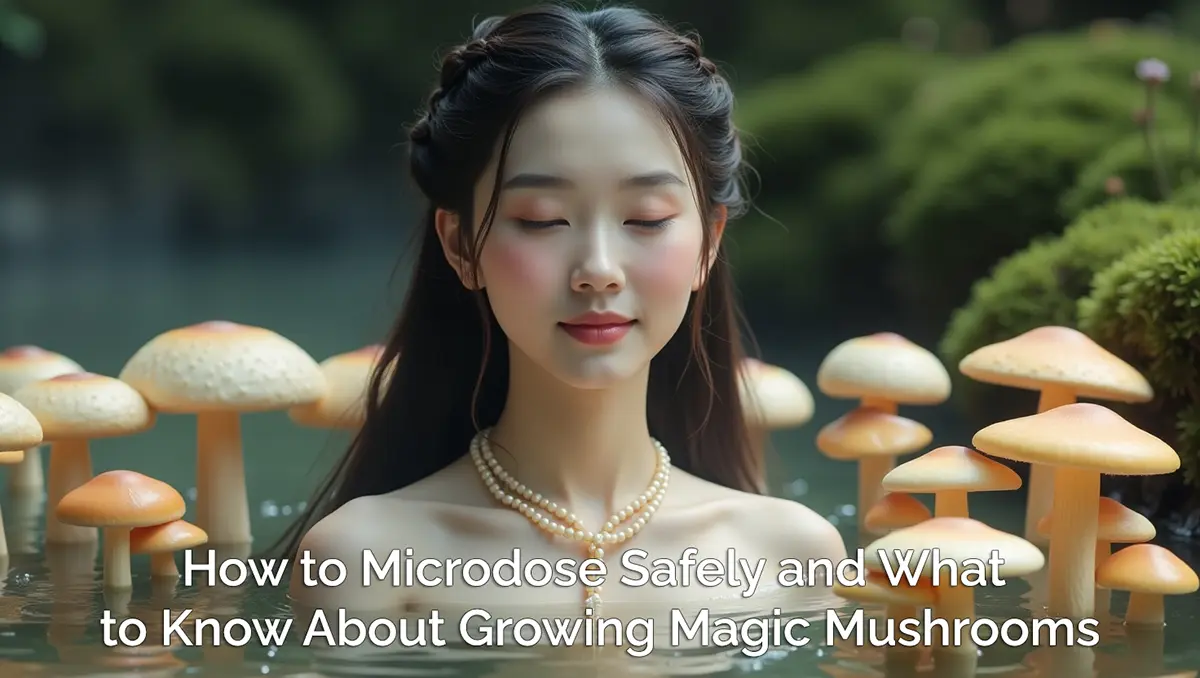
How to Microdose Safely and What to Know About Growing Magic Mushrooms
Microdosing is taking a very small amount of a psychedelic substance on a regular schedule. Many people say they try it for mood, focus, or creativity. But psilocybin — the active compound in “magic mushrooms” — is controlled under U.S. federal law. This post explains the science, the legal facts, the risks, and safer choices. It does not give growth or dosing instructions. Learn how to make informed decisions and where to look for legal help and research.
What “microdosing” means
Microdosing means using much less than a full psychedelic dose. People report subtle changes rather than full hallucinations. Scientists are still studying whether microdosing helps and how it works. Results so far are mixed. Some studies find small benefits. Other reviews say the evidence is limited and more rigorous trials are needed. If you are reading about microdosing, keep in mind the research is evolving.
Legal status: it matters
Psilocybin is a Schedule I substance under U.S. federal law. That classification means it is illegal to manufacture, grow, possess, or distribute in most places. Some cities and states have eased enforcement or set up regulated programs, but federal law still applies in many cases. Check local rules where you live and prioritize legal pathways like clinical trials or licensed programs.
Why you should avoid growth or dosing instructions
Growing magic mushrooms or getting detailed dosing instructions can be illegal in many places. It can also be unsafe. Potency varies. Mushroom products or homemade edibles can have uneven strength. For safety and legal reasons, I won’t provide how-to steps, recipes, or dosing numbers. Instead, this post focuses on safer information, medical context, and alternatives you can pursue legally.

What research says about psilocybin and microdosing
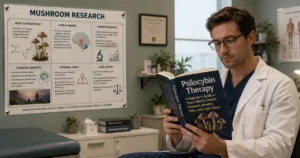
Major research centers are studying psilocybin for conditions like depression, anxiety, and addiction. Johns Hopkins and other academic groups have run clinical trials under controlled conditions. Early results for supervised clinical use look promising in specific settings. But microdosing — taking very small amounts on a regular basis — has less clinical evidence. Systematic reviews show interest and some reported benefits, but also note study limits and possible side effects. Researchers call for careful, controlled studies. If you are curious, consider joining a legitimate clinical trial rather than self-experimentation.
Types of magic mushrooms (basic definitions)
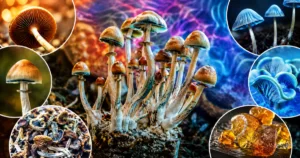
“Magic mushrooms” is a general term for fungi that contain psilocybin or related compounds. There are many species. Here are plain definitions of terms you may see:
- Types of magic mushrooms — refers to the many species in the genus Psilocybe and others. They differ in appearance and where they grow. This is identification information only.
- Liberty caps — a common name for Psilocybe semilanceata, a wild species found in some regions. The name is used in field guides and research, but being able to identify a mushroom does not make it safe to pick or use.
- Hillbilly mushrooms — a colloquial name you may see online. Slang names vary by region and are not a reliable way to identify species.
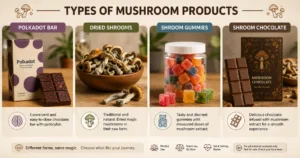
- Shroom gummies / mushroom gummy / shroom gummies — baked or gummy products that contain mushroom extracts or psilocybin. These are unregulated in most places and can vary widely in strength and contents. Be cautious of any unverified edible.
Talking about names and types helps with awareness. It does not replace expert identification or legal advice. Never assume a mushroom is safe just because of a common name.
Safety concerns and who should avoid microdosing
Microdosing is not risk-free. Possible concerns include:
- Unexpected mood changes or increased anxiety.
- Worsening of psychosis or bipolar disorder in vulnerable people.
- Interaction with prescription medicines, especially antidepressants.
- Unpredictable effects from untested products like unregulated gummies.
If you have a personal or family history of psychotic disorders, are pregnant, or are taking certain medications, do not try microdosing on your own. Instead, talk with a licensed health professional. Research centers often screen participants carefully to reduce risks.
Harm reduction checklist (a short, practical list)
If someone is determined to learn more, here are safer choices. This list avoids any illegal or actionable steps:
- Know the law where you live. Federal and state rules differ.
- Talk with a health professional about mental health history and medications.
- Prefer participation in a clinical study or licensed therapeutic program when available.
- Avoid unregulated products and unknown edible items like unverified shroom gummies.
- Track mood and side effects and stop if you feel worse. Seek medical help for severe reactions.

About “shroom gummies” and other edibles
“Shroom gummies” or mushroom gummies are edible products that claim to contain psilocybin or extracts. In most U.S. jurisdictions, these products are unregulated and can vary in potency. That raises safety issues. You should not rely on untested edibles for consistent effects. If you want therapeutic work with psilocybin, the safer route is a regulated clinical program where dose, purity, and supervision are controlled.
Alternatives that are legal and safer
If you’re exploring mood, creativity, or focus, consider these legal options:
- Therapy and counseling with a licensed clinician.
- Mindfulness, meditation, and structured behavioral programs.
- Exercise, sleep, and diet changes that support mood.
- Approved supplements and vitamins after discussing with your doctor.
- Enrolling in clinical research studies if you want to try psychedelic treatment under supervision.
How research and clinical programs handle psilocybin
Clinical trials use trained staff, set doses, safe environments, and follow-up integration sessions. They recruit and screen volunteers carefully. The goal is to reduce risk and measure outcomes in a controlled way. That approach is how researchers can learn whether psilocybin has real therapeutic value and how to use it safely. If you want to try a regulated program, look for university research centers or registered clinical trials.
Practical steps to take now (legal and safe)
- Learn the law where you live. Don’t assume what’s true in one state applies in another.
- Talk with a medical professional before trying anything that could affect your mental health.
- If you want to support research, search for clinical trials at reputable centers like Johns Hopkins.
How to read research and news about microdosing
Science reports can be confusing. Watch for well-designed, peer-reviewed studies and systematic reviews. Small online surveys can show what people report, but they do not prove safety or effectiveness. Trusted sources include university research centers and public health agencies.
A note about your safety and mental health
If you or someone you know experiences a severe reaction to any substance, get emergency medical help right away. If you are struggling with mood, anxiety, or thoughts of self-harm, contact a licensed mental health professional or crisis line in your area. These are urgent medical matters and need expert care.
Why Dank Mart is sharing this information
At DankMart.co, we aim to share honest information so you can make safer choices. We sell legal cannabis products and focus on compliance. We do not provide or promote illegal psychedelics. If you’re interested in legal products for relaxation or wellness, check our shop for state-legal items, and consult a clinician for mental health concerns.
Summary
Microdosing is an area of interest and study. There’s early evidence that clinical use of psilocybin, in controlled settings, can have therapeutic benefits. But microdosing outside research is not proven and carries risks. Growing magic mushrooms, preparing unregulated shroom gummies, or taking specific dosing advice online can be unsafe and illegal. If you’re curious, the safest options are to learn about local laws, talk to a medical professional, and consider joining a supervised clinical trial.
REFERENCES:
V. Polito, P. Liknaitzky. (2022, May 21). The emerging science of microdosing: A systematic review of research on low dose psychedelics (1955–2021) and recommendations for the field. Available at: https://www.sciencedirect.com/science/article/pii/S0149763422001956
Johnson, J. (2024, October 29). What to know about microdosing. Medical News Today. Available at: https://www.medicalnewstoday.com/articles/microdosing
Wikipedia. (2025, October 28). List of psilocybin mushroom species. Available at: https://en.wikipedia.org/wiki/List_of_psilocybin_mushroom_species
Dr. Louisa Degenhardt, Ph.D, AO, FAA, FASSA, FAHMS
About author

Add comment