
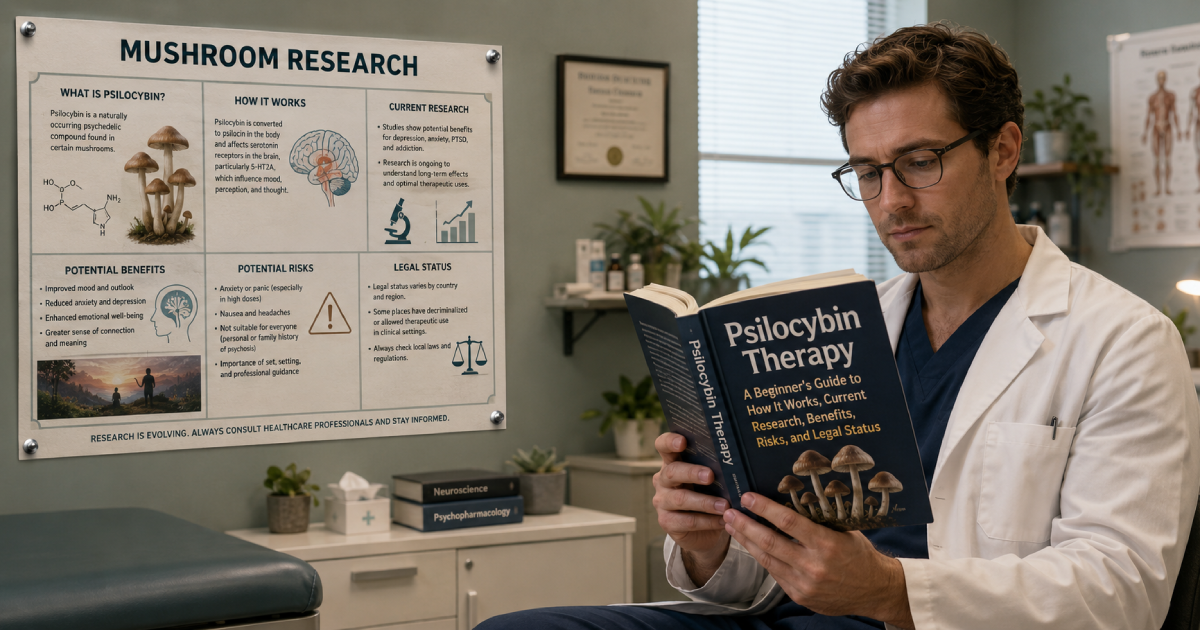
What Is Psilocybin Therapy? A Beginner’s Guide to How It Works, Current Research, Benefits, Risks, and Legal Status
Mental health treatment has evolved significantly over the past decade. Alongside advances in traditional psychotherapy and medication, researchers have renewed their interest in psychedelic-assisted therapy—particularly treatments involving psilocybin, a naturally occurring psychedelic compound found in certain mushroom species.
Clinical studies at leading research institutions have explored whether psilocybin therapy may help people living with conditions such as treatment-resistant depression, anxiety related to serious illness, and certain substance use disorders. While the results have generated considerable scientific interest, psilocybin therapy remains an emerging field of medicine rather than a routine healthcare treatment.
At the same time, growing public awareness has led to understandable questions:
- What exactly is psilocybin therapy?
- How does it differ from recreational mushroom use?
- Is it safe?
- Is it legal?
- What do scientists actually know—and what remains uncertain?
This guide explains the current evidence in plain language. You’ll learn how psilocybin therapy works, the conditions researchers are studying, potential benefits and risks, and why medically supervised treatment is very different from using psychedelic mushrooms outside a clinical setting.
Whether you’re following developments in mental health research or simply trying to understand the science behind recent headlines, this overview aims to provide balanced, evidence-based information.
What Is Psilocybin Therapy?
Psilocybin therapy is a form of psychedelic-assisted psychotherapy that combines a carefully controlled dose of psilocybin with structured psychological support from trained professionals.
Unlike traditional medications that are often taken daily, psilocybin therapy usually involves only one or a small number of supervised treatment sessions as part of a broader therapeutic program.
A typical program includes three phases:
1. Preparation
Before treatment, participants meet with trained clinicians or therapists.
These sessions are designed to:
- Review medical history
- Discuss mental health concerns
- Explain what to expect
- Build trust with the treatment team
- Identify personal goals for therapy
Preparation is considered an important part of treatment because it helps participants feel informed and supported before the psychedelic session begins.
2. Supervised Psilocybin Session
During the treatment session, participants receive a measured dose of pharmaceutical-grade psilocybin in a carefully monitored environment.
Clinical settings are intentionally designed to promote comfort and reduce distractions. Many participants spend much of the session resting quietly while wearing eye shades and listening to specially selected music.
Rather than directing the experience, therapists generally provide emotional support, reassurance, and assistance if challenging emotions arise.
Sessions often last between six and eight hours, during which participants remain under continuous observation.
3. Integration
Many experts believe the work doesn’t end when the psychedelic effects wear off.
In follow-up appointments, participants discuss their experience with therapists and explore how any insights or emotional changes may relate to everyday life.
Integration sessions may include conversations about:
- Personal relationships
- Emotional processing
- Behavioral changes
- Coping strategies
- Long-term mental health goals
The purpose is to help people understand and apply their experiences in practical, meaningful ways rather than viewing the session as a standalone event.
What Is Psilocybin?
Psilocybin is a naturally occurring compound found in dozens of mushroom species belonging primarily to the Psilocybe genus.
After it is consumed, the body converts psilocybin into psilocin, the compound primarily responsible for its psychological effects.
Psilocin interacts with serotonin receptors throughout the brain—particularly the 5-HT2A receptor, which plays a role in mood, perception, cognition, and emotional processing.
Scientists are still investigating exactly how these interactions influence mental health, but several theories have emerged from recent research.
Current evidence suggests psilocybin may temporarily alter communication between brain networks that are normally highly organized. During this period, some individuals report experiencing:
- New emotional perspectives
- Increased openness
- Greater psychological flexibility
- Changes in self-perception
- Enhanced emotional insight
Researchers continue studying whether these temporary brain changes contribute to longer-term improvements in certain mental health conditions.
Although many findings are encouraging, much remains unknown, and scientists emphasize that additional research is needed before broader conclusions can be drawn.
How Does Psilocybin Affect the Brain?
Modern brain imaging has provided researchers with new opportunities to observe how psilocybin influences neural activity.
One area receiving significant attention is the default mode network (DMN)—a group of interconnected brain regions involved in self-reflection, memory, and habitual thinking patterns.
Some studies suggest that psilocybin temporarily reduces activity within this network while increasing communication between regions of the brain that do not usually interact as extensively.
Researchers believe this increased connectivity may help explain why some participants describe experiencing:
- Different perspectives on long-standing problems
- Reduced repetitive negative thinking
- Strong emotional experiences
- Greater feelings of connectedness
- Increased cognitive flexibility
It’s important to note that these findings represent ongoing scientific investigation rather than established medical fact. Brain function is extraordinarily complex, and researchers are still working to understand exactly how these temporary changes may relate to improvements reported by some participants.
What Conditions Are Scientists Studying?
Psilocybin therapy remains an active area of clinical research around the world.
While no broad medical approval currently exists in the United States, researchers continue investigating whether psychedelic-assisted therapy may have a role in treating several mental health conditions.
Major Depressive Disorder
Depression affects millions of people worldwide, and some individuals continue experiencing symptoms despite trying multiple antidepressant medications.
Several clinical trials have examined whether psilocybin-assisted therapy could help people with treatment-resistant depression.
Some participants have experienced meaningful improvements lasting weeks or months following treatment. However, researchers caution that larger studies are needed to better understand who may benefit most and how durable these improvements may be over time.
Anxiety Related to Serious Illness
People facing life-threatening illnesses often experience profound anxiety, depression, or emotional distress.
Research involving patients with advanced cancer has suggested that supervised psilocybin therapy may help reduce psychological distress and improve quality of life for some individuals.
Rather than treating the underlying illness itself, researchers are exploring whether therapy may help patients better cope with fear, uncertainty, and emotional suffering.
Substance Use Disorders
Researchers are also studying whether psilocybin-assisted therapy may support recovery from certain forms of addiction.
Areas under investigation include:
- Alcohol use disorder
- Tobacco dependence
- Certain other substance use disorders
These studies typically combine psilocybin with structured behavioral therapy rather than relying on the medication alone.
Early findings are encouraging but remain preliminary.
Post-Traumatic Stress Disorder (PTSD)
Although research involving PTSD is still relatively limited compared with depression, investigators are exploring whether psychedelic-assisted therapy may help some individuals process traumatic experiences in new ways.
Because PTSD is a complex condition, researchers emphasize that significantly more evidence is needed before determining whether psilocybin therapy could become part of future treatment options.
Obsessive-Compulsive Disorder (OCD)
Small pilot studies have explored psilocybin’s possible effects on obsessive thoughts and compulsive behaviors.
While some early results have generated interest, current evidence remains limited, and larger randomized clinical trials are necessary before researchers can draw firm conclusions.
Other Areas of Research
Scientists continue investigating whether psilocybin therapy may eventually have applications in areas such as:
- End-of-life emotional distress
- Existential anxiety
- Certain eating disorders
- Chronic emotional suffering
- Other psychiatric conditions
Each of these areas remains under scientific investigation, and no conclusions should be drawn until larger, high-quality studies have been completed.

Is Psilocybin Therapy Safe?
Safety is one of the most common questions surrounding psilocybin therapy—and the answer depends heavily on how, where, and why it is used.
In clinical research, psilocybin is administered under carefully controlled conditions. Participants undergo medical and psychological screening before treatment, receive pharmaceutical-grade doses, and are continuously monitored throughout the experience by trained professionals.
These safeguards are designed to reduce risk and provide support if difficult emotions or unexpected reactions occur.
Outside of research or regulated therapeutic settings, the situation is very different. Potency can vary significantly between mushroom species and even between individual mushrooms. People may also unknowingly consume toxic look-alike species or take mushrooms in environments that increase the likelihood of accidents or psychological distress.
For these reasons, researchers stress that the safety findings reported in clinical trials should not be assumed to apply to unsupervised recreational use.
Potential Benefits Being Studied
Although psilocybin therapy remains under investigation, researchers have identified several potential benefits that continue to be explored in clinical trials.
Some participants have reported:
- Reduced symptoms of depression
- Lower anxiety levels
- Greater emotional openness
- Improved psychological flexibility
- Increased sense of meaning or purpose
- Better quality of life
- Reduced cravings in addiction treatment studies
Importantly, not everyone experiences these outcomes. Individual responses vary based on factors such as personal history, mental health status, preparation, therapeutic support, and the specific treatment protocol used.
Researchers also emphasize that psilocybin is not considered a cure for mental illness. It is being studied as one component of a broader therapeutic approach that includes psychological support before and after the psychedelic experience.
Possible Risks and Side Effects
Like any medical intervention, psilocybin therapy carries potential risks.
The most commonly reported side effects during clinical studies include:
- Temporary anxiety
- Nausea
- Headache
- Dizziness
- Increased heart rate
- Elevated blood pressure
- Fatigue after treatment
These effects are generally temporary and resolve without lasting complications in carefully supervised research settings.
However, psychological reactions can sometimes be intense. During treatment, participants may experience:
- Fear
- Confusion
- Sadness
- Emotional vulnerability
- Distressing memories
- Feelings of losing control
While these experiences can be challenging, therapists are present to provide reassurance and support throughout the session.
Outside of supervised settings, these reactions may become more difficult to manage and could place individuals at greater risk of injury or emotional harm.
Who May Not Be a Good Candidate?
Psilocybin therapy is not appropriate for everyone.
Before participating in clinical research or regulated treatment programs, patients typically undergo comprehensive medical and psychiatric evaluations.
Healthcare professionals may advise against psilocybin therapy for individuals with:
- A personal history of schizophrenia
- A family history of psychotic disorders
- Bipolar I disorder
- Active psychosis
- Certain cardiovascular conditions
- Uncontrolled high blood pressure
- Pregnancy or breastfeeding, unless specifically recommended by a physician
Researchers are also continuing to study how psilocybin may interact with certain medications, including some antidepressants. Anyone considering participation in a clinical study should discuss their complete medical history and current medications with qualified healthcare professionals.
Clinical Therapy vs. Recreational Mushroom Use
Although both involve psilocybin, clinical therapy and recreational use differ in important ways.
| Clinical Psilocybin Therapy | Recreational Use |
| Medical and psychological screening | Usually no formal screening |
| Standardized pharmaceutical-grade dosing | Potency varies considerably |
| Supervision by trained professionals | Often unsupervised |
| Controlled therapeutic environment | The environment varies widely |
| Structured preparation sessions | Usually none |
| Integration therapy afterward | Typically absent |
These differences are important because researchers believe that preparation, professional support, and integration contribute significantly to both safety and therapeutic outcomes.
Is Psilocybin Therapy Legal?
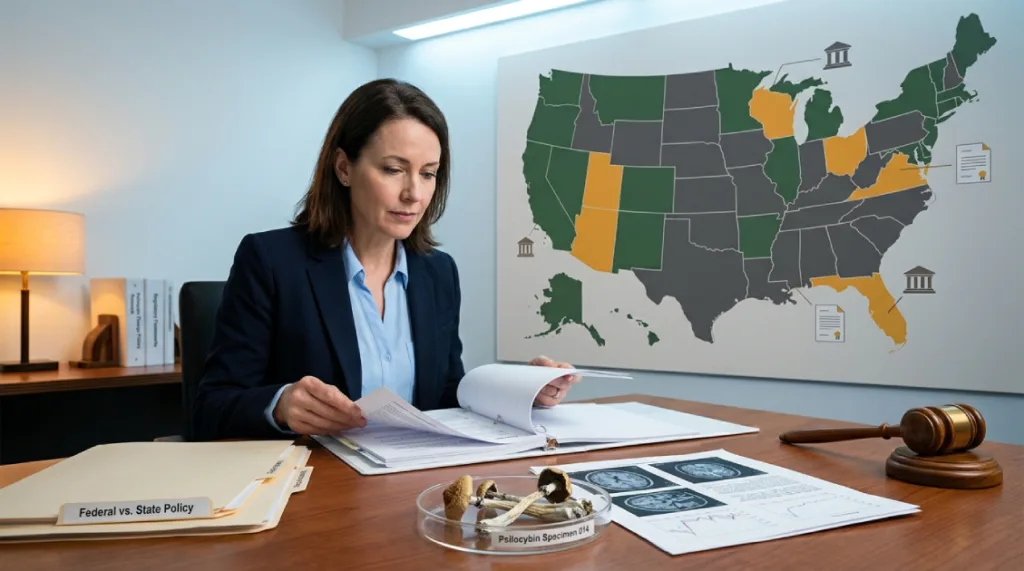
The legal status of psilocybin varies considerably depending on where you live.
In the United States, psilocybin remains classified as a Schedule I controlled substance under federal law, meaning it has not been approved for general medical use at the federal level.
However, legal developments continue to evolve.
Examples include:
- Oregon established a regulated psilocybin services program.
- Colorado approved a framework for regulated access to certain natural medicines.
- Clinical trials continue under federal regulatory oversight at universities and research institutions.
Because laws differ between jurisdictions and may change over time, anyone interested in psilocybin therapy should consult current local regulations rather than relying on outdated information.
Common Myths About Psilocybin Therapy
Myth: Psilocybin Therapy Is Just Taking Magic Mushrooms
Not exactly.
Clinical therapy combines a carefully measured dose with medical screening, trained therapists, preparation sessions, continuous supervision, and structured follow-up care.
These elements distinguish treatment from recreational use.
Myth: One Session Permanently Cures Depression
Current research does not support this conclusion.
While some clinical studies have shown meaningful improvements for certain participants, depression is a complex condition. Researchers continue studying how long benefits may last and which individuals are most likely to respond.
Myth: Psilocybin Is Completely Safe Because It’s Natural
Many naturally occurring substances can produce significant biological effects.
Although psilocybin has shown a relatively low risk of physical dependence in research, it can still produce powerful psychological experiences and may not be appropriate for everyone.
“Natural” should never be interpreted as meaning “risk-free.”
Myth: More Is Better
Clinical studies use carefully standardized doses developed under research protocols.
Increasing the amount taken does not necessarily improve outcomes and may increase the likelihood of adverse experiences.
Frequently Asked Questions
Has the FDA approved psilocybin therapy?
As of today, the U.S. Food and Drug Administration has not approved psilocybin therapy as a general treatment for mental health conditions. Research is ongoing, and several therapies have received Breakthrough Therapy designation to facilitate further study, but this designation is not the same as FDA approval.
Can psilocybin cure depression?
Current evidence does not support describing psilocybin as a cure.
Some studies have demonstrated encouraging improvements in symptoms among certain participants, but larger clinical trials are still needed before researchers can determine its long-term role in mental healthcare.
Is psilocybin addictive?
Available research suggests that psilocybin has a relatively low risk of physical dependence compared with many other substances.
However, this does not mean it is appropriate or safe for everyone.
How long do the effects last?
Although experiences vary, the general timeline is:
- Initial effects: 20–60 minutes
- Peak effects: approximately 2–3 hours
- Total experience: about 6–8 hours
Some participants also report emotional reflection or changes in perspective that continue for several days after treatment.
Can anyone participate in psilocybin therapy?
No.
Clinical programs use screening procedures to determine whether individuals meet eligibility criteria. Medical history, psychiatric history, medications, and overall health are all considered before treatment.
The Future of Psilocybin Research
Interest in psychedelic medicine continues to grow among researchers, healthcare professionals, and policymakers.
Universities and medical centers around the world are conducting clinical trials to better understand:
- Which conditions respond best to treatment
- The safest treatment protocols
- Appropriate dosing strategies
- Long-term outcomes
- Potential risks
- Which patients may benefit most
As evidence continues to develop, regulatory agencies will evaluate whether psilocybin-assisted therapy should become more widely available in healthcare settings.
Until then, researchers emphasize that treatment should occur only within approved clinical trials or regulated programs where available.
Final Thoughts
Psilocybin therapy represents one of the most closely watched areas of mental health research today. Early studies have produced promising findings for conditions such as depression, anxiety related to serious illness, and certain substance use disorders, but many important questions remain unanswered.
Current evidence suggests that the combination of careful preparation, professional supervision, and structured integration distinguishes clinical psilocybin therapy from recreational psychedelic use. Researchers continue to investigate how these elements contribute to both safety and therapeutic outcomes.
If you’re interested in learning more about developments in psychedelic research, it’s best to rely on trusted medical organizations, peer-reviewed scientific studies, and qualified healthcare professionals rather than sensational headlines or anecdotal claims.
At Dankmart.co, our goal is to help readers stay informed about emerging topics in cannabis and psychedelic research through educational content that emphasizes scientific evidence, responsible decision-making, and evolving regulations. As science continues to develop, staying informed through credible sources remains the best way to understand this rapidly changing field.
References:
Johns Hopkins Medicine. (n.d.). Psychedelics Research. Available at: https://www.hopkinsmedicine.org/psychiatry/research/psychedelics-research
American Brain Foundation. (October 29, 2024). How Psychedelics Affect the Brain. Available at: https://www.americanbrainfoundation.org/how-psychedelics-affect-the-brain/
Meshkat, S., Malik, G., Zeifman, R. J., Swainson, J., Balachandra, K., Reichelt, A. C., Zhang, Y., Burback, L., Winkler, O., Greenshaw, A., Vermetten, E., Mayo, L. M., Tanguay, R., Jetly, R., & Bhat, V. (April 14, 2025). [Article]. Available at: https://www.sciencedirect.com/science/article/abs/pii/S0149763425001630
Dr. Louisa Degenhardt, Ph.D, AO, FAA, FASSA, FAHMS


About author



Add comment