Magic Mushroom Pictures: A Complete Guide to Psilocybin Mushrooms and Related Psychedelics
Interest in psychedelic mushrooms has grown dramatically over the last decade. Whether you’re searching for magic mushroom pictures, curious about different mushroom species, or trying to understand how psilocybin works, it’s important to rely on accurate, evidence-based information rather than myths or social media speculation.
Many people begin their research by searching for terms like magic mushroom pictures, shrooms, psilocybin mushrooms, or magic mushroom identification. Some simply want to see what different species look like, while others are interested in learning about ongoing scientific research into psilocybin and its potential therapeutic applications.
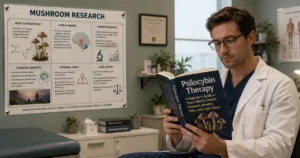
Researchers at respected institutions, including Johns Hopkins University, Imperial College London, and other medical research centers, continue to investigate psilocybin’s possible role in treating conditions such as depression, anxiety, post-traumatic stress disorder (PTSD), and substance use disorders. Although early findings have shown promise in carefully supervised clinical settings, psilocybin remains heavily regulated in many jurisdictions and is not approved as a treatment for most medical conditions.
At Dank Mart, we believe education is one of the most valuable tools available to consumers. Understanding what psychedelic mushrooms are, how they differ from other mushroom products, and how to recognize reliable information can help you make informed decisions wherever you live.
This guide explores:
- What magic mushrooms are
- Why do people search for magic mushroom pictures
- How psilocybin affects the brain
- Common mushroom species
- Safety considerations
- Magic truffles
- Mushroom spores
- Functional mushrooms versus psychedelic mushrooms
- Frequently asked questions
- Current scientific research
- Responsible product education
Our goal is to provide balanced, educational information without exaggeration, helping readers better understand this rapidly evolving area of research.
What Are Magic Mushrooms?
Magic mushrooms are naturally occurring fungi that contain psilocybin, a naturally occurring psychedelic compound found in more than 180 known mushroom species.
After consumption, the body converts psilocybin into psilocin, the compound primarily responsible for producing psychedelic effects. Psilocin interacts with serotonin receptors in the brain—particularly the 5-HT2A receptor—which influences perception, mood, cognition, and sensory processing.
Depending on numerous individual factors, some people report experiencing:
- Changes in visual perception
- Altered sense of time
- Enhanced emotional awareness
- Increased introspection
- Feelings of connectedness
- Changes in sensory perception
- Spiritual or personally meaningful experiences
These experiences are commonly referred to as a psychedelic trip, although every experience differs.
Unlike many recreational substances, psilocybin doesn’t produce identical effects for everyone. Factors such as body chemistry, dosage, previous experience, mindset, physical surroundings, and overall health can all influence the experience.
Why Do So Many People Search for Magic Mushroom Pictures?
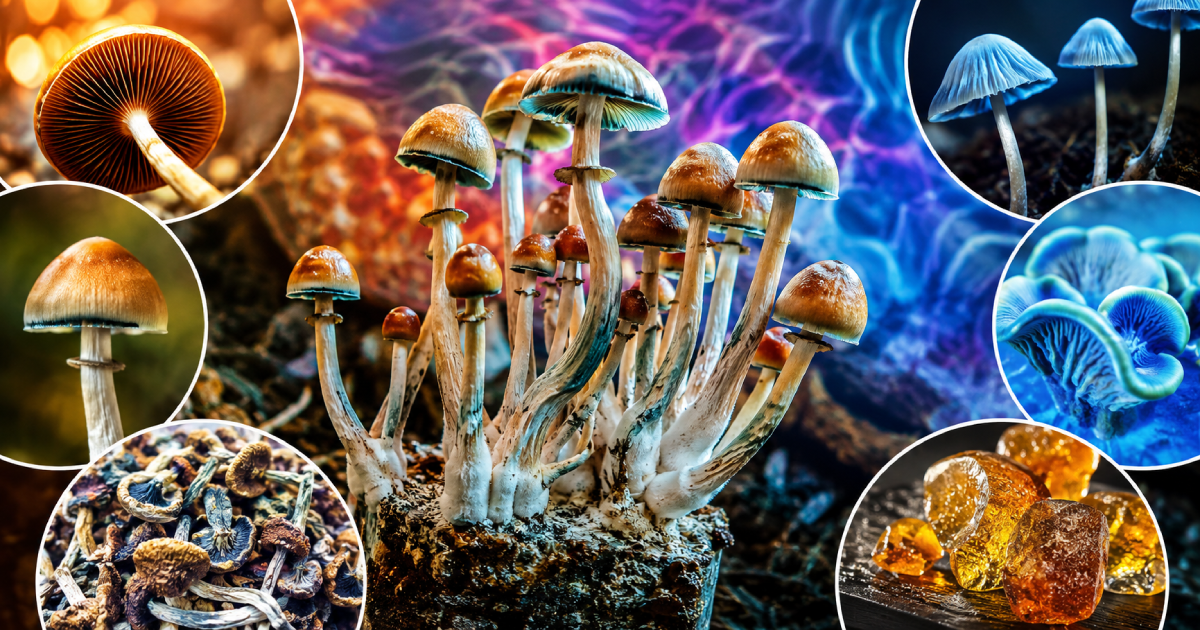
One of the most common online searches related to psychedelics involves finding magic mushroom pictures.
People typically search for images because they want to:
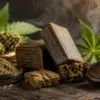
- Learn what psychedelic mushrooms look like
- Compare different species
- Understand mushroom anatomy
- Identify common physical characteristics
- Learn the difference between psychedelic and non-psychedelic mushrooms
Educational images can be extremely useful for understanding mushroom biology.
They often illustrate:
- Cap shape
- Stem thickness
- Gill structure
- Bruising coloration
- Overall growth patterns
- Size differences among species
However, photographs should never be used as the sole method for identifying mushrooms found in nature.
Many poisonous mushrooms closely resemble psilocybin-containing species. Even experienced mushroom foragers rely on multiple identification methods—including habitat, spore prints, microscopic examination, and expert verification—rather than appearance alone.
Mistaken identification can result in serious poisoning or death. If you encounter wild mushrooms, never assume they are safe based solely on online photographs.
Understanding Psilocybin
Psilocybin belongs to a class of compounds known as classic psychedelics.
Unlike stimulants or depressants, psychedelics primarily affect how the brain processes information rather than simply speeding up or slowing down nervous system activity.
After ingestion:
- Psilocybin enters the digestive system.
- The liver converts it into psilocin.
- Psilocin crosses the blood-brain barrier.
- It interacts primarily with serotonin receptors.
Researchers believe this temporarily changes communication between different brain networks.
Although scientists continue studying exactly how these changes occur, research suggests that psilocybin may temporarily reduce activity in certain brain regions while increasing communication between others.
This altered communication may help explain why users sometimes report:
- New perspectives on personal experiences
- Enhanced emotional processing
- Increased openness
- Altered perception of colors and sounds
- Changes in self-awareness
It’s important to note that much of today’s scientific research uses carefully measured pharmaceutical-grade psilocybin administered under medical supervision. These clinical settings differ significantly from unsupervised recreational use.
Common Types of Psilocybin Mushrooms
Scientists have identified more than 180 mushroom species containing psilocybin.
Some species are better known than others because they have been more widely studied or cultivated.
Psilocybe cubensis
The best-known psychedelic mushroom species is Psilocybe cubensis.
It is the species most commonly referenced in educational materials because it has been cultivated extensively and is among the easiest species to recognize in scientific literature.
Several well-known varieties belong to this species.
Golden Teacher
Golden Teacher is one of the most recognizable names within the psychedelic community.
Its characteristics often include:
- Golden-colored caps
- Thick stems
- Moderate size
- Distinctive appearance
Although potency varies considerably, Golden Teacher has become one of the most frequently discussed varieties in educational resources due to its widespread cultivation history.
Because every mushroom varies naturally, appearance alone cannot predict potency.
Penis Envy
Another well-known variety is Penis Envy.
This variety has gained significant attention because it is frequently reported to contain higher concentrations of psilocybin than many other Psilocybe cubensis varieties.
Common characteristics include:
- Thick stems
- Smaller caps
- Dense structure
- Distinctive appearance compared with standard cubensis varieties
Potency, however, varies considerably between individual mushrooms.
Researchers generally study purified psilocybin rather than individual commercial mushroom varieties, meaning scientific conclusions typically apply to psilocybin itself rather than specific strain names.
How Long Do Psilocybin Effects Last?
The duration of a psilocybin experience depends on several factors, including dose, metabolism, and individual physiology.
Although every experience is different, many people report the following general timeline:
| Stage | Approximate Time |
| Initial effects | 20–60 minutes |
| Peak effects | 2–4 hours |
| Gradual decline | 4–6 hours |
| Residual effects | Up to 8 hours |
Factors that may influence duration include:
- Dosage
- Individual metabolism
- Body composition
- Whether food was consumed beforehand
- Previous psychedelic experience
- Overall health
Clinical studies generally monitor participants throughout the entire experience under professional supervision to ensure safety and provide psychological support if needed.
Can You Identify Mushrooms from Pictures Alone?
The short answer is no.
While educational photographs are valuable learning tools, they cannot reliably identify wild mushrooms.
Many dangerous species closely resemble psilocybin-containing mushrooms.
Professional identification often requires examining:
- Gill attachment
- Spore print color
- Bruising reactions
- Habitat
- Growing conditions
- Microscopic features
- Odor
- Seasonal growth patterns
Even experienced mycologists avoid making definitive identifications based solely on photographs.
If you find mushrooms growing outdoors, do not consume them based on similarities to online images.
Why Scientific Interest Has Increased
For decades, psychedelic research remained limited due to legal restrictions.
During the past twenty years, however, research institutions worldwide have renewed scientific interest in psilocybin.
Current areas of investigation include:
- Major depressive disorder
- Treatment-resistant depression
- Anxiety associated with life-threatening illness
- Substance use disorders
- Tobacco dependence
- Alcohol dependence
- Obsessive-compulsive disorder
- End-of-life psychological distress
These studies typically involve:
- Medical screening
- Carefully controlled dosages
- Psychological preparation
- Clinical supervision
- Post-session integration support
Researchers continue emphasizing that additional large-scale studies are needed before broader conclusions can be drawn about therapeutic use.
Magic Truffles vs. Magic Mushrooms: What’s the Difference?
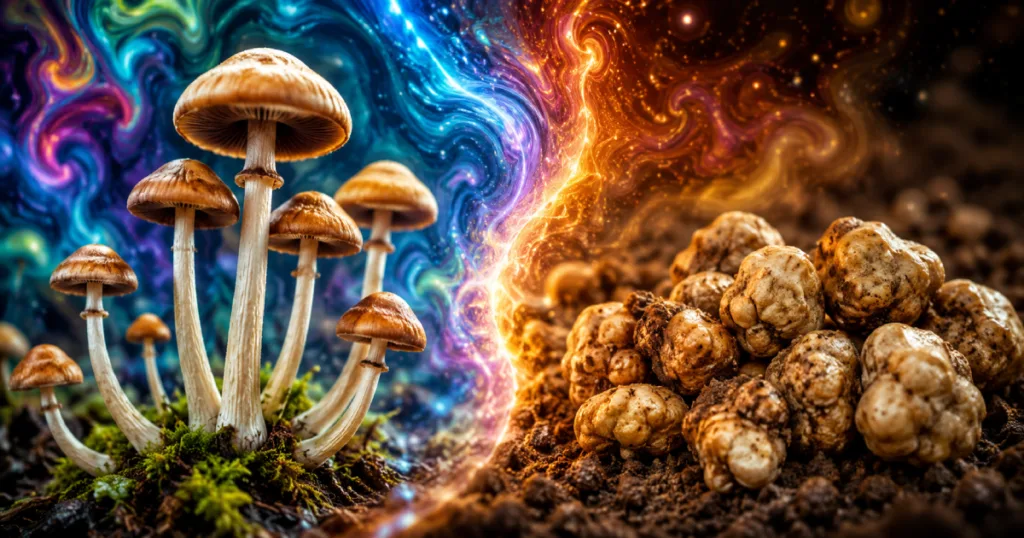
As you learn more about psychedelics, you’ll likely encounter another product called magic truffles. While they come from the same type of fungus as magic mushrooms, they are not the same thing.
Magic mushrooms are the fruiting bodies that grow above the ground, while magic truffles are underground nutrient storage structures known as sclerotia. Certain species of fungi produce these dense underground formations instead of—or in addition to—traditional mushrooms.
Both can naturally contain psilocybin and psilocin, meaning they may produce similar psychoactive effects. However, their appearance, texture, cultivation methods, and legal treatment can differ depending on where you live.
| Magic Mushrooms | Magic Truffles |
| Grow above ground | Grow below ground |
| Produce caps and stems | Form dense underground sclerotia |
| More recognizable | Less familiar to beginners |
| Numerous species available | Produced by fewer fungal species |
| Potency varies naturally | Potency also varies naturally |
Some countries have historically regulated magic truffles differently from psychedelic mushrooms, although laws continue to evolve. Before purchasing or possessing any psychedelic product, always review the regulations in your country, state, or province.
What Are Penis Envy Mushroom Spores?
Another popular search phrase is Penis Envy mushroom spores.
To understand this term, it’s helpful to know how mushrooms reproduce.
Unlike flowering plants that reproduce using seeds, mushrooms reproduce by releasing microscopic spores. These spores contain the genetic material needed to produce new fungal growth under suitable environmental conditions.
Penis Envy is one of the most recognizable varieties within the Psilocybe cubensis species. Because of its unique appearance and reputation for higher potency, it has become one of the most discussed mushroom varieties online.
People often search for Penis Envy spores because they are interested in:
- Mushroom genetics
- Scientific microscopy
- Mycology education
- Fungal life cycles
- Learning about different mushroom varieties
In some jurisdictions, spores may be legal to possess because they do not contain psilocybin. However, laws regarding cultivation and intended use vary widely. Anyone interested in spores should always research applicable local regulations before purchasing or possessing them.
Why is Penis Envy so well-known?
Within educational discussions surrounding psychedelic mushrooms, Penis Envy has earned a reputation for producing relatively high concentrations of psilocybin compared to many other Psilocybe cubensis varieties.
People frequently describe experiences involving:
- Stronger visual effects
- Greater changes in perception
- More intense emotional experiences
- Longer-lasting subjective effects
However, it’s important to understand that no two mushrooms are chemically identical. Natural variation occurs between harvests, individual mushrooms, and cultivation conditions.
For this reason, experienced researchers and educators emphasize that potency cannot be determined simply by appearance or variety name.
Most scientific studies investigating psilocybin use standardized pharmaceutical preparations rather than naturally occurring mushroom varieties. This allows researchers to precisely measure dosage and better understand clinical outcomes.
Functional Mushrooms vs. Psychedelic Mushrooms
One of the most common misconceptions is that all mushroom-based products produce psychedelic effects.
In reality, there are two very different categories of mushroom products.
Functional Mushrooms
Functional mushrooms do not contain psilocybin and are commonly found in wellness supplements and food products.
Examples include:
- Lion’s Mane
- Reishi
- Cordyceps
- Chaga
- Turkey Tail
- Maitake
- Shiitake
These mushrooms are often marketed for their nutritional or wellness properties and are widely available in many countries.
Psychedelic Mushrooms
Psychedelic mushrooms naturally contain psilocybin.
They are associated with altered perception, changes in consciousness, and ongoing medical research into potential therapeutic applications.
Because mushroom-themed branding has become increasingly popular, consumers should carefully read ingredient labels before purchasing any mushroom product.
A product featuring mushroom imagery or branding does not necessarily contain psilocybin.
Mushroom-Infused Products and Branded Edibles
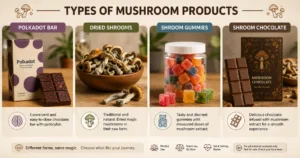
As interest in mushroom products has expanded, many companies now sell mushroom-themed chocolates, gummies, capsules, beverages, and other edibles.
These products may contain a wide range of ingredients depending on the manufacturer and local regulations.
For example, mushroom-branded products may include:
- Functional mushroom extracts
- Botanical ingredients
- Adaptogens
- Hemp-derived cannabinoids
- Amanita muscaria extracts
- Other proprietary mushroom blends
Because formulations differ significantly between brands, consumers should never assume that two products with similar packaging contain the same ingredients.
Before purchasing any mushroom-related product, consider reviewing:
- Full ingredient list
- Manufacturer information
- Third-party laboratory testing (when available)
- Serving size guidance
- Storage recommendations
- Batch information
Reliable brands typically provide transparent product information that helps consumers make informed purchasing decisions.
What Factors Influence a Psilocybin Experience?
No two psychedelic experiences are exactly alike.
Scientists have identified numerous factors that may influence how individuals respond to psilocybin.
These include:
- Body chemistry
- Metabolism
- Previous psychedelic experience
- Individual sensitivity
- Emotional state
- Physical environment
- Dosage
- Sleep quality
- Hydration
- Whether food was consumed beforehand
Researchers frequently discuss two important concepts known as set and setting.
Set
“Set” refers to an individual’s mindset before the experience.
This includes:
- Mood
- Expectations
- Stress level
- Emotional well-being
- Personal outlook
Setting
“Setting” refers to the environment.
Examples include:
- Physical surroundings
- Noise level
- Lighting
- Familiarity with the location
- Presence of trusted individuals
Clinical research consistently emphasizes that these factors may significantly influence subjective experiences.
Potential Risks and Safety Considerations
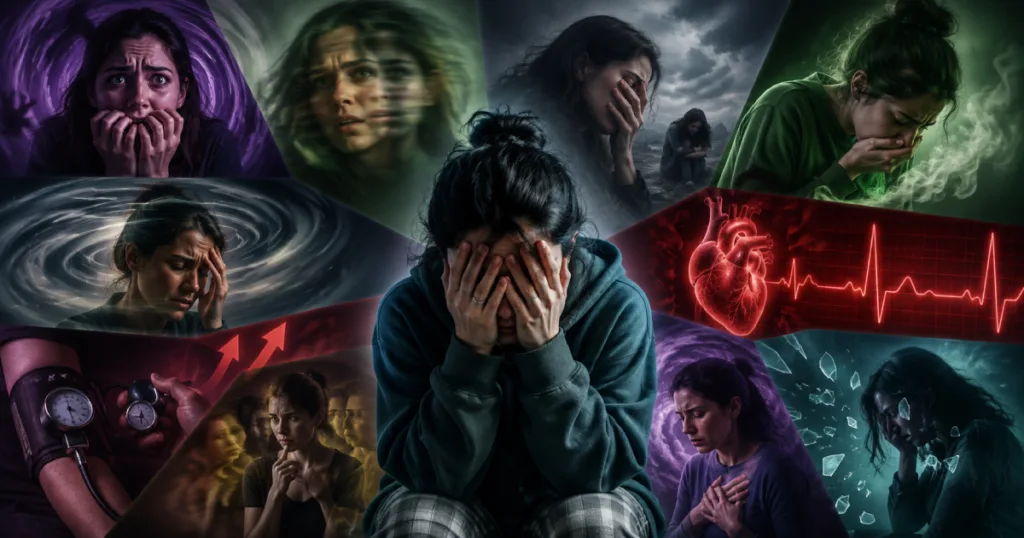
Although psilocybin research has produced encouraging findings in carefully controlled clinical settings, psychedelic mushrooms are not risk-free.
Potential short-term effects reported in scientific literature include:
- Anxiety
- Confusion
- Fear
- Nausea
- Vomiting
- Dizziness
- Elevated heart rate
- Temporary increases in blood pressure
- Changes in judgment
- Emotional distress
Some individuals may experience what is commonly referred to as a challenging experience or “bad trip.”
This may involve:
- Panic
- Intense fear
- Distressing thoughts
- Confusion
- Temporary paranoia
These experiences are more likely to occur in unfamiliar environments, after consuming unknown amounts, or when underlying mental health conditions are present.
Current research also suggests that individuals with a personal or family history of psychotic disorders may face increased risks associated with psychedelic substances.
For this reason, most clinical trials carefully screen participants before administering psilocybin.
Can You Tell if a Mushroom Is Safe from a Picture?
Many online searches begin with the hope that photographs alone can identify psychedelic mushrooms.
Unfortunately, this approach is unreliable.
Several poisonous mushrooms resemble psilocybin-containing species.
Proper identification often requires evaluating:
- Cap texture
- Gill attachment
- Stem characteristics
- Spore print color
- Bruising response
- Habitat
- Geographic location
- Seasonal growth
- Microscopic structures
Professional mycologists rarely rely on photographs alone.
Educational images should be viewed as learning tools—not identification guides for wild mushrooms.
Why Psilocybin Research Is Expanding
Interest in psychedelics has grown rapidly because researchers continue exploring how psilocybin may affect brain function.
Universities and medical research centers around the world are investigating potential applications involving:
- Major depressive disorder
- Treatment-resistant depression
- Anxiety associated with serious illness
- Alcohol use disorder
- Tobacco dependence
- Obsessive-compulsive disorder
- End-of-life psychological distress
Researchers are also studying:
- Brain connectivity
- Neuroplasticity
- Emotional processing
- Cognitive flexibility
- Long-term psychological outcomes
While early findings have attracted considerable public attention, scientists consistently emphasize that additional high-quality clinical trials are needed before broader medical conclusions can be reached.
As research continues, education remains essential for helping consumers distinguish evidence-based information from myths, misinformation, and exaggerated marketing claims.
At Dank Mart, we encourage readers to stay informed through credible scientific sources and to approach emerging research with curiosity, critical thinking, and an understanding of the legal framework in their area.
Frequently Asked Questions About Magic Mushrooms
Are Magic Mushrooms Legal?
The legal status of psilocybin varies significantly around the world.
In the United States, psilocybin remains a Schedule I controlled substance under federal law, although several states and municipalities have adopted different policies regarding research, decriminalization, or supervised therapeutic programs.
Other countries have adopted their own regulatory approaches. Some permit limited therapeutic access, while others prohibit possession entirely.
Because laws continue to evolve, always verify your local regulations before purchasing, possessing, or consuming any psychedelic product.
Are Magic Truffles the Same as Magic Mushrooms?
No.
Although they originate from closely related fungi and may contain similar psychoactive compounds, they are biologically different structures.
Magic mushrooms are the fruiting bodies that grow above ground.
Magic truffles are underground sclerotia that store nutrients for the fungus.
From an educational standpoint, both are interesting examples of how certain fungal species naturally produce psilocybin.
What Does “Shroom” Mean?
“Shroom” is simply a shortened form of the word mushroom.
Depending on the conversation, people may use it to describe:
-
- Psilocybin mushrooms
- Psychedelic mushrooms
- Fresh mushrooms
The term is informal rather than scientific.
Are All Mushroom Products Psychedelic?
No.
This is one of the biggest misconceptions among new consumers.
Many products sold today contain functional mushrooms, such as:
- Lion’s Mane
- Reishi
- Cordyceps
- Turkey Tail
- Chaga
These mushrooms do not contain psilocybin and do not produce psychedelic effects.
Reading ingredient labels carefully is one of the simplest ways to understand exactly what you’re purchasing.
Why Do People Search for Magic Mushroom Pictures?
People commonly search for magic mushroom pictures because they want to:
- Compare species
- Learn mushroom anatomy
- Understand physical characteristics
- Read educational information alongside photographs
- Differentiate psychedelic mushrooms from edible or poisonous varieties
Images are excellent educational tools—but they should never be used as the sole method of identifying wild mushrooms.
Can Psilocybin Be Detected by Looking at a Mushroom?
No.
The concentration of psilocybin cannot be determined by appearance alone.
Two mushrooms that look nearly identical may contain different concentrations of naturally occurring compounds.
Researchers use laboratory testing—not visual inspection—to determine chemical composition.
Why Are Scientists Studying Psilocybin?
Scientific interest has increased because early clinical studies suggest psilocybin may have therapeutic potential when administered in carefully controlled medical settings.
Current areas of investigation include:
- Depression
- Treatment-resistant depression
- Anxiety associated with serious illness
- Alcohol use disorder
- Tobacco dependence
- PTSD
- End-of-life psychological distress
Researchers continue emphasizing that more large-scale studies are needed before broader medical recommendations can be made.
How to Evaluate Mushroom Products
If you live in a jurisdiction where mushroom-related products are legally available, choosing reputable brands is an important part of responsible purchasing.
Reliable companies generally provide clear, transparent information about what they sell.
When comparing products, consider whether the manufacturer provides:
- Clearly labeled ingredients
- Complete nutritional or product information
- Batch or lot identification
- Storage recommendations
- Serving guidance
- Independent laboratory testing (when available)
- Contact information
- Educational resources
Transparency helps consumers make informed decisions while building confidence in product quality.
Choosing Products That Match Your Experience Level
Not every mushroom-related product is designed for the same type of consumer.
Depending on local regulations and the manufacturer, products may include:
-
- Capsules
- Powdered mushroom blends
- Beverages
- Dried mushrooms
- Functional mushroom supplements
Different products vary in formulation, ingredients, concentration, and intended use.
Reading labels carefully—and understanding exactly what is contained within the product—is always recommended.
Why Product Education Matters
One of the biggest challenges facing consumers today is misinformation.
Social media videos, online forums, and viral posts often present exaggerated claims regarding psychedelic products.
Responsible education helps separate:
✔ Scientific evidence
from
✖ Marketing hype
Educational resources should encourage consumers to:
- Verify claims
- Consult reputable sources
- Understand legal considerations
- Learn about potential risks
- Recognize that ongoing research continues to evolve
At Dank Mart, we believe informed consumers make better decisions.
Whether someone is exploring cannabis products, functional mushrooms, or learning about psychedelic research, access to balanced educational information should always come first.
Current Legal Landscape
Laws regarding psilocybin continue to change around the world.
Different jurisdictions have adopted different approaches, including:
- Criminal prohibition
- Medical research exemptions
- Therapeutic access programs
- Local decriminalization initiatives
- Regulated supervised treatment models
Because legislation changes regularly, information that is accurate today may change in the future.
Consumers should always review the latest regulations issued by their local or national governments before purchasing, possessing, or transporting any psychedelic-related product.
Common Myths About Magic Mushrooms
As public interest grows, myths continue to circulate online.
Let’s address several of the most common misconceptions.
Myth 1: Every Mushroom With a Brown Cap Is Psychedelic
False.
Thousands of mushroom species exist, and only a small percentage naturally contain psilocybin.
Myth 2: You Can Identify Mushrooms Using Google Images
False.
Photographs alone cannot safely identify wild mushrooms.
Professional identification often requires microscopic examination and additional scientific methods.
Myth 3: All Mushroom Chocolate Bars Contain Psilocybin
False.
Many mushroom chocolates instead contain:
- Lion’s Mane
- Reishi
- Cordyceps
- Adaptogenic herbs
- Botanical ingredients
Always read ingredient labels carefully.
Myth 4: Scientific Research Has Proven Psilocybin Cures Depression
False.
Current studies have shown encouraging results in carefully supervised clinical settings.
However, researchers consistently emphasize that additional large-scale studies remain necessary before broader conclusions can be made.
Myth 5: Stronger Is Always Better
False.
Potency alone does not determine the quality of an experience.
Individual biology, environment, emotional state, and many other factors all contribute to how someone responds.
Why Accurate Information Matters
The internet contains an enormous amount of information about psychedelic mushrooms.
Unfortunately, not all of it is accurate.
Some websites rely on sensational headlines or unsupported claims to generate traffic.
Others repeat outdated information without citing credible research.
Educational resources should strive to provide:
- Balanced explanations
- Clear distinctions between established science and emerging research
- Honest discussion of risks
- Transparent sourcing
- Easy-to-understand language
This approach helps readers make informed decisions while avoiding unnecessary confusion.
At Dankmart.co, our goal extends beyond offering products where legally permitted.
We believe education plays an essential role in helping consumers better understand:
- Cannabis
- Functional mushrooms
- Psychedelic research
- Responsible consumption
- Product quality
- Emerging scientific developments
Our educational articles are written to simplify complex topics into practical, easy-to-understand language while encouraging readers to consult reputable scientific sources for additional learning.
Whether you’re researching magic mushroom pictures, comparing functional mushrooms, or exploring the latest developments in psychedelic science, we’re committed to helping you stay informed with balanced, evidence-based content.
References:
Davis, K., FNP. Medically reviewed by Nguyen, A., PharmD, RPh, CPh. (Updated March 25, 2025). Marijuana and Depression: What’s the Link? Available at: https://www.medicalnewstoday.com/articles/308850
Johnson, J. Medically reviewed by O’Carroll, D., MD. (Updated August 23, 2024). How Long Do Shrooms Stay in Your System? Available at: https://www.medicalnewstoday.com/articles/how-long-do-shrooms-stay-in-your-system
Canna, A., & Cingolani, S. (December 1, 2022). Harm Reduction for the Use of Classical Psychedelics and Other Hallucinogens: A Review of the Evidence. Available at: https://pmc.ncbi.nlm.nih.gov/articles/PMC9751063/
Dr. Louisa Degenhardt, Ph.D, AO, FAA, FASSA, FAHMS

About author


Add comment