
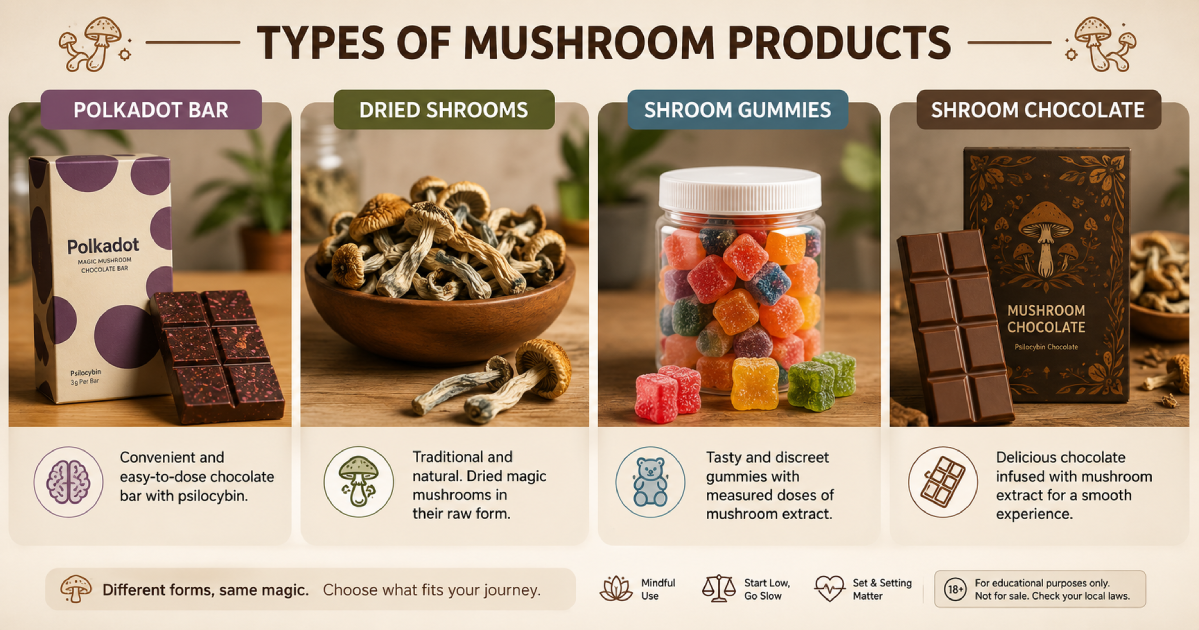
Polkadot Bar vs. Other Mushroom Products: Everything You Need to Know Before You Buy
If you’ve spent any time researching mushroom chocolate products, chances are you’ve come across the Polkadot bar. With its colorful packaging and widespread online popularity, it’s one of the most recognizable names in the mushroom product market. But despite its popularity, many shoppers still have important questions.
How does a Polkadot bar compare to dried mushrooms? Is it different from mushroom capsules or gummies? Does it contain psychedelic mushrooms, medicinal mushrooms, or something else entirely? And perhaps most importantly, how can you tell whether you’re buying a legitimate, high-quality product?
These are all valid questions. The mushroom market has expanded rapidly over the past few years, bringing with it a growing variety of products, brands, and formulations. While consumers have more choices than ever before, they also face greater uncertainty because manufacturing practices, ingredient transparency, and product quality can vary significantly.
Whether you’re simply researching mushroom chocolates, comparing different product types, or trying to understand the differences between strains like the Penis Envy mushroom and Albino Penis Envy mushroom, this guide will help you make a more informed decision.
In this comprehensive comparison, you’ll learn:
- What a Polkadot bar is and how it differs from other mushroom products
- The advantages and limitations of mushroom chocolates
- How dried mushrooms, capsules, gummies, and extracts compare
- The differences between psychedelic mushrooms and medicinal mushrooms
- Why strains like Penis Envy and Albino Penis Envy are well known
- How to identify high-quality mushroom products
- Important safety and legal considerations
- What to look for when shopping with trusted retailers like Dank Mart
By the end of this guide, you’ll have a much clearer understanding of today’s mushroom product landscape and the factors that matter most when evaluating quality.
What Is a Polkadot Bar?
A Polkadot bar is a chocolate bar marketed as containing mushroom-based ingredients. Depending on the manufacturer and the market where it is sold, these ingredients may include:
- Psilocybin-containing mushrooms (where legally permitted)
- Mushroom extracts
- Functional or medicinal mushrooms
- Botanical ingredients
- Flavoring and chocolate blends
One of the biggest misconceptions is that every Polkadot bar is identical. In reality, there is no universal manufacturing standard for products sold under the Polkadot name.
Some products emphasize functional mushrooms such as Lion’s Mane or Reishi, while others are marketed as psychedelic mushroom chocolates where local laws permit. Packaging, ingredients, and potency may differ dramatically depending on the manufacturer and retailer.
This inconsistency is one reason consumers should always read ingredient labels carefully rather than relying solely on branding or online reviews.
Why Have Mushroom Chocolate Bars Become So Popular?
Chocolate has become one of the most common delivery methods for mushroom products, and it’s easy to understand why.
Traditional dried mushrooms have a naturally earthy flavor that many people find unpleasant. Chocolate masks that taste while creating a more familiar and enjoyable eating experience.
Beyond flavor, chocolate bars also offer practical benefits.
Manufacturers typically divide each bar into individually scored squares, making serving sizes easier to estimate than breaking apart dried mushrooms by eye. Although consistency still depends entirely on manufacturing quality, many consumers appreciate the convenience.
Other reasons mushroom chocolates have become increasingly popular include:
- Easy portability
- Longer shelf stability when stored properly
- Familiar format
- Variety of flavors
- Attractive packaging
- More approachable for first-time buyers
It’s important to understand, however, that chocolate itself does not make mushroom compounds stronger.
Despite common myths online, there is currently no scientific evidence showing that chocolate increases the potency of psilocybin. Instead, chocolate primarily improves taste, convenience, and portioning.
Polkadot Bars vs. Dried Mushrooms
When comparing mushroom products, dried mushrooms remain the benchmark because they represent one of the oldest and least processed forms available.
Each option offers distinct advantages depending on what a consumer values most.
Polkadot Bars
Advantages
- Better taste
- Convenient packaging
- Easy to carry
- Individual serving squares
- No preparation required
- Wide variety of chocolate flavors
Potential Limitations
- Ingredients vary between manufacturers
- Counterfeit products exist
- Manufacturing quality differs
- Potency depends on production methods
Because mushroom chocolates involve additional ingredients and processing, consumers should place greater emphasis on ingredient transparency and third-party testing whenever possible.
Dried Mushrooms
Dried mushrooms contain minimal processing, making them attractive to consumers who prefer products closer to their natural form.
Advantages
- Minimal processing
- Easier identification of mushroom species
- Long history of traditional use
- No added sugars or chocolate ingredients
Considerations
- Strong earthy flavor
- Naturally variable potency
- More difficult to portion accurately
- Less convenient to consume
Even within the same species, natural differences in growing conditions, harvesting methods, and storage can influence potency. This variability is one reason researchers emphasize laboratory testing rather than relying on strain names alone.
Neither option is inherently better. Product quality depends far more on sourcing, manufacturing standards, storage conditions, and transparency than on whether the mushrooms are sold dried or incorporated into chocolate.
Comparing Mushroom Chocolates, Capsules, Gummies, and Extracts
Today’s mushroom market offers far more than chocolate bars.
Consumers can now choose from several delivery methods, each with unique characteristics.
Mushroom Chocolate Bars
Best for:
- Taste
- Convenience
- Portioned servings
- Wide flavor variety
Ideal for consumers who dislike the flavor of dried mushrooms.
Mushroom Capsules
Mushroom Capsules offer one of the simplest ways to consume mushroom products.
Benefits include:
- No mushroom taste
- Easy transportation
- Consistent serving sizes
- Convenient daily use
Capsules are commonly used for functional mushrooms such as Lion’s Mane, Reishi, Cordyceps, and Turkey Tail, although some markets also offer psychedelic formulations where legally permitted.
Mushroom Gummies
Mushroom Gummies have become increasingly popular because they resemble traditional dietary supplements.
Advantages include:
- Pleasant flavor
- Easy portioning
- Beginner-friendly
- Portable packaging
As with chocolates, ingredient quality can vary considerably between manufacturers.
Mushroom Extracts
Liquid extracts are concentrated formulations designed to deliver mushroom compounds in small serving sizes.
They are commonly used for functional mushrooms and may offer faster absorption compared with whole mushrooms, depending on formulation.
Consumers should pay close attention to extraction methods, ingredient concentrations, and independent testing before purchasing extracts.
Understanding Mushroom Potency
One of the most common myths surrounding mushroom products is that every product labeled with the same strain or brand has identical potency.
In reality, mushroom potency depends on many variables, including:
- Species
- Genetic lineage
- Growing conditions
- Harvest timing
- Drying process
- Storage conditions
- Manufacturing practices
- Laboratory verification
Even two products produced from the same mushroom variety may differ significantly if they were cultivated or processed differently.
This is why reputable manufacturers increasingly invest in laboratory analysis and batch testing. These practices help verify ingredient identity, improve consistency, and provide consumers with greater confidence in the products they purchase.
For shoppers comparing different brands, transparency is often a stronger indicator of quality than marketing claims or flashy packaging.
Understanding Penis Envy Mushrooms
Among the many varieties of Psilocybe cubensis, few have generated as much attention as the Penis Envy mushroom. It has become one of the best-known mushroom strains because of its distinctive appearance and reputation for higher-than-average psilocybin concentrations.
Although many online discussions describe Penis Envy as one of the “strongest” cubensis varieties, it’s important to remember that potency isn’t determined by strain name alone. Genetics, cultivation methods, harvesting, drying, storage, and laboratory testing all influence the final concentration of active compounds.
Why Is It Called Penis Envy?
The strain earned its name because of its unique physical appearance.
Unlike many other Psilocybe cubensis mushrooms, Penis Envy mushrooms typically feature:
- Thick, dense stems
- Smaller caps
- Compact overall structure
- Slower growth cycle
- Reduced spore production
These characteristics make the strain visually recognizable even before laboratory analysis.
Is Penis Envy Really More Potent?
Many cultivators and experienced users report that Penis Envy mushrooms often contain higher concentrations of psilocybin than average Psilocybe cubensis varieties.
However, scientific research also demonstrates that natural variation exists between individual mushrooms, even those grown from the same genetic lineage.
Factors affecting potency include:
- Genetics
- Substrate quality
- Environmental conditions
- Harvest timing
- Drying methods
- Storage conditions
Because of these variables, laboratory testing remains the only reliable way to determine actual potency.
Consumers should avoid assuming that every product labeled “Penis Envy” will provide identical effects.
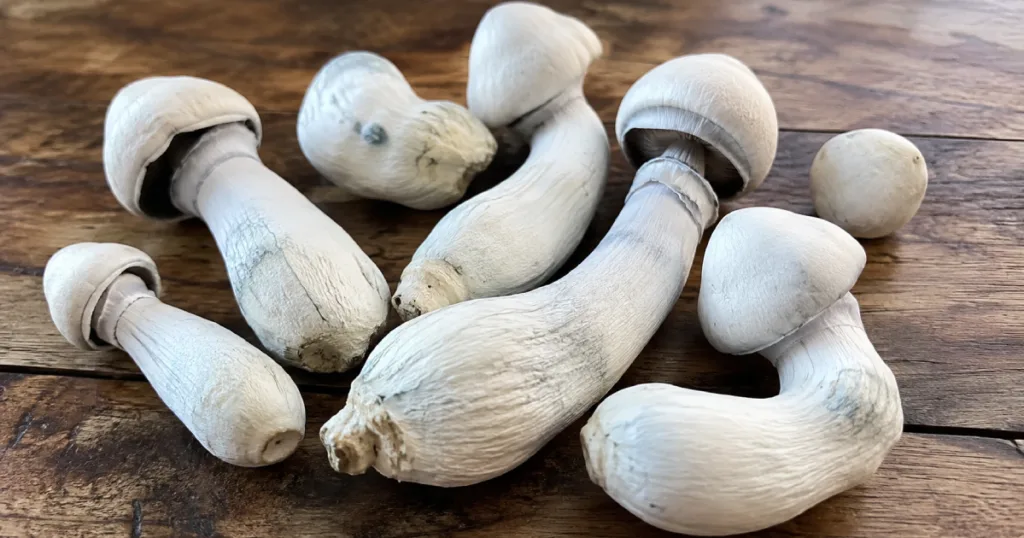
What Is the Albino Penis Envy Mushroom?
The Albino Penis Envy mushroom, commonly abbreviated as APE, is another highly recognized member of the Penis Envy lineage.
Despite its name, it is not considered a true albino. Instead, it is a leucistic mutation that produces very light-colored fruiting bodies while retaining small amounts of pigmentation.
APE mushrooms are known for:
- White to pale cream coloration
- Thick stems
- Small caps
- Dense tissue
- Slow growth
- High reported potency
Because of their unusual appearance, Albino Penis Envy mushrooms are among the easiest varieties to distinguish visually.
Like all mushroom varieties, however, potency can vary naturally from one harvest to another.
Medicinal Mushrooms vs. Psychedelic Mushrooms
One of the biggest misconceptions in today’s mushroom market is that all mushroom products are psychedelic.
They are not.
In fact, there are two very different categories of mushroom products available today.
Medicinal (Functional) Mushrooms
Functional mushrooms have been used in traditional wellness practices for centuries and are now commonly found in dietary supplements, coffees, teas, capsules, powders, and chocolates.
Popular medicinal mushrooms include:
- Lion’s Mane
- Reishi
- Turkey Tail
- Cordyceps
- Chaga
- Maitake
- Shiitake
These mushrooms do not contain psilocybin and are not considered psychedelic.
Instead, researchers continue to study them for compounds that may support:
- Cognitive health
- Immune function
- Physical performance
- General wellness
Although research remains ongoing, many consumers choose functional mushrooms as part of their daily wellness routines.
Psychedelic Mushrooms
Psychedelic mushrooms contain naturally occurring compounds such as psilocybin and psilocin.
Depending on local laws, these mushrooms may be illegal, decriminalized, or regulated for therapeutic use.
Unlike functional mushrooms, psychedelic mushrooms produce altered states of consciousness and should never be confused with wellness supplements.
Because packaging can sometimes look similar, consumers should always read ingredient labels carefully before purchasing any mushroom product.
Why Ingredient Transparency Matters
One of the clearest signs of a reputable mushroom brand is transparency.
Unfortunately, not every product on today’s market clearly explains what is actually inside the package.
Some products provide:
- Complete ingredient lists
- Batch numbers
- Manufacturing information
- Third-party laboratory testing
- Storage recommendations
Others provide little more than colorful packaging and vague marketing language.
Whenever possible, consumers should prioritize products that clearly disclose:
Mushroom Species
Knowing which mushroom species is included helps consumers better understand the product they’re purchasing.
Examples include:
- Lion’s Mane
- Reishi
- Cordyceps
- Turkey Tail
- Psilocybe cubensis (where legally available)
Serving Information
Reliable manufacturers provide clear serving guidance.
Products without serving information make it much more difficult for consumers to understand what they’re purchasing.
Batch Identification
Batch numbers improve traceability.
If manufacturers perform quality testing, batch numbers allow products to be linked with laboratory reports and manufacturing records.
Third-Party Testing
Independent laboratory testing has become one of the strongest indicators of product quality.
Testing may verify:
- Ingredient identity
- Heavy metals
- Pesticides
- Microbial contamination
- Active compound concentrations (where legally permitted)
While not every manufacturer currently provides testing information, brands that do often inspire greater consumer confidence.
How to Spot a Low-Quality Mushroom Product
The rapid growth of the mushroom market has unfortunately attracted products that make exaggerated claims or provide very little information.
Learning to recognize warning signs can help shoppers make better decisions.
Be cautious of products that:
- Don’t list ingredients
- Have no manufacturer information
- Make unrealistic potency claims
- Promise guaranteed experiences
- Lack of serving recommendations
- Have no batch numbers
- Provide no testing information
- Use copied or misleading packaging
- Offer no customer support
These warning signs don’t automatically mean a product is unsafe, but they should encourage consumers to research further before making a purchase.
The Importance of Buying from Reputable Retailers
Where you buy a mushroom product can be just as important as the product itself.
Established retailers often provide:
- Detailed product descriptions
- Transparent ingredient information
- Educational resources
- Responsive customer support
- Access to recognized brands
Rather than relying solely on social media posts or anonymous online marketplaces, many consumers prefer retailers that prioritize product education alongside their product selection.
For shoppers researching mushroom products, Dank Mart offers a carefully curated collection that makes it easier to compare brands, review product information, and explore educational resources before purchasing.
Whether you’re interested in mushroom chocolates, functional mushroom supplements, or simply learning more about today’s mushroom market, choosing a retailer that values transparency can help you make more informed decisions.
Why Product Testing Is Becoming Increasingly Important
As consumer awareness grows, laboratory testing is becoming one of the most important differentiators between premium products and lower-quality alternatives.
Independent testing may help verify:
- Identity of mushroom ingredients
- Product consistency
- Absence of harmful contaminants
- Compliance with manufacturing standards
Testing also promotes accountability.
Manufacturers willing to submit products for independent analysis often demonstrate greater confidence in their production processes and ingredient sourcing.
While laboratory reports are not yet universal across the industry, they are becoming an increasingly valuable indicator of quality for informed consumers.

How Long Do Mushroom Chocolate Bars Last?
Proper storage plays a major role in preserving the quality, flavor, and texture of mushroom chocolate products. While chocolate itself can remain enjoyable for many months when stored correctly, environmental conditions may gradually affect both the chocolate and any mushroom ingredients it contains.
Although exact shelf life varies by manufacturer, ingredients, and packaging, following a few simple storage practices can help maintain product quality.
Best Storage Practices
To maximize freshness, store mushroom chocolate bars:
- In a cool, dry location
- Away from direct sunlight
- Inside their original packaging or an airtight container
- Away from excess humidity
- At a stable temperature
Heat is one of chocolate’s biggest enemies. Even if a melted chocolate bar is cooled and solidifies again, its texture and appearance may change due to cocoa butter separation.
Moisture is another concern. Excess humidity can reduce shelf life and negatively affect both chocolate quality and mushroom ingredients.
If you live in a particularly warm climate, refrigeration may be appropriate, provided the chocolate is sealed in an airtight container to reduce condensation.
Are Polkadot Bars Legal?
One of the most frequently asked questions about mushroom products concerns legality.
The answer depends entirely on where you live.
Laws governing psilocybin and mushroom products vary significantly between countries, states, provinces, and municipalities.
In the United States, for example:
- Psilocybin remains illegal under federal law.
- Some states have created regulated therapeutic programs.
- Certain cities have adopted decriminalization policies.
- Local regulations continue to evolve.
Because laws change regularly, consumers should always verify current regulations before purchasing, possessing, or using any mushroom product.
Retailers and educational resources can provide general information, but legal requirements should always be confirmed through official government sources.
Safety Considerations Before Trying Mushroom Products
Every individual responds differently to mushroom products.
Numerous factors may influence a person’s experience, including:
- Individual sensitivity
- Body weight
- Product formulation
- Mushroom species
- Active compound concentration
- Setting
- Mental state
- Previous experience
For this reason, consumers should avoid assuming that two products with similar packaging or branding will produce identical effects.
Why Product Consistency Matters
One reason quality manufacturers invest in standardized production and laboratory testing is to improve consistency between batches.
Without quality control, even products carrying the same name may differ significantly in composition.
This reinforces the importance of purchasing from retailers that prioritize transparency and reputable brands.
Read Labels Carefully
Before purchasing any mushroom product, review the label for:
- Complete ingredient list
- Serving information
- Manufacturer details
- Storage instructions
- Batch information
- Expiration or best-by date
Clear labeling demonstrates attention to quality and helps consumers make informed purchasing decisions.
Consult a Healthcare Professional When Appropriate
Individuals who are pregnant, nursing, taking prescription medications, or managing existing medical conditions should consult a qualified healthcare professional before using mushroom-based products.
Likewise, anyone with questions about potential interactions or health considerations should seek personalized medical advice rather than relying solely on general online information.
How to Choose High-Quality Mushroom Products
With so many brands entering the marketplace, selecting a reliable product can feel overwhelming.
Rather than focusing solely on colorful packaging or online popularity, consider the qualities that distinguish reputable manufacturers.
Look for Ingredient Transparency
Quality companies openly disclose:
- Mushroom species
- Additional ingredients
- Flavoring components
- Serving sizes
- Manufacturing information
Avoid products that use vague descriptions without explaining exactly what they contain.
Prioritize Third-Party Testing
Independent laboratory testing remains one of the strongest indicators of product quality.
Testing may verify:
- Ingredient identity
- Product purity
- Heavy metals
- Microbial contaminants
- Manufacturing consistency
While not every company currently publishes laboratory reports, brands that prioritize testing often demonstrate a stronger commitment to consumer confidence.
Research the Brand
A little research can go a long way.
Before purchasing, consider:
- Company reputation
- Customer reviews
- Educational resources
- Product transparency
- Responsiveness to customer questions
Companies that invest in education often demonstrate a longer-term commitment to their customers.
Buy from Trusted Retailers
Where you purchase a product matters.
Established retailers typically:
- Work with recognized brands
- Provide detailed product descriptions
- Offer educational resources
- Maintain customer support
- Help consumers compare products more easily
For shoppers exploring today’s expanding mushroom market, Dank Mart offers a carefully selected collection of mushroom-related products from trusted brands. Instead of relying on vague marketing claims, customers can compare product information, ingredients, and educational content in one convenient location.
Whether you’re researching mushroom chocolates, functional mushroom supplements, or learning about different mushroom varieties, shopping with a reputable retailer helps simplify the decision-making process.
Comparing the Most Popular Mushroom Product Types
The growing popularity of mushroom products has created more choices than ever before. Each format offers unique advantages depending on your personal preferences.
| Product Type | Best For | Considerations |
| Dried Mushrooms | Minimal processing | Earthy taste, natural potency variation |
| Chocolate Bars | Flavor and convenience | Quality varies by manufacturer |
| Capsules | Easy daily use | No chocolate flavors |
| Gummies | Pleasant taste | Ingredient quality varies |
| Liquid Extracts | Concentrated formulations | Extraction methods differ |
| Functional Mushroom Powders | Smoothies and beverages | Mixing required |
Rather than asking which product is “best,” consumers should consider which option best matches their preferences, goals, and expectations while emphasizing transparency and product quality.
Why Education Is Becoming More Important
As interest in mushroom products continues to grow, consumers are increasingly looking beyond marketing and asking more informed questions.
Instead of focusing only on brand names, many shoppers now ask:
- What ingredients are included?
- Has the product been independently tested?
- Is the manufacturer transparent?
- Where were the mushrooms sourced?
- How is the product manufactured?
This shift toward education benefits both consumers and reputable companies.
Brands that provide detailed information help shoppers make informed purchasing decisions instead of relying solely on advertising claims or social media trends.
The most trusted retailers increasingly recognize that educating customers builds long-term confidence.
That’s one reason educational resources have become an important part of the customer experience at retailers like Dank Mart, where consumers can compare products, explore mushroom education, and better understand today’s rapidly evolving marketplace before making a purchase.
Frequently Asked Questions
What is a Polkadot Bar?
A Polkadot Bar is a mushroom chocolate product sold under the Polkadot brand. Depending on the manufacturer and the market where it is available, formulations may contain functional mushroom ingredients or other mushroom-based compounds. Because there is no single manufacturing standard across all products using the Polkadot name, it’s important to review the ingredient list, serving information, and manufacturer details before making a purchase.
Are Polkadot Bars the Same as Dried Mushrooms?
No.
Although both products may involve mushroom-based ingredients, they differ in several important ways.
Dried mushrooms are minimally processed and retain their natural form, while Polkadot Bars combine mushroom ingredients with chocolate and other food ingredients. Chocolate bars are often chosen for their flavor, convenience, and portioned format, whereas dried mushrooms appeal to consumers looking for a less processed option.
Neither format is inherently better—the right choice depends on your preferences and the quality of the product.
What Is the Difference Between Penis Envy and Albino Penis Envy?
Both are well-known varieties within the Psilocybe cubensis lineage.
Penis Envy mushrooms are recognized for their thick stems, compact caps, and reputation for higher-than-average potency.
Albino Penis Envy (APE) is a leucistic variation with pale coloring and similar physical characteristics. Like Penis Envy, APE has developed a reputation for higher potency, though actual concentrations can vary depending on genetics, cultivation methods, harvesting, and storage.
Laboratory testing is the only reliable way to determine the potency of any individual mushroom product.
Are Functional Mushrooms Psychedelic?
No.
Functional mushrooms—including Lion’s Mane, Reishi, Cordyceps, Turkey Tail, Chaga, and Maitake—do not contain psilocybin and are not considered psychedelic.
These mushrooms are commonly used in dietary supplements, powders, teas, coffees, and wellness products. Researchers continue to study their naturally occurring compounds for potential health-supporting properties, although research is still evolving.
How Should Mushroom Chocolate Be Stored?
To help preserve freshness and quality:
- Store in a cool, dry place.
- Keep away from direct sunlight.
- Avoid excessive heat and humidity.
- Leave the product in its original packaging or an airtight container.
- Follow any storage recommendations provided by the manufacturer.
Proper storage helps maintain the chocolate’s texture and overall product quality.
How Can I Tell If a Mushroom Product Is High Quality?
Look for products that provide:
- Complete ingredient lists
- Clear serving information
- Manufacturer details
- Batch or lot numbers
- Third-party testing (when available)
- Storage recommendations
- Responsive customer support
Avoid products that make unrealistic claims or provide little information about what’s inside the package.
Where Can I Learn More About Mushroom Products?
Educational retailers can be a valuable resource when comparing mushroom products and understanding different formulations.
At Dank Mart, shoppers can browse a curated selection of mushroom-related products while also accessing educational information to help them compare brands, ingredients, and product formats. Taking the time to research before purchasing can help you make a more informed decision.
Final Thoughts
As mushroom products continue to gain popularity, consumers have more options than ever before. From traditional dried mushrooms to chocolate bars, capsules, gummies, powders, and extracts, each format offers unique advantages depending on individual preferences and intended use.
A Polkadot Bar has become one of the most recognizable mushroom chocolate products on the market, but branding alone should never be the deciding factor. The quality of any mushroom product depends on much more than its name or packaging.
When comparing products, focus on factors that truly matter:
- Transparent ingredient lists
- Reputable manufacturers
- Independent laboratory testing, when available
- Clear serving guidance
- Proper storage recommendations
- Responsive customer support
- Honest educational resources
Taking the time to compare products carefully can help you avoid misleading marketing claims and identify brands that prioritize quality and transparency.
As the mushroom industry continues to evolve, informed consumers will be better equipped to choose products that align with their preferences while supporting companies that emphasize responsible manufacturing and education.
Explore Mushroom Products with Confidence
Whether you’re comparing mushroom chocolates, learning about functional mushrooms, or researching well-known varieties like Penis Envy and Albino Penis Envy, education is one of the most valuable tools you can have.
At dankmart.co, we’re committed to helping customers make informed decisions by offering carefully selected products, detailed product information, and educational resources that simplify the shopping experience.
Explore our collection of mushroom products, compare trusted brands, and continue learning with confidence—because the best purchasing decisions begin with reliable information.
References:
Davis, K., FNP. Medically reviewed by Nguyen, A., PharmD, RPh, CPh. (Updated March 25, 2025). Marijuana and Depression: What’s the Link? Available at: https://www.medicalnewstoday.com/articles/308850
Minnesota Department of Agriculture. (July 2025). Mushroom Product Safety for Consumers. Available at: https://www.mda.state.mn.us/sites/default/files/docs/2025-07/Mushroom%20Product%20Safety%20for%20Consumers%207.25.pdf
Dr. Louisa Degenhardt, Ph.D, AO, FAA, FASSA, FAHMS


About author




Add comment