Is Weed a Drug? Cannabis, THC, CBD & Marijuana Explained
Quick answer: Yes, weed is a drug. Weed, marijuana, and cannabis products can affect how your brain and body work, especially when they contain THC, the main cannabis compound responsible for the “high.”
But that answer needs context.
For some people, the word drug sounds automatically negative. They hear it and think of addiction, criminalization, danger, or something that should be avoided. For others, the word simply means a substance that changes how the body works. In that sense, prescription medications, over-the-counter medicines, alcohol, tobacco, caffeine, and cannabis can all be discussed as drugs depending on how the word is being used.
MedlinePlus defines drugs as chemical substances that can change how your body and mind work, and it includes prescription medicines, over-the-counter medicines, alcohol, tobacco, and illegal drugs in that broader category. MedlinePlus also lists marijuana among substances discussed under drug use and addiction.
So, when someone asks, “Is weed a drug?” the honest answer is:
Yes. Weed is a drug because cannabis contains active chemical compounds that can affect the brain, body, mood, coordination, memory, attention, perception, and decision-making.
That does not mean every cannabis product is the same. It also does not mean every adult uses cannabis for the same reason. Some people use cannabis recreationally where adult use is legal. Some people use medical cannabis under state programs. Some people use FDA-approved cannabis-related prescription medicines. Others avoid cannabis because of health, safety, job, family, legal, or personal reasons.
At Dank Mart, we believe cannabis education should be clear, honest, and easy to understand. Whether you are new to cannabis, comparing THC and CBD, or simply trying to understand why marijuana is called a drug, this guide breaks down the topic in plain English.
Educational note: This article is for adult cannabis education only. It is not medical advice, legal advice, or a recommendation to use cannabis. Cannabis laws vary by location. Talk with a licensed health care provider before using cannabis for a health reason, especially if you take medication, are pregnant, breastfeeding, or have a medical condition.
So, Is Weed a Drug?
Yes. Weed is a drug because it contains compounds that can change how your brain and body function.
The cannabis plant contains natural chemical compounds called cannabinoids. The two best-known cannabinoids are:
| Compound | What it is | What to know |
| THC | Tetrahydrocannabinol | The main intoxicating cannabis compound. THC can cause a high and may impair memory, attention, coordination, judgment, reaction time, and perception. |
| CBD | Cannabidiol | A cannabis compound that does not cause a high by itself, although CBD products can vary in quality, labeling, legality, and ingredients. |
THC is the reason cannabis fits so clearly into the common definition of a drug. The CDC states that cannabis directly affects brain functions related to memory, learning, attention, decision-making, coordination, emotions, and reaction time.
That means cannabis can affect:
- How do you feel?
- How do you think?
- How quickly you react.
- How well you coordinate movement.
- How you perceive time and surroundings.
- How do you make decisions?
- Whether it is safe for you to drive or operate equipment.
This is why the answer should not be watered down.
Weed is a drug.
But the word “drug” does not automatically mean “bad in every situation.” Some drugs are prescribed by doctors. Some drugs are available over the counter. Some drugs are legal for adults but still carry risks. Some drugs are misused. Some drugs can be helpful in one context and harmful in another.
That is why a better question is not only “Is weed a drug?” A better question is:
What kind of cannabis product is it, how much THC does it contain, why is someone using it, and what risks should they understand first?
Marijuana, Cannabis, and Weed: What Do These Words Mean?
People often use weed, marijuana, and cannabis as if they mean the same thing. In everyday conversation, they often do. But there are small differences worth knowing.
| Term | Plain-English meaning | Important note |
| Cannabis | The plant name | Cannabis is the broader plant category. It contains cannabinoids such as THC and CBD. |
| Marijuana | A common term for cannabis flower, leaves, stems, seeds, or products that contain THC | Marijuana is often used in legal, medical, and public-health contexts. |
| Weed | A casual name for marijuana | Usually refers to cannabis used for its effects, especially THC-containing cannabis. |
| THC | The main intoxicating cannabinoid | THC can cause a high and impair certain brain and body functions. |
| CBD | A non-intoxicating cannabinoid | CBD does not cause a high by itself, but products may still have risks, contaminants, labeling issues, or legal restrictions. |
The terms can overlap, but the product matters.
A high-THC flower is not the same as a low-THC CBD product. A small edible is not the same as a concentrate. A state-regulated medical cannabis product is not the same as an untested product from an unknown source. A prescription FDA-approved cannabis-related medicine is not the same as a dispensary product marketed for general adult use.
That is why broad statements like “weed is safe” or “weed is dangerous” are usually too simple.
The more helpful answer is:
Weed is a drug, but cannabis products vary widely in strength, form, legal status, intended use, and risk.
Why Weed Fits the Definition of a Drug
Weed fits the definition of a drug because it contains active substances that can change how the body and mind work.
The main active substance in most intoxicating cannabis products is THC. THC interacts with the body’s endocannabinoid system, which helps regulate several functions, including mood, appetite, memory, sleep, and pain perception. When THC is consumed, it can produce effects such as relaxation, euphoria, altered time perception, increased appetite, impaired coordination, anxiety, or paranoia, depending on the person, product, dose, and situation.
The CDC explains that recent cannabis use can have immediate effects on thinking, attention, memory, coordination, movement, and time perception.
That is enough to answer the core question.
Yes, marijuana is a drug. Yes, weed is a drug. Yes, cannabis products that contain THC can affect the brain and body.
But the debate continues because people are often using the word “drug” emotionally, not scientifically.
For one person, “drug” means danger.
For another person, “drug” means medicine.
For another, “drug” means any chemical substance that changes the body.
For another, “drug” means something illegal.
Those meanings get mixed. That is why conversations about cannabis can become confusing so quickly.
Why People Debate the Word “Drug”
People debate whether weed is a drug because the word carries a lot of history, stigma, politics, and personal experience.
Some people grew up hearing marijuana described only as a dangerous, illegal substance. Others live in states where adults can legally purchase cannabis from licensed dispensaries. Some people know patients who use medical cannabis under state law. Others know someone who struggled with cannabis use disorder or had a bad experience with high-THC products.
All of those experiences shape how people hear the word.
The legal landscape also adds confusion. In the United States, cannabis law has changed significantly at the state level, but state law and federal law do not always treat cannabis the same way. NCSL tracks state cannabis policy because laws can include medical programs, adult-use programs, public health rules, driving-under-the-influence provisions, taxes, research, and other state-level regulations. Its cannabis policy database is updated bimonthly and covers enacted legislation from May 2022 forward.
Federal rules have also been changing. In April 2026, the Justice Department and DEA announced an order placing FDA-approved products containing marijuana and marijuana products regulated by a qualifying state medical marijuana license in Schedule III, while also starting an expedited hearing process to consider broader rescheduling of marijuana from Schedule I to Schedule III.
The Federal Register final rule explains that this Schedule III action applies to FDA-approved drug products containing marijuana and marijuana subject to qualifying state medical marijuana licensing, while other forms of marijuana outside those categories can remain subject to Schedule I controls.
As of this update in July 2026, DEA hearing proceedings on the broader proposed rescheduling of marijuana began June 29, 2026, and were scheduled to run through July 15, 2026.
That is a lot for the average reader to sort through.
So if cannabis is legal in one state, restricted in another, treated differently under federal rules, used medically by some people, and avoided by others, it makes sense that people ask: “Is weed really a drug?”
The answer is still yes. But legality, medical use, and safety are separate questions.
Is Marijuana a Drug or a Medicine?
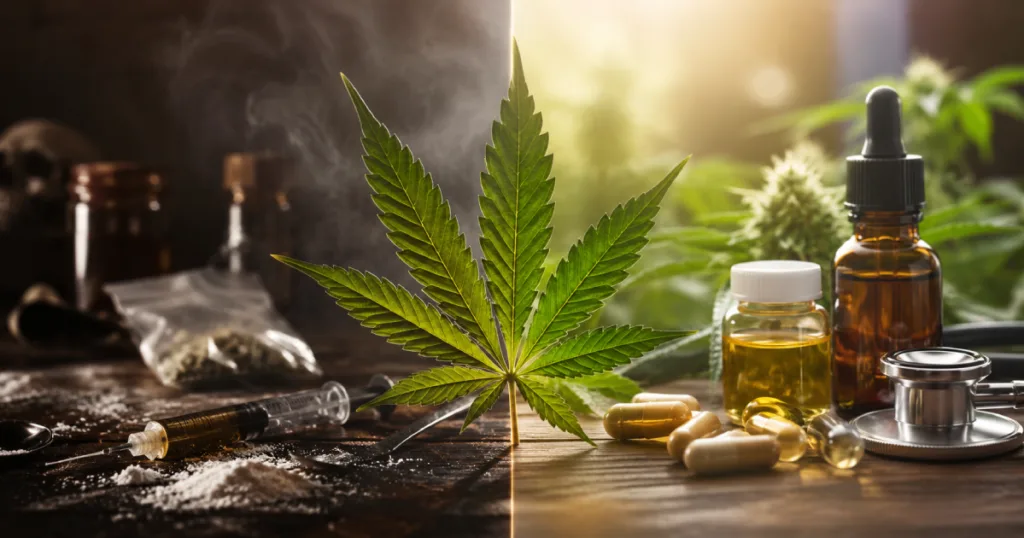
Marijuana can be discussed as both a drug and a medicine, depending on the product and the context.
A medicine is still a drug. It is a drug used for a medical purpose.
That does not mean all cannabis products are medicines. It also does not mean every product sold as cannabis, marijuana, THC, or CBD has been approved to treat a medical condition.
The FDA states that it has not approved a marketing application for cannabis itself to treat any disease or condition. However, the FDA has approved one cannabis-derived prescription drug, Epidiolex, which contains cannabidiol, and three synthetic cannabis-related prescription drugs: Marinol, Syndros, and Cesamet. These approved products are available only with a prescription from a licensed healthcare provider.
That means several things can be true at once:
- Weed is a drug.
- THC is a drug compound that can cause intoxication.
- CBD is a cannabis compound that does not cause a high by itself.
- Some cannabis-related products are FDA-approved prescription medicines.
- Many cannabis products sold in adult-use or medical markets are not FDA-approved to treat diseases or conditions.
- State medical cannabis programs and FDA-approved prescription drug pathways are not the same thing.
This distinction matters because medical language can be misunderstood. If a product is sold at a dispensary, that does not automatically mean it is FDA-approved as a treatment. If a product contains CBD, that does not automatically mean it is risk-free. If a product is legal under state law, that does not automatically mean it is appropriate for every person.
Anyone considering cannabis for a health reason should speak with a licensed health care provider, especially if they take prescription medication, have a heart or mental health condition, are pregnant, are breastfeeding, or have a history of substance use disorder.
THC vs. CBD: Why the Difference Matters
The difference between THC and CBD is one of the most important cannabis basics.
THC is the compound most people associate with feeling high. It can alter mood, perception, memory, reaction time, and coordination. THC levels can vary widely across cannabis products. Some flower products have moderate THC levels. Some THC concentrates, weed vapes, and dabs may contain much higher THC concentrations.
CBD does not cause a high by itself. That is why many people think of CBD as gentler or less intoxicating. But CBD products still require caution. Labels can be confusing. Products may contain more or less CBD than advertised. Some may contain THC. Some may contain contaminants. Some may interact with medications.
The FDA notes that cannabis plants can be grown to produce varying concentrations of THC or CBD, and the agency has not approved other cannabis, cannabis-derived, or CBD products currently available on the market outside the approved prescription products it identifies.
For adults shopping legally, the practical lesson is simple:
Do not rely only on the word “cannabis.” Read the label. Check THC. Check CBD. Check serving size. Check the product type. Check whether the product has been tested under applicable state rules.
At Dank Mart, this is one of the reasons education matters. A person who understands THC and CBD is better prepared to compare products responsibly, ask better questions, and avoid assuming that all cannabis products feel the same.
Why Cannabis Can Feel Different for Different People
Cannabis does not affect everyone the same way.
One person may feel calm and relaxed. Another may feel anxious. One person may feel sleepy. Another may feel uncomfortable, paranoid, or too high. Some people may feel the effects quickly. Others may not feel much at first and may accidentally consume more than they intended, especially with edibles.
The CDC explains that how cannabis affects a person can depend on factors such as THC concentration, frequency of use, use with other substances, mode of use, previous experience, biology, and sex. Edibles and high-THC products can have delayed or unpredictable effects and may increase the risk of poisoning or overdose-like reactions.
This is why product type matters.
Smoking or vaping cannabis can produce effects faster than eating cannabis-infused food. Edibles can take longer to kick in and can last longer than expected. Concentrates may contain much higher THC levels than flower. Mixing cannabis with alcohol or other drugs can increase impairment.
So when people ask whether weed is a drug, the answer should include a practical reminder:
The strength, form, amount, timing, and person using it all matter.
What Are the Risks of Weed?
A helpful cannabis article should be honest about risks without using scare tactics.
Cannabis is not harmless. THC-containing cannabis can impair attention, memory, coordination, reaction time, and decision-making. It can cause anxiety, panic, paranoia, confusion, a fast heart rate, nausea, vomiting, or other uncomfortable effects when too much is used. CDC materials describe health risks associated with cannabis use regardless of how it is used, including cannabis use disorder, brain effects, driving impairment, lung concerns from smoking, and other health considerations.
Some risks are short-term. These may include:
- Feeling too high.
- Anxiety or panic.
- Confusion.
- Poor coordination.
- Slower reaction time.
- Distorted perception.
- Sleepiness or dizziness.
- Impaired judgment.
- Nausea or vomiting.
Some risks are related to frequent or heavy use. The CDC states that about 3 in 10 people who use cannabis may have some form of cannabis use disorder. Signs can include trying but failing to quit, craving cannabis, using cannabis despite problems at home, school, or work, giving up important activities, using in high-risk situations such as driving, needing more cannabis for the same effect, or experiencing symptoms when stopping.
Some risks are related to age. Developing brains are more vulnerable to cannabis effects, and the CDC notes that cannabis use before age 18 may affect how the brain builds connections for attention, memory, and learning.
Some risks are related to pregnancy or breastfeeding. CDC breastfeeding guidance says marijuana chemicals can pass through breast milk and advises breastfeeding mothers not to use marijuana or CBD products to limit potential risks to infants.
The point is not to frighten people. The point is to be accurate.
Weed is a drug because it can affect the body and mind. Like other drugs, it can carry risks, especially when used heavily, used too young, used with alcohol or other substances, used before driving, or used without understanding the strength and serving size.
Edibles, Concentrates, and Product Strength
Not all cannabis products work the same way.
A cannabis edible is very different from smoked flower. A tincture is different from a vape. A high-THC concentrate is different from a lower-THC product. This is one of the most important points for adults who are new to cannabis.
The CDC notes that cannabis edibles can take 30 minutes to 2 hours to produce intoxicating effects, which can lead some people to consume too much before the first serving fully takes effect. Edible effects can also last longer than expected, and THC strength may be difficult to measure or inaccurate on some labels.
That is why many cannabis education programs emphasize caution with edibles. A person may eat a cannabis-infused product, feel nothing after 20 minutes, take more, and then feel much stronger effects later.
Concentrates can create a different issue. THC oils and concentrates used in vaping and dabbing often involve highly concentrated forms of THC, and the CDC notes that they may contain additives or contaminants that can be harmful.
For adults who choose to use cannabis where legal, a safer approach starts with label-reading and patience:
- Check THC per serving.
- Check total THC per package.
- Do not assume all edibles are mild.
- Do not take more simply because the effects are delayed.
- Avoid mixing cannabis with alcohol or other substances.
- Store all products securely.
- Keep cannabis away from children and pets.
The CDC specifically recommends keeping cannabis products in a locked childproof container and out of the reach and sight of children and pets.
Does Legal Cannabis Mean Safe Cannabis?
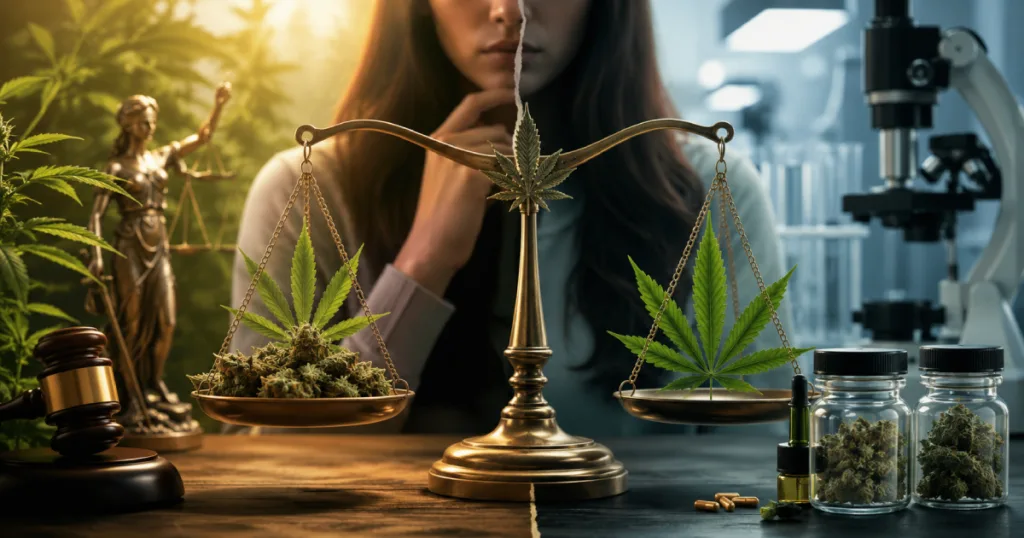
No. Legal cannabis does not automatically mean safe cannabis.
Legal means a product or activity is allowed under certain rules in a particular place. It does not mean the product has no risks. Alcohol is legal for adults, but it can still impair driving, interact with medications, and harm health. Prescription drugs can be legal and medically useful, but they can still cause side effects or be misused. Cannabis works the same way.
CDC’s cannabis FAQ says the fact that cannabis is legal in some states for medical or nonmedical adult use does not mean it is safe, and it lists potential negative health consequences tied to heavy use, pregnancy or breastfeeding, mental health, smoking, edibles, vaping, and concentrates.
Legal cannabis rules may include age limits, purchase limits, packaging requirements, testing rules, possession limits, medical card rules, dispensary licensing, taxes, and rules around public use or driving. These rules vary by state and can change.
That is why adults should always check local laws before buying, possessing, traveling with, or using cannabis.
A legal purchase in one place may not be legal in another. A state-legal product may still be treated differently under federal law. A product allowed for medical use may have different rules than adult-use cannabis. A product sold online may not meet the same standards as a regulated product sold through a licensed dispensary.
So the most responsible answer is:
Legal cannabis can give adults a regulated way to access cannabis where permitted, but it does not remove the need to understand THC, serving size, impairment, storage, health risks, and local law.
Can You Drive After Using Weed?
No. You should not drive after using cannabis.
Cannabis can impair skills needed for safe driving. The CDC states that cannabis affects areas of the brain involved in movement, balance, coordination, memory, and judgment. It can slow reaction time, reduce decision-making ability, impair coordination, and distort perception. Driving under the influence of drugs, including cannabis, is dangerous and illegal.
This is one of the clearest safety points in the entire cannabis conversation.
Even if cannabis is legal where you live, driving while impaired is not safe. It can put you, passengers, pedestrians, and other drivers at risk. Mixing cannabis with alcohol can increase impairment even more.
Plan. Use a designated driver who has not used cannabis or alcohol. Use a rideshare service, taxi, or other safe transportation option. Do not assume you are safe to drive because you “feel okay.”
What Adults Should Check Before Using Cannabis
For adults who choose cannabis where legal, education should come before use.
Before buying or using a cannabis product, ask these questions:
1. Is cannabis legal where I am?
Cannabis laws vary by state, territory, country, and local jurisdiction. Rules may differ for adult-use cannabis, medical cannabis, hemp-derived products, public use, possession limits, travel, workplace policies, and driving.
2. How much THC is in the product?
THC strength matters. A product with higher THC may produce stronger intoxication and greater impairment. Check THC per serving and total THC per package.
3. Is it an edible, flower, vape, tincture, or concentrate?
Method of use affects timing, intensity, duration, and risk. Edibles can be delayed. Smoked products can affect the lungs. Concentrates may be very strong.
4. Am I taking medication?
Cannabis may interact with some medications. CDC’s FAQ advises people to talk with a doctor about medications and possible side effects when mixed with cannabis.
5. Am I pregnant, breastfeeding, or caring for an infant?
CDC guidance encourages breastfeeding mothers to avoid marijuana and CBD products because chemicals can pass to infants through breast milk and secondhand smoke exposure.
6. Do I need to drive, work, or operate equipment?
Do not use cannabis before driving, working in a safety-sensitive role, or operating machinery.
7. Can I store it safely?
Keep cannabis locked, labeled, and away from children and pets. Cannabis Edibles can look like ordinary snacks or candy, which increases the risk for accidental ingestion.
What This Means for Dank Mart Customers
At Dank Mart, cannabis education comes first.
A trustworthy cannabis dispensary or cannabis website should do more than list products. It should help adults understand what they are looking at. That includes the difference between THC and CBD, the difference between flower and edibles, the importance of serving size, and the difference between legal access and risk-free use.
If you are exploring cannabis, Dank Mart encourages you to start with the basics:
- Learn what THC means.
- Learn what CBD means.
- Read product labels carefully.
- Compare product types before choosing.
- Understand your local laws.
- Avoid driving after cannabis use.
- Store cannabis securely.
- Talk with a licensed health care provider before using cannabis for medical reasons.
Dank Mart is here for adults who want clearer information before making a choice. Cannabis can be confusing, especially for beginners. Our goal is to make the language easier to understand so you can ask better questions and make more informed decisions where cannabis is legal.
The key takeaway is simple:
Do not let marketing, slang, or assumptions decide for you. Learn what the product is, what it contains, how it may affect you, and whether it is legal where you live.
Frequently Asked Questions
Is weed considered a drug?
Yes. Weed is considered a drug because it contains active chemical compounds that can change how your brain and body work. THC is the main cannabis compound responsible for the high and can affect memory, attention, coordination, reaction time, and decision-making.
Is marijuana the same as weed?
In everyday language, yes. Weed is a casual term for marijuana. Cannabis is the broader plant name, while marijuana usually refers to THC-containing cannabis flower, plant material, or products.
Is cannabis the same as marijuana?
Cannabis is the plant name. Marijuana is a common term often used for cannabis products that contain THC. People often use the words interchangeably, but cannabis is the broader term.
Is CBD a drug?
CBD is a cannabis compound, but it does not cause a high by itself. One purified CBD prescription medicine, Epidiolex, is FDA-approved for certain seizure disorders. However, the FDA has not approved most CBD products sold in stores or online to treat diseases or conditions.
Is marijuana medicine?
Some cannabis-related prescription medicines are FDA-approved, and many states have medical cannabis programs. However, the FDA has not approved cannabis itself as a treatment for any disease or condition.
Does legal cannabis mean cannabis is safe?
No. Legal cannabis does not mean risk-free cannabis. The CDC states that cannabis being legal in some states for medical or adult use does not mean it is safe, and health risks can still exist.
Can weed be addictive?
Some people can develop cannabis use disorder. CDC materials state that about 3 in 10 people who use cannabis may have some form of cannabis use disorder, and the risk can be higher for people who start young or use frequently.
Can you drive after using weed?
No. Cannabis can impair reaction time, decision-making, coordination, and perception. Driving under the influence of cannabis is dangerous and illegal.
Are edibles safer than smoking?
Not automatically. Edibles avoid smoke exposure, but they can take 30 minutes to 2 hours to produce effects, can last longer than expected, and can lead to accidental overconsumption.
Should pregnant or breastfeeding people use cannabis?
Pregnant or breastfeeding people should speak with a licensed health care provider. CDC breastfeeding guidance advises mothers not to use marijuana or CBD products because chemicals can pass to infants through breast milk or secondhand smoke exposure.
Final Takeaway: Is Weed a Drug?
Yes. Weed is a drug.
Marijuana is a drug because it contains active compounds that can change how your mind and body work. THC can cause a high and may impair memory, attention, coordination, reaction time, judgment, and perception. CBD does not cause a high by itself, but CBD products can still vary in quality, ingredients, legality, and safety.
But calling weed a drug is not the end of the conversation. It is the beginning of a better one.
The real questions are:
- What product is being used?
- How much THC does it contain?
- Is it legal where you live?
- Is it being used recreationally, medically, or for another reason?
- Could it interact with medication?
- Could it affect driving, work, school, or caregiving?
- Is it stored safely away from children and pets?
- Has the person using it talked with a health care provider when needed?
A smart cannabis conversation is honest about both sides. Cannabis can be legally available in many places. Some adults use it responsibly where permitted. Some patients use cannabis-related products under medical supervision or state programs. Some FDA-approved cannabis-related medicines exist. At the same time, cannabis can impair driving, affect the brain and body, interact with medications, create risks for certain groups, and lead to cannabis use disorder for some people.
At Dankmart.co, we believe adults deserve clear, accurate cannabis education before making decisions. Start with the facts. Read labels. Know your laws. Avoid driving after use. Store products safely. Ask questions. And when cannabis is connected to a health concern, speak with a licensed health care provider.
References:
Cleveland Clinic. (November 5, 2023). Marijuana (Cannabis): What It Is, Side Effects & Risks. Available at: https://my.clevelandclinic.org/health/articles/4392-marijuana-cannabis
DiLonardo, M. J., & Walker-Journey, J. Medically reviewed by Begum, J., MD. (October 31, 2023). CBD vs. THC: What’s the Difference? Available at: https://www.webmd.com/pain-management/cbd-thc-difference
Frysh, P., & Booth, S. Medically reviewed by Shruthi N., MD. (December 23, 2024). Marijuana Use and Its Effects. Available at: https://www.webmd.com/mental-health/addiction/marijuana-use-and-its-effects

About author




Add comment