
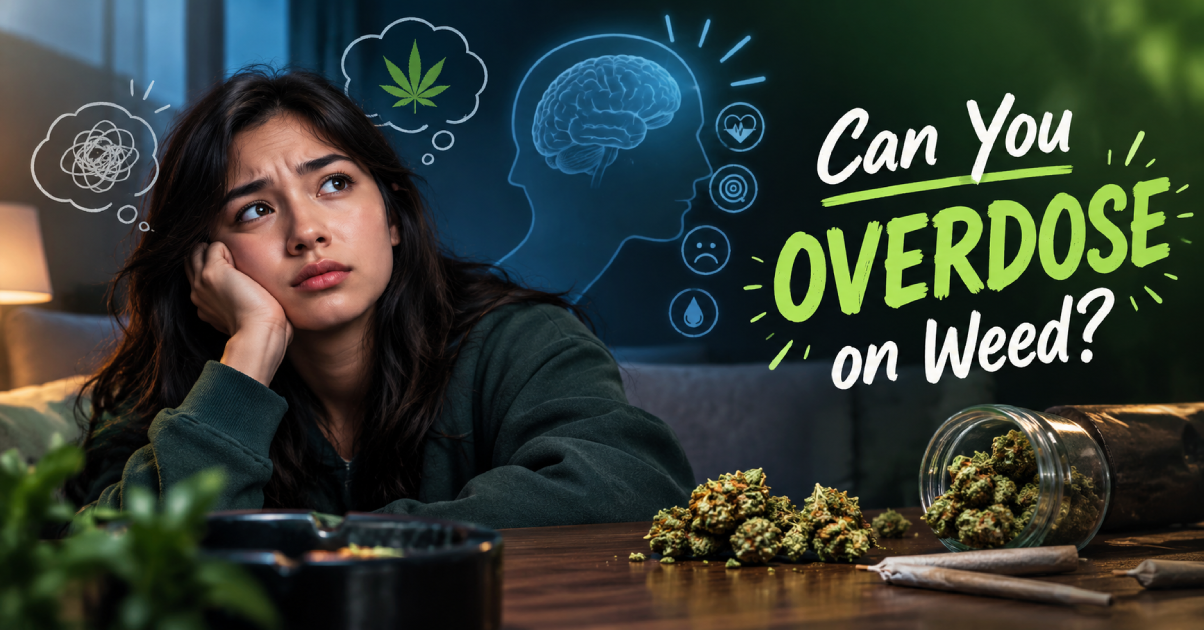
Can You Overdose on Weed? Symptoms, Risks, and What to Do
Cannabis has become more mainstream than ever. From medical use to recreational legalization, millions of people are using weed regularly—and many are asking the same question:
Can you overdose on weed?
You’ve probably heard conflicting answers. Some say it’s impossible. Others share intense experiences that sound downright scary.
The truth is more nuanced.
Yes, you can take too much cannabis. But it doesn’t work the same way as overdosing on alcohol, opioids, or other drugs.
In this in-depth guide, we’ll break down:
- What a weed overdose actually means
- Whether it can be fatal
- Symptoms to watch for
- What to do if it happens
- How to avoid it altogether
If you want a clear, honest, and science-backed answer—this is it.
What Does “Overdose” Really Mean?
An overdose happens when you take more of a substance than your body can comfortably handle.
With substances like alcohol or opioids, overdoses can suppress breathing, shut down organs, and become life-threatening very quickly.
Cannabis works differently.
The primary psychoactive compound in weed is THC (tetrahydrocannabinol). THC affects the brain’s cannabinoid receptors, which influence mood, memory, appetite, and perception—but it does not directly control breathing or heart function in the same way opioids do.
So when people talk about a “weed overdose,” they’re usually referring to taking too much THC and experiencing overwhelming side effects—not a fatal poisoning.
Can You Overdose on Weed?
Yes—but not in the way most people think.
You can absolutely consume too much cannabis and feel extremely uncomfortable. This is often called a “weed overdose” or “greening out.”
However:
👉 There are no confirmed deaths from cannabis alone due to overdose.
👉 The risk of fatal overdose is extremely low compared to alcohol or opioids.
That said, “not fatal” doesn’t mean “harmless.”
Taking too much THC can trigger intense physical and psychological symptoms that can feel frightening—especially for new users.
What Happens When You Take Too Much Weed?
When THC levels exceed your tolerance, your body and brain can become overstimulated.
The result? A mix of mental and physical symptoms that can range from mild discomfort to severe distress.
Common Symptoms of a Weed Overdose
🧠 Psychological Effects
- Anxiety or panic attacks
- Paranoia (“everyone is watching me”)
- Confusion or disorientation
- Feeling detached from reality
- Racing thoughts
❤️ Physical Effects
- Rapid heart rate
- Dizziness or lightheadedness
- Nausea or vomiting
- Sweating or chills
- Dry mouth
😵 Severe Reactions (Less Common)
- Hallucinations
- Extreme agitation
- Temporary loss of coordination
- Feeling like you’re dying (a common panic response)
These symptoms can feel intense—but they are temporary and will pass as THC leaves your system.
Why Do People Overdose on Weed?
Most weed overdoses are accidental, not intentional.
Here are the most common reasons:
1. Edibles Are Easy to Misjudge
Edibles are the #1 cause of cannabis overdoses.
Why?
- They take 30 minutes to 2 hours to kick in
- Effects last much longer than smoking
- People often think “it’s not working” and take more
Then everything hits at once.
👉 This delayed onset leads many users to unintentionally consume too much THC.
2. High-Potency THC Products
Modern cannabis is much stronger than it used to be.
Products like:
-
- THC Concentrates (wax, shatter)
- High-THC flower
can contain very high THC levels, increasing the risk of overconsumption.
3. Low Tolerance
If you’re new to cannabis, your body isn’t used to THC.
Even small doses can feel intense.
4. Mixing Cannabis with Alcohol
Combining weed with alcohol can amplify effects dramatically.
This combination is known to increase:
- Nausea
- Dizziness
- Loss of control
5. Lack of Dosage Awareness
Many people simply don’t know how much THC they’re consuming.
That’s why buying from trusted sources like Dank Mart, where products are clearly labelled and tested, can significantly reduce your risk.
How Long Does a Weed Overdose Last?
The duration depends on how you consume cannabis.
Smoking or Vaping
- Effects start within minutes
- Peak within 30–60 minutes
- Fade after 2–4 hours
Edibles
- Effects start in 30–120 minutes
- Peak after 2–4 hours
- Can last 6–8 hours or longer
In some cases, mild symptoms like fatigue or brain fog may linger into the next day.
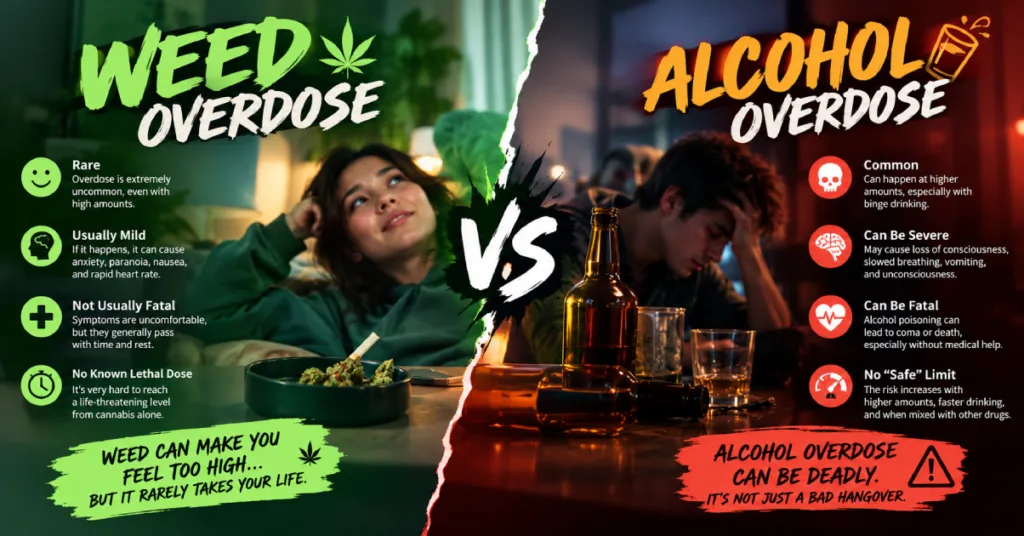
Weed Overdose vs Alcohol Overdose
Understanding the difference helps put things into perspective.
| Substance | Can suppress breathing? | Fatal overdose risk |
| Cannabis | No | Extremely rare |
| Alcoho | Yes | High |
| Opioids | Yes | Very high |
Cannabis does not typically shut down vital functions—but alcohol and opioids can.
That’s why overdoses from those substances are far more dangerous.
What Should You Do If You Take Too Much Weed?
If you think you’ve had too much THC, the most important thing to remember is:
👉 You are not in danger. The feeling will pass.
Here’s what helps:
1. Stay Calm
Remind yourself:
“This is temporary. I’ll be okay.”
Panic often makes symptoms worse.
2. Move to a Safe, Comfortable Space
Sit or lie down somewhere quiet and familiar.
Avoid overstimulation (loud music, crowds).
3. Hydrate
Drink water or juice.
Avoid alcohol—it will make things worse.
4. Practice Slow Breathing
Try this:
- Inhale for 4 seconds
- Hold for 4 seconds
Exhale for 6 seconds
This helps calm your nervous system.
5. Wait It Out
Time is the biggest factor.
Your body will naturally process the THC.
6. Ask for Support
If possible, have someone you trust stay with you.
When to Seek Medical Help
While rare, get help if you experience:
- Chest pain
- Trouble breathing
- Fainting
- Severe confusion
- Persistent vomiting
These symptoms may not be caused by cannabis alone.
Can a Weed Overdose Be Dangerous?
A weed overdose is not usually life-threatening, but it can still carry risks:
- Increased chance of accidents or falls
- Impaired judgment (e.g., driving)
- Panic attacks or severe anxiety
- Emergency room visits in extreme cases
Edibles and high-THC products are the most common contributors.
Is Weed Addictive?
Yes—cannabis can be addictive, though not everyone develops dependence.
This condition is called Cannabis Use Disorder (CUD).
Signs of Cannabis Addiction
- Using more than intended
- Difficulty cutting back
- Cravings
- Using despite negative consequences
- Irritability without it
Studies suggest around 30% of users may develop some level of dependence, especially with frequent or high-THC use.
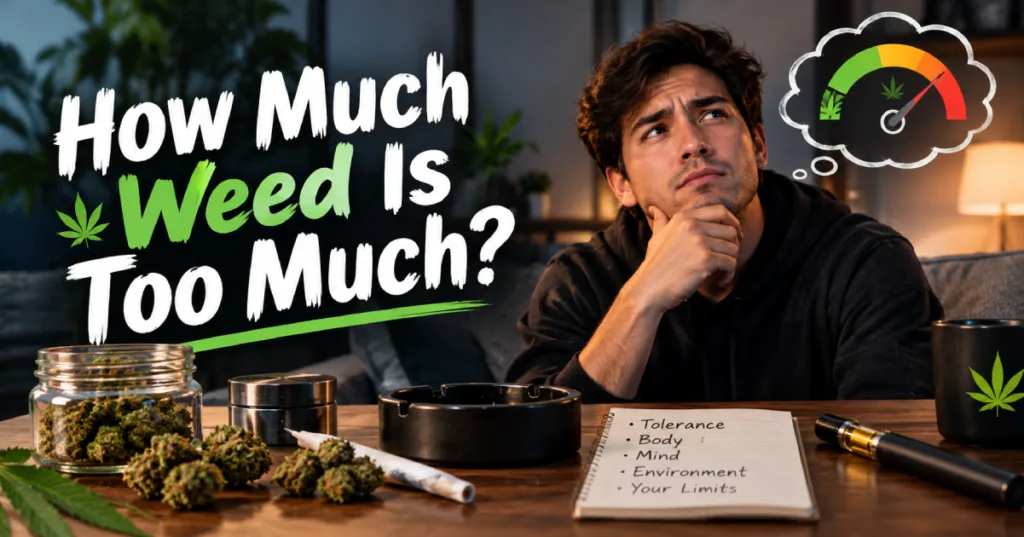
How Much Weed Is Too Much?
There’s no universal “safe dose.”
It depends on:
- Your tolerance
- Body chemistry
- THC strength
- Method of consumption
General Guidelines
Edibles
- Beginners: 2.5–5 mg THC
- Wait at least 2 hours before taking more
Smoking/Vaping
- Start with one small puff
- Wait 10–15 minutes
👉 The golden rule: Start low and go slow.
How to Avoid a Weed Overdose
Prevention is simple—but it requires awareness.
Smart Cannabis Use Tips
- Start with low doses
- Wait before re-dosing
- Read THC labels carefully
- Avoid mixing with alcohol
- Use in a safe environment
- Buy from trusted cannabis retailers like Dank Mart
Knowing exactly what you’re consuming makes a huge difference.
Frequently Asked Questions
Can you die from weed?
No confirmed cases of fatal overdose from cannabis alone.
What does a bad high feel like?
Anxiety, paranoia, nausea, and a racing heart are common.
How much THC is too much?
It varies, but beginners can feel overwhelmed at doses above 5–10 mg.
Should I go to the hospital?
Only if symptoms are severe or unusual (chest pain, fainting, etc.).
The Bottom Line
So, can you overdose on weed?
Yes, but it’s not the same as overdosing on other drugs.
You can take too much THC and feel extremely uncomfortable. But it’s very unlikely to be fatal.
Still, cannabis isn’t risk-free.
High doses—especially from edibles or potent products—can lead to intense side effects.
And while many people use weed without problems, it can be addictive for some.
Final Takeaway
If you choose to use cannabis:
👉 Start low
👉 Go slow
👉 Know your limits
👉 Choose quality, labelled products
Responsible use is what separates a good experience from a bad one.
Disclaimer: This article is for informational purposes only and does not constitute medical advice. Always consult a qualified healthcare professional for medical concerns.
References:
MedlinePlus. (n.d.). Marijuana Intoxication. Available at: https://medlineplus.gov/ency/article/007287.htm
UF Health. (n.d.). Marijuana Intoxication. Available at: https://ufhealth.org/conditions-and-treatments/marijuana-intoxication
Woodcock, S., PharmD. Reviewed by Palmer, C., MD. (Reviewed March 25, 2026). How to Get Unhigh: Tips for Coming Down From Weed. Available at: https://www.goodrx.com/well-being/substance-use/how-to-get-unhigh
Dr. Louisa Degenhardt, Ph.D, AO, FAA, FASSA, FAHMS


About author





Add comment