
No products in the cart.
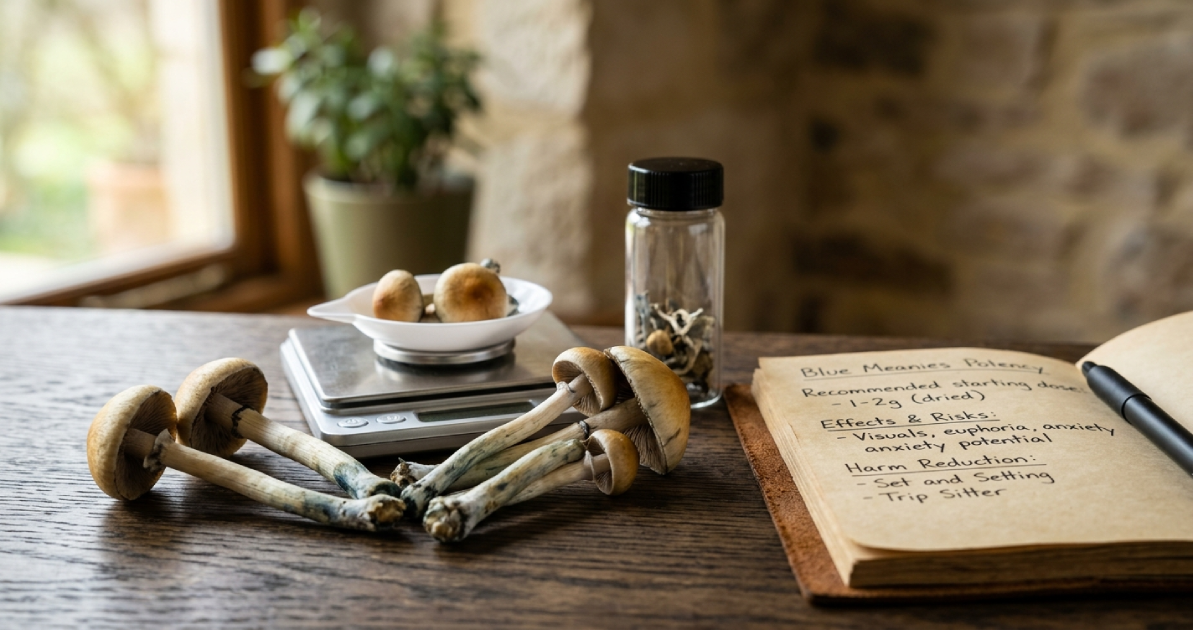
Blue Meanies Mushrooms: Effects, Dosage, Potency, Risks & Safety Guide (2026)
Blue Meanies mushrooms are among the best-known psilocybin mushrooms, recognized for their reputation as one of the more potent psychedelic varieties available. Whether you’re researching them out of curiosity, comparing different mushroom strains, or exploring educational information before purchasing mushroom products where legally available, understanding how Blue Meanies differ from other psilocybin mushrooms is essential.
One reason Blue Meanies generate so much interest is their reported strength. While potency varies from batch to batch, many experienced users consider certain Blue Meanies varieties stronger than the average Psilocybe cubensis strain. This has made them a frequent topic of discussion in psychedelic communities and educational resources.
However, potency is only one part of the story. Individual factors such as metabolism, body chemistry, dosage, environment, and mindset all influence the overall experience. No two experiences are exactly alike, and no two mushroom harvests contain identical concentrations of naturally occurring compounds.
In this comprehensive guide, you’ll learn:
- What Blue Meanies mushrooms are
- The difference between the two mushrooms is commonly called “Blue Meanies”
- Why they’re considered potent
- Typical dosage ranges
- How psilocybin affects the brain
- Common effects and possible side effects
- The importance of set and setting
- Microdosing explained
- Blue Meanies vs. B+ mushrooms
- Blue Meanies vs. shroom edibles
- Safe storage practices
- Current scientific research
- Frequently asked questions
At Dank Mart, we believe informed customers make better decisions. This guide is intended for educational purposes and should not be considered medical advice. Always follow local laws and consult a qualified healthcare professional if you have questions about your health or medications.
What Are Blue Meanies Mushrooms?
The name Blue Meanies actually refers to two different psilocybin mushrooms, which often confuses people.
1. Panaeolus cyanescens
The original Blue Meanies are Panaeolus cyanescens, a naturally occurring mushroom species found in tropical and subtropical climates worldwide.
This species has earned a reputation for exceptionally high psilocybin concentrations compared with many other psychedelic mushrooms. Because of this, experienced users often approach this species with greater caution.
Characteristics include:
- Thin white stems
- Grey to white caps
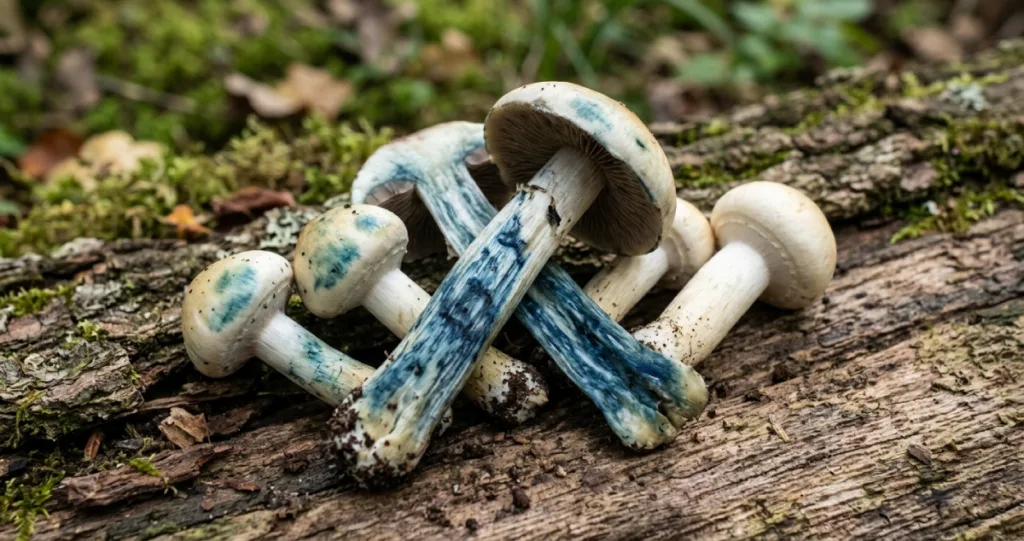
- Strong blue bruising when handled
- Growth in grassy environments
- Naturally high psilocybin content
2. Blue Meanies (Psilocybe cubensis strain)
The second mushroom, commonly called Blue Meanies,s is a cultivated strain of Psilocybe cubensis.
This is the variety most commonly sold by mushroom retailers and discussed online.
Compared with Panaeolus cyanescens, this version is generally:
- Easier to cultivate
- More widely available
- Larger in appearance
- More forgiving for growers
- Still considered above-average in potency compared with many cubensis strains.
When browsing educational articles or mushroom products, the term Blue Meanies usually refers to this Psilocybe cubensis strain unless otherwise specified.
Understanding this distinction helps avoid confusion when reading dosage recommendations or comparing experiences.
What Makes Blue Meanies Different?
Blue Meanies have developed a strong reputation within the mushroom community because many users report:
- More intense visual effects
- Stronger emotional changes
- Faster onset in some cases
- Higher potency than average cubensis mushrooms
- Deeper introspective experiences
It’s important to remember that these observations are largely anecdotal and can vary significantly depending on the mushroom species, growing conditions, storage, preparation, and individual biology.
Scientific testing has shown that psilocybin concentrations vary considerably even within mushrooms from the same harvest. For that reason, appearance alone cannot accurately predict potency.
Active Compounds in Blue Meanies
Like many psychedelic mushrooms, Blue Meanies naturally contain several psychoactive compounds, including:
- Psilocybin
- Psilocin
- Baeocystin (small amounts)
- Norbaeocystin (trace amounts)
After consumption, psilocybin is converted by the body into psilocin, the compound primarily responsible for the psychological and perceptual effects associated with psychedelic mushrooms.
Researchers believe psilocin influences serotonin receptors throughout the brain, particularly the 5-HT2A receptor, which plays an important role in perception, cognition, mood, and sensory processing.
This interaction temporarily alters communication between different brain networks, which may explain why many users experience changes in thought patterns, perception, and emotional processing.
What Do Shrooms Do?
One of the most common questions people ask is:
“What do shrooms actually do?”
Although every experience is unique, psilocybin commonly affects several areas of perception and cognition.
Many users report changes in:
- Visual Perception
- Colours may appear brighter.
- Patterns may seem to move.
- Textures often become more noticeable.
Closed-eye visuals may develop at higher doses.
Some people describe enhanced appreciation of artwork, landscapes, and natural environments
Sense of Time
Time distortion is extremely common.
Minutes may feel much longer.
Hours may seem surprisingly short.
Some users report temporarily losing track of chronological time altogether.
Emotional Processing
Psilocybin experiences often involve noticeable emotional changes.
People commonly report feelings such as:
- Curiosity
- Wonder
- Gratitude
- Calmness
- Connectedness
- Compassion
Others may experience:
- Anxiety
- Fear
- Confusion
- Emotional vulnerability
The direction of an experience is influenced by many variables, including dosage, mindset, and environment.
Thought Patterns
Many individuals describe:
- Increased introspection
- Creative thinking
- New perspectives
- Heightened imagination
- Reflection on personal relationships
Some users also report feeling more aware of thoughts that are normally ignored during everyday life.
These effects are temporary but can feel highly significant while they occur.
Why Are Blue Meanies Considered Strong?
The reputation of Blue Meanies largely comes from reports of above-average potency.
However, mushroom potency is influenced by numerous variables.
These include:
- Species
- Genetics
- Growing conditions
- Harvest timing
- Drying methods
- Storage conditions
- Age of the mushrooms
For example, Panaeolus cyanescens often contains substantially more psilocybin than many Psilocybe cubensis varieties.
Even within cultivated Blue Meanies cubensis, potency varies considerably from one batch to another.
This unpredictability is one reason educational resources consistently recommend approaching any unfamiliar mushroom cautiously rather than assuming its strength.
No visual characteristic—including blue bruising—can accurately indicate potency.
Blue Meanies Dosage Guide
There is no universally correct dosage for psychedelic mushrooms.
The amount that produces noticeable effects for one person may produce significantly different effects for someone else.
Variables influencing the experience include:
- Body weight
- Individual sensitivity
- Previous psychedelic experience
- Stomach contents
- Hydration
- Sleep quality
- Mental state
- Mushroom potency
The following ranges are commonly referenced for dried Psilocybe cubensis mushrooms and are intended for educational purposes only.
| Experience | Approximate Amount |
| Microdose | 0.1–0.3 g |
| Very Low | 0.3–0.5 g |
| Mild | 0.5–1 g |
| Moderate | 1–2 g |
| Strong | 2–3.5 g |
| Very Intense | 3.5 g+ |
Because Blue Meanies are often regarded as stronger than average cubensis mushrooms, many experienced users choose lower amounts compared with standard cubensis strains.
No dosage chart can predict an individual’s response.
How Long Do Blue Meanies Last?
The timeline of a psilocybin experience depends on several factors, including dosage, metabolism, whether food was recently consumed, and individual physiology.
Typical timelines include:
| Stage | Approximate Time |
| Onset | 20–60 minutes |
| Peak | 2–4 hours |
| Overall Experience | 4–8 hours |
| After-effects | Several additional hours |
Some individuals notice a quicker onset after consuming mushrooms on an empty stomach, although this may also increase the likelihood of nausea or stomach discomfort.
Even after the primary effects have subsided, some people report a lingering sense of calm, reflection, or mental fatigue for the remainder of the day.
Common Effects of Blue Meanies Mushrooms
Every psychedelic experience is unique.
However, commonly reported effects include:
Visual Changes
- Enhanced colors
- Geometric patterns
- Increased appreciation of nature
- Closed-eye imagery
- Altered perception of light
Emotional Changes
- Joy
- Curiosity
- Wonder
- Gratitude
- Reflection
- Increased empathy
Cognitive Changes
- Creative thinking
- Personal insight
- Altered sense of self
- Increased introspection
- Different perspectives on everyday experiences
The intensity of these effects generally increases as dosage increases, though individual responses vary considerably.
Possible Side Effects of Blue Meanies Mushrooms
Although many people focus on the desired effects of psilocybin mushrooms, it’s equally important to understand the potential side effects. Not every experience is pleasant, and even experienced users can encounter challenging effects.
Commonly reported side effects include:
- Nausea
- Upset stomach
- Increased heart rate
- Sweating
- Dilated pupils
- Dizziness
- Anxiety
- Confusion
- Restlessness
- Temporary paranoia
Higher amounts generally increase both the intensity of desired effects and the likelihood of unwanted reactions.
Psychological effects can also become overwhelming in unfamiliar or stressful environments. Feelings of fear, panic, or emotional discomfort are sometimes referred to as a “challenging experience” or “bad trip.”
Most effects resolve as the psilocybin wears off, but the experience can feel intense while it is occurring.
Who Should Avoid Psilocybin Mushrooms?
Psilocybin is not appropriate for everyone.
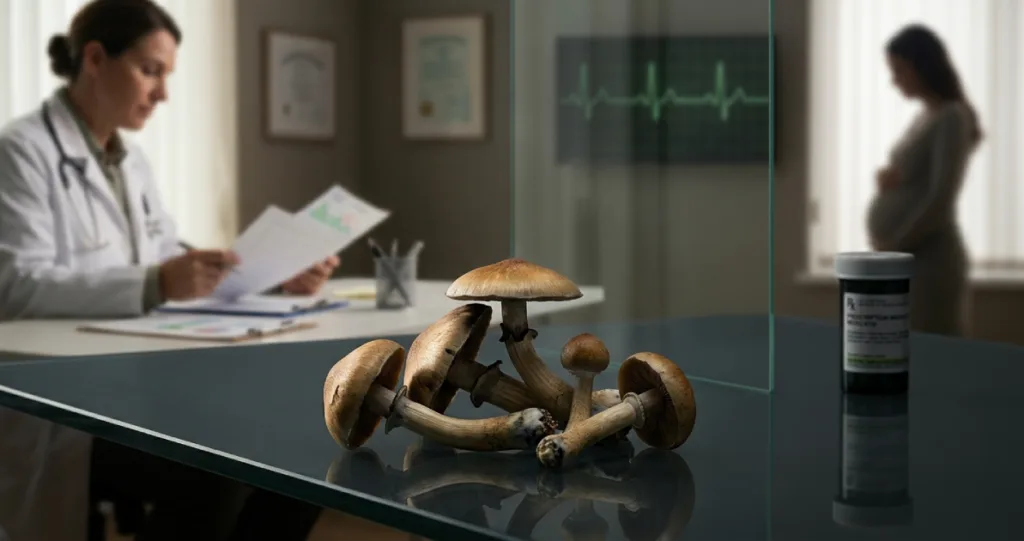
Individuals should avoid psychedelic mushrooms or seek medical advice before use if they:
- Have a personal or family history of psychotic disorders
- Have been diagnosed with schizophrenia or bipolar disorder
- Are pregnant or breastfeeding
- Take medications that may interact with serotonin pathways
- Have certain cardiovascular conditions
- Have been advised by a healthcare professional to avoid psychedelic substances
Because psilocybin can temporarily affect perception, judgment, and coordination, it should never be combined with driving or operating machinery.
Drug Interactions
Research on psilocybin interactions continues to evolve, but certain medications may alter its effects.
Examples include:
SSRIs
Some antidepressants may reduce or alter psychedelic effects.
MAOIs
These medications may increase or prolong psychedelic experiences and should only be combined under qualified medical supervision in approved research settings.
Alcohol
Alcohol may increase nausea, impair judgment, and reduce the clarity of the experience.
Cannabis
Some individuals report that cannabis intensifies visual effects, while others report increased anxiety. Responses vary widely.
Never stop prescribed medications without guidance from a qualified healthcare provider.
Why “Set and Setting” Matter
Experienced psychedelic educators frequently emphasize two important concepts: set and setting.
Set
“Set” refers to your internal state.
This includes:
- Mood
- Expectations
- Emotional wellbeing
- Stress levels
- Recent life events
Entering a psychedelic experience while feeling overwhelmed or emotionally distressed may increase the likelihood of a difficult experience.
Setting
“Setting” refers to your surroundings.
Examples include:
- Location
- Noise level
- Lighting
- People present
- Comfort
- Familiarity
Research and clinical studies suggest that mindset and environment can strongly influence the overall psychedelic experience.
What Is Microdosing?
Microdosing involves consuming a very small amount of psilocybin that is intended to remain below the threshold of noticeable psychedelic effects.
Typical educational references describe microdoses as approximately:
0.1–0.3 grams of dried mushrooms
People who practice microdosing often report goals such as:
- Increased focus
- Improved creativity
- Enhanced productivity
- Better mood
- Greater emotional balance
However, scientific evidence remains mixed.
Some studies have reported promising findings, while others have found little measurable difference compared with a placebo. Researchers continue to investigate potential therapeutic applications in controlled clinical settings.
Microdosing should not be viewed as a proven treatment for any medical condition.
Blue Meanies vs. B+ Mushrooms
The B+ mushroom is one of the most recognized Psilocybe cubensis strains and is often compared with Blue Meanies.
| Feature | Blue Meanies | B+ Mushroom |
| Species | Usually Psilocybe cubensis strain (sometimes Panaeolus cyanescens) | Psilocybe cubensis |
| Reputation | Above-average potency | Moderate potency |
| Experience | Often reported as more intense | Frequently described as balanced |
| Beginner Friendly | Often considered less forgiving | Commonly recommended for beginners |
| Appearance | Thick stems, blue bruising | Large caps, lighter colouration |
Neither strain is objectively “better.” Potency varies significantly from one harvest to another, and individual preferences differ.
Blue Meanies vs. Golden Teacher
Golden Teacher is another well-known Psilocybe cubensis variety.
Compared with Blue Meanies, Golden Teacher is often described by users as:
- Slightly milder
- More gradual in onset
- Popular among beginners
- Known for reflective experiences
Blue Meanies are more commonly associated with stronger visual effects and higher perceived potency, though individual experiences vary.
What Are Shroom Edibles?
Not everyone enjoys consuming dried mushrooms.
To improve convenience and taste, manufacturers have introduced products such as:
- Chocolate bars
- Gummies
- Capsules
- Teas
- Beverage mixes
These products are often referred to as shroom edibles.
However, not all products are identical.
Some contain genuine mushroom material.
Others may contain mushroom extracts or different psychoactive ingredients altogether.
Reading ingredient labels carefully and purchasing only from transparent, reputable retailers is an important part of making informed decisions.
Dried Mushrooms vs. Mushroom Edibles
Both formats have advantages.
Dried Mushrooms
Advantages
- Traditional format
- Minimal ingredients
- Easier to visually identify
Disadvantages
Earthy taste
- Texture, some people dislike
- Measuring can require a scale
Mushroom Edibles
Advantages
- Improved flavor
- Convenient
- Easy to transport
Disadvantages
- Ingredient quality varies
- Additional ingredients may be present
- Potency differs between manufacturers
Understanding exactly what a product contains is essential before consumption.
Why Do Psilocybin Mushrooms Turn Blue?
Many psilocybin-containing mushrooms develop blue bruising after being touched or damaged.
This occurs because naturally occurring compounds oxidize when exposed to air.
Although blue bruising is commonly associated with psilocybin-containing mushrooms, it does not reliably indicate potency.
Some highly potent mushrooms bruise lightly, while others bruise heavily.
Bruising alone should never be used to estimate strength.
Can Photos Identify Wild Mushrooms?
Many people search online for mushroom identification images.
While photographs can help demonstrate characteristics such as:
- Cap shape
- Stem thickness
- Gill color
- Bruising
They should never be relied upon to identify wild mushrooms.
Numerous toxic species closely resemble psilocybin mushrooms.
Proper identification requires extensive experience and, in some cases, microscopic examination.
Consuming unidentified wild mushrooms can result in severe poisoning or death.
Storage Tips
Proper storage helps preserve quality over time.
For dried mushrooms:
- Store in an airtight container.
- Keep away from direct sunlight.
- Avoid heat and moisture.
- Store in a cool, dark place.
- Consider food-safe desiccant packs to reduce humidity.
Poor storage may reduce quality and encourage mould growth.
Are Blue Meanies Legal?
The legal status of psilocybin mushrooms varies significantly depending on your country, state, province, or municipality.
Some jurisdictions prohibit possession and sale, while others have introduced limited decriminalization or regulated medical and research programs.
Before purchasing or possessing mushroom products, always review the laws that apply where you live.
This article is intended for educational purposes and does not provide legal advice.
Current Scientific Research
Interest in psilocybin has grown rapidly over the past decade.
Researchers are investigating its potential role in carefully controlled clinical settings for conditions including:
- Treatment-resistant depression
- Anxiety associated with serious illness
- Post-traumatic stress disorder (PTSD)
- Substance use disorders
Although early findings are promising, psilocybin is still being studied, and more large-scale clinical trials are needed before broader conclusions can be made.
Outside approved medical or research settings, psilocybin should not be considered an established treatment for any health condition.
Frequently Asked Questions
Are Blue Meanies stronger than regular cubensis?
Many people consider Blue Meanies stronger than the average Psilocybe cubensis strain. Potency varies significantly between harvests, growing conditions, and individual mushrooms.
What do shrooms do to your brain?
After consumption, psilocybin is converted into psilocin, which temporarily affects serotonin receptors involved in perception, mood, and cognition.
Is B+ better for beginners?
B+ mushrooms are commonly described as having moderate potency, making them a frequent recommendation for beginners. Individual responses still vary.
Are mushroom gummies the same as dried mushrooms?
Not always. Some gummies contain mushroom extracts, while others may contain different active ingredients. Always read product labels carefully.
Is microdosing scientifically proven?
Research remains ongoing. While some studies have reported encouraging findings, additional high-quality clinical research is needed.
Can Blue Meanies be identified by blue bruising alone?
No. Blue bruising may indicate oxidation of psilocybin-related compounds, but it cannot accurately measure potency or safely identify a mushroom species.
Learn More at Dank Mart
Whether you’re researching Blue Meanies mushrooms, comparing mushroom strains, learning about microdosing, or exploring different mushroom product formats, understanding the science, safety considerations, and product differences can help you make more informed decisions.
At Dankmart.co, we’re committed to providing educational resources alongside a carefully curated selection of mushroom-related products where legally available. We also offer premium cannabis flower, THC concentrates, Weed vapes, THC edibles, weed accessories, and other products from trusted brands, supported by clear product information to help customers shop with confidence.
Explore the Dank Mart collection to compare mushroom products, discover cannabis favourites, and browse our growing library of educational guides designed to help you stay informed.
References:
iNaturalist. (July 16, 2026). Panaeolus cyanescens. Available at: https://www.inaturalist.org/taxa/179100-Panaeolus-cyanescens
Srakocic, S. (Medically reviewed by Alisha D. Sellers, BS Pharmacy, PharmD). (December 14, 2022). What Are Shrooms? Available at: https://www.healthline.com/health/drugs/what-are-shrooms
Becker, M. L. (October 3, 2023). Small Doses of Mushrooms May Have Beneficial Effects on Mental Disorders. Available at: https://www.sdu.dk/en/nyheder/smaa-doser-svampe-kan-have-gavnlig-effekt-paa-psykiske-lidelser

About author

About Author
Dr. Louisa Degenhardt, Ph.D. AO, FAA, FASSA, FAHMS
Other posts by Dr. Louisa Degenhardt, Ph.D. AO, FAA, FASSA, FAHMSRelated posts
Whether you’re new to mushroom products or have experience with them, proper storage is one of the easiest ways to help maintain their quality over... Continue reading
Mental health treatment has evolved significantly over the past decade. Alongside advances in traditional psychotherapy and medication, researchers have renewed their interest in psychedelic-assisted therapy—particularly... Continue reading
Interest in psychedelic mushrooms has grown dramatically over the last decade. Whether you’re searching for magic mushroom pictures, curious about different mushroom species, or trying... Continue reading
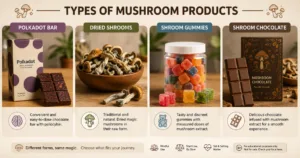
If you’ve spent any time researching mushroom chocolate products, chances are you’ve come across the Polkadot bar. With its colorful packaging and widespread online popularity,... Continue reading
CBD products have become one of the most popular ways for people to explore the benefits of hemp without experiencing the intoxicating effects commonly associated... Continue reading
Add comment