
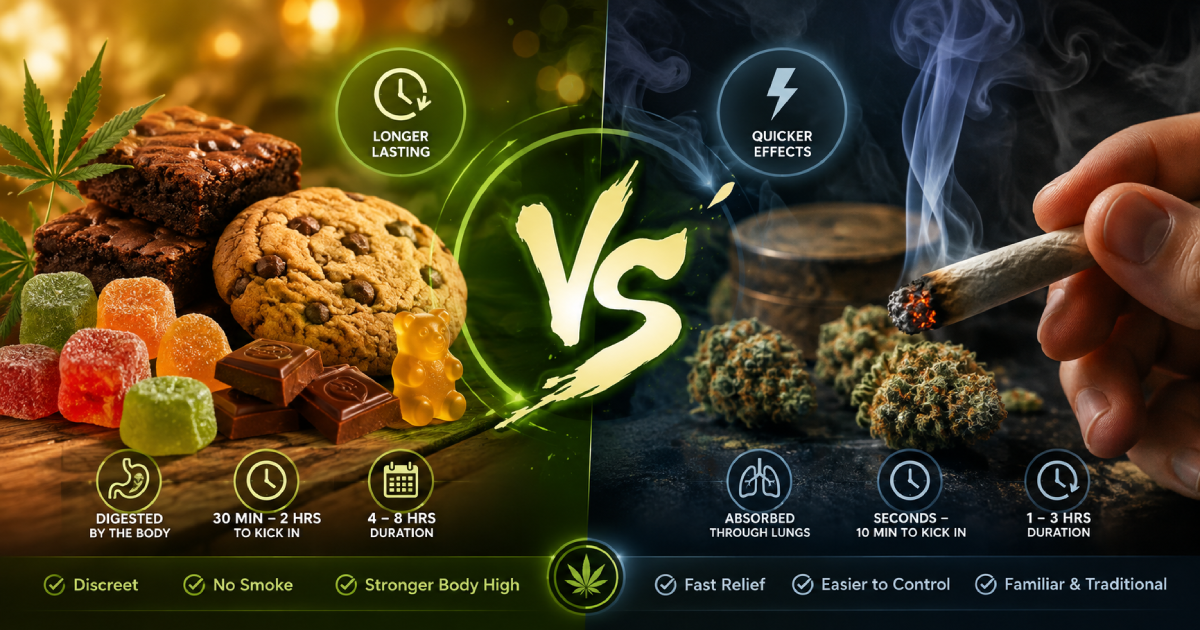
Weed Edibles vs Smoking: Which Is Better? A Complete Guide to Effects, Safety & Duration (2026)
If you’re new to cannabis—or you’re thinking about trying a different way to consume it—you’ve probably asked yourself: Are weed edibles better than smoking?
It’s one of the most common questions among both first-time users and experienced cannabis consumers. While smoking and edibles both deliver THC, they affect your body in very different ways. The way you consume cannabis influences how quickly you feel the effects, how intense they become, how long they last, and even the overall experience.
Some people enjoy smoking because it provides almost immediate effects and makes it easier to control dosage. Others prefer THC edibles because they don’t involve inhaling smoke and often produce a longer-lasting, more immersive experience.
So, which option is right for you?
The answer depends on your goals, your tolerance, your lifestyle, and how you want cannabis to fit into your day.
In this comprehensive guide, we’ll compare weed edibles vs smoking, explain how each method works, answer common questions like “Does eating weed get you high?” and “Are edibles safer than smoking?”, and help you choose the option that best matches your needs.
Whether you’re looking for premium flower, flavorful gummies, pre-rolls, concentrates, or vapes, Dank Mart offers a carefully curated selection of trusted cannabis products to suit every experience level.
Quick Comparison: Weed Edibles vs Smoking
If you’re short on time, here’s a side-by-side overview of the biggest differences.
| Feature | Smoking Cannabis | THC Edibles |
| Effects Begin | 2–10 minutes | 30–120 minutes |
| Peak Effects | 15–30 minutes | 2–4 hours |
| Duration | 2–4 hours | 6–12 hours or longer |
| Dose Control | Easy to adjust | More difficult due to delayed onset |
| Odor | Strong cannabis smell | Minimal odor |
| Lung Exposure | Yes | None |
| Best For | Fast relief, easier dosing | Long-lasting effects, discretion |
Neither method is universally “better.” Each offers unique advantages depending on your preferences and intended use.
Understanding How THC Works in the Body
To understand why smoking and edibles feel so different, it’s important to know what happens after THC enters your body.
THC (tetrahydrocannabinol) is the primary psychoactive cannabinoid found in cannabis. Once absorbed, it interacts with receptors throughout your body’s endocannabinoid system (ECS)—a network involved in regulating mood, appetite, memory, pain perception, sleep, and many other biological functions.
Although smoking and eating cannabis introduce the same cannabinoid, the path THC takes through your body changes nearly every aspect of the experience.
When You Smoke Cannabis
When cannabis is smoked or inhaled through a dry herb vaporizer, THC passes through tiny air sacs in your lungs called alveoli. From there, it rapidly enters your bloodstream before reaching your brain.
Because this process happens so quickly, most users begin noticing effects within just a few minutes.
The fast onset also makes smoking easier to control because you can gradually increase your dose one inhalation at a time.
When You Eat an Edible
Edibles follow a completely different route.
Instead of entering your bloodstream through the lungs, THC travels through your digestive system before reaching your liver.
Inside the liver, much of the THC is converted into 11-hydroxy-THC, a metabolite that research suggests crosses the blood-brain barrier efficiently and may produce stronger and longer-lasting psychoactive effects than inhaled THC.
This metabolic process explains why edibles usually take much longer to begin working but often feel more intense once they do.
Does Eating Weed Get You High?
Yes—absolutely.
One of the most frequently asked questions from beginners is:
Does eating weed get you high?
The answer is yes, but the experience is different from smoking.
Unlike inhaled cannabis, edibles take time to digest before THC enters your bloodstream.
This delay often catches first-time users off guard.
Many people assume their edible “isn’t working” after 30 or 45 minutes and decide to eat another serving.
Then, once both doses begin taking effect, they experience a much stronger high than they intended.
Patience is one of the most important aspects of consuming cannabis edibles safely.
Most experienced consumers recommend waiting at least two full hours before deciding whether another serving is necessary.
Why Do Edibles Feel Stronger Than Smoking?
People often assume smoking produces the strongest high because the effects arrive almost immediately.
In reality, many cannabis users report that edibles feel significantly more powerful.
The primary reason is the production of 11-hydroxy-THC during digestion.
Although everyone’s body processes cannabinoids differently, many users describe edible experiences as:
- Longer lasting
- More physically relaxing
- More immersive
- More noticeable mentally
- Slower to wear off
Factors such as metabolism, tolerance, body composition, food intake, product quality, and THC dose all influence the intensity of an edible.
This is why two people consuming the same edible may have completely different experiences.
Weed Edibles vs Smoking: The Biggest Differences
While both methods deliver THC, the overall experience differs in several important ways.
Speed of Onset
Smoking is the fastest way to experience cannabis effects.
Most people begin noticing changes within just a few minutes.
This rapid onset makes it ideal for individuals who want immediate effects or prefer adjusting their dose gradually.
Edibles, on the other hand, require patience.
Depending on digestion, metabolism, and whether you’ve recently eaten, onset typically occurs between 30 minutes and two hours.
For some individuals, especially after a large meal, it can take even longer.
Duration of Effects
Smoking generally produces a shorter experience.
Typical timeline:
Smoking
- Begins: 2–10 minutes
- Peaks: 15–30 minutes
- Lasts: 2–4 hours
Edibles produce much longer-lasting effects.
Typical timeline:
Edibles
- Begins: 30–120 minutes
- Peaks: 2–4 hours
- Lasts: 6–12 hours or more
For people seeking extended effects without repeated dosing, edibles are often the preferred choice.
Dose Control
Smoking offers one significant advantage:
Immediate feedback.
You can take:
- one puff
- Wait several minutes
- Evaluate how you feel, and decide whether you want more
Edibles don’t provide that luxury.
Once you’ve eaten a gummy or brownie, there’s no way to reduce the dose if you’ve taken more than intended.
That’s why beginners are usually advised to start with a low THC dose—typically 2.5 to 5 mg—and wait before consuming more.
Convenience and Discretion
For many consumers, convenience is one of the biggest reasons to choose edibles.
Smoking often involves:
- Rolling papers
- Lighters
- Ash
- Smoke
- A noticeable cannabis odor
Edibles eliminate nearly all of these concerns.
A gummy can be consumed quickly, produces little to no smell, and is easy to transport discreetly.
Because of this, THC gummies have become one of the fastest-growing segments of the legal cannabis market.
How Smoking Cannabis Works
Smoking remains one of the oldest and most widely used methods of cannabis consumption.
When cannabis flower is burned, cannabinoids are released in the smoke and absorbed through the lungs.
Common smoking methods include:
- Joints
- Pipes
- Bongs
- Blunts
- Dry herb vaporizers (which heat flower without combustion)
The biggest advantage of smoking is predictability.
Most users know within minutes exactly how the cannabis is affecting them.
That immediate feedback allows for gradual adjustments and often makes smoking easier for beginners than people expect.
However, combustion also exposes users to smoke and byproducts created whenever plant material is burned.
For individuals who prefer to avoid inhaling smoke altogether, edibles provide an alternative route of consumption while still delivering THC.
How Weed Edibles Work
Cannabis edibles include nearly any food or beverage infused with cannabinoids.
Popular options include:
- Cookies
- Brownies
- Beverages
- Capsules
- Mints
Unlike smoking, edibles must move through the digestive system before THC reaches the bloodstream.
Several factors influence how quickly an edible begins working, including:
- Metabolism
- Body weight
- Recent food intake
- Individual tolerance
- The edible’s ingredients
- Total THC consumed
Because so many variables are involved, two identical gummies may feel different depending on when and how they’re consumed.
For many people, however, the longer wait is worth it because the effects typically last far longer than inhaled cannabis.
Whether you’re exploring premium cannabis flower or accurately labeled THC gummies, choosing high-quality products from trusted retailers like Dank Mart helps provide a more consistent and predictable experience.
Which Gets You Higher: Edibles or Smoking?
One of the biggest misconceptions about cannabis is that smoking automatically produces the strongest high simply because the effects begin almost immediately.
In reality, many experienced cannabis consumers report that edibles often feel stronger than smoking, even when the amount of THC consumed is similar.
The reason lies in how your body processes THC.
When cannabis is smoked, delta-9 THC enters your bloodstream directly through the lungs before traveling to the brain. While the effects appear quickly, they also begin fading relatively soon afterward.
Edibles take a completely different path.
After passing through your digestive system, THC is metabolized in the liver into 11-hydroxy-THC, a compound that many researchers believe crosses the blood-brain barrier more efficiently than inhaled THC.
For many users, this results in:
- A stronger body sensation
- More intense cerebral effects
- A longer-lasting high
- A slower decline after the peak
However, it’s important to remember that cannabis affects everyone differently.
Several factors influence how high you may feel, including:
- Your THC tolerance
- Body chemistry
- Metabolism
- Body weight
- Whether you’ve eaten recently
- The cannabinoid profile of the product
- Individual sensitivity to THC
Rather than asking which method is universally stronger, it’s more accurate to say that edibles often produce a longer and more intense experience, while smoking offers faster but generally shorter-lasting effects.
Are Edibles Safer Than Smoking?
Another common question is:
Are edibles safer than smoking?
The answer depends on what type of risk you’re considering.
Smoke Exposure
One advantage of edibles is that they eliminate exposure to smoke.
Whenever plant material is burned—including cannabis—combustion produces byproducts that are inhaled into the lungs.
For people who prefer not to inhale smoke, edibles provide an alternative method of consuming THC.
Risk of Overconsumption
While edibles avoid smoke inhalation, they introduce another challenge.
Because they take much longer to begin working, people sometimes consume additional servings before the first dose has taken effect.
This is one of the most common causes of uncomfortable eating experiences.
Taking too much THC may temporarily produce symptoms such as:
- Anxiety
- Rapid heart rate
- Confusion
- Dizziness
- Dry mouth
- Nausea
- Temporary paranoia
- Difficulty concentrating
Although these effects are usually temporary and not life-threatening for healthy adults, they can be unpleasant—especially for new cannabis users.
The safest approach is simple:
Start low. Wait patiently. Increase gradually if needed.
Which Method Is Better for Beginners?
Many first-time consumers assume edibles are easier because eating a gummy seems simpler than smoking.
Ironically, smoking often provides more control.
Here’s why.
Smoking
With smoking, you can:
- Take one puff
- Wait several minutes
- Evaluate how you feel
- Decide whether to continue
Because the effects appear quickly, it’s easier to avoid consuming more THC than intended.
Edibles
Edibles require patience.
Imagine a beginner eats a 10 mg gummy.
Thirty minutes later, they don’t feel anything.
They decide to eat another.
An hour later, both doses begin working.
Instead of experiencing a mild effect, they’ve now consumed 20 mg—far more than they originally intended.
This scenario happens surprisingly often.
For new users, many cannabis educators recommend beginning with approximately 2.5–5 mg THC and waiting at least two hours before considering another serving.
Remember that everyone processes THC differently.
A dose that feels mild for one person may feel significantly stronger for someone else.
Factors That Affect How Strong an Edible Feels
One reason people have dramatically different edible experiences is that many biological factors influence THC absorption.
Your Metabolism
People with faster metabolisms may begin feeling effects sooner than those with slower digestion.
Food Intake
Eating an edible on an empty stomach often results in a quicker onset.
After a large meal, digestion may slow considerably.
Body Composition
Body size and composition may influence how cannabinoids are processed and stored.
However, body weight alone does not reliably predict cannabis tolerance.
Individual Tolerance
Someone who consumes cannabis regularly will usually require more THC to achieve the same effects as someone with little or no experience.
Product Quality
Accurately labeled products from trusted retailers provide more consistent dosing.
Choosing premium cannabis products from established dispensaries like Dank Mart helps reduce uncertainty by providing clearly labeled THC content and products sourced from reputable brands.
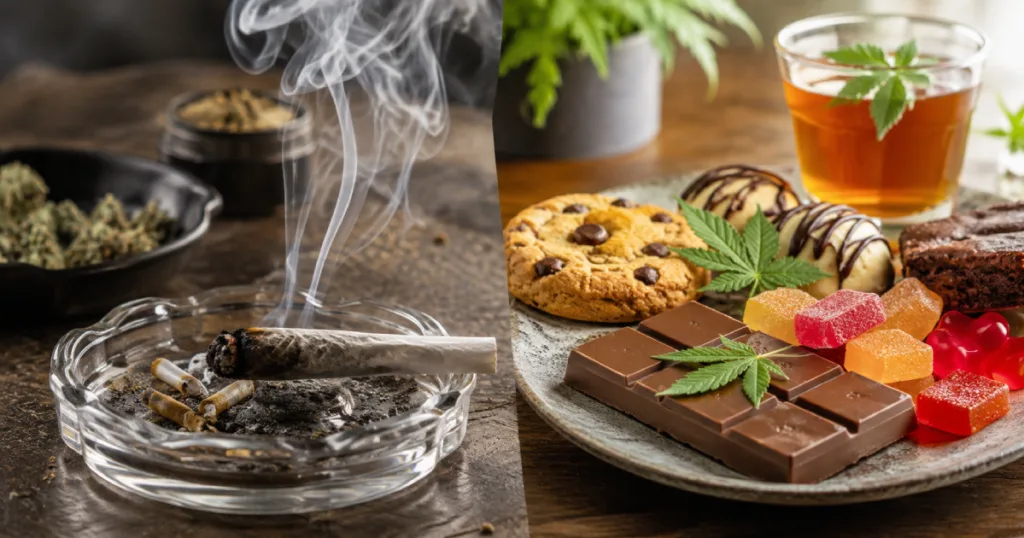
Smoking vs Edibles: Dose Control
Another major difference between these two consumption methods is how easily you can control your dose.
Smoking
Dose adjustment is gradual.
Each inhalation provides almost immediate feedback.
If you’re satisfied after one or two puffs, you simply stop.
Edibles
Each serving contains a predetermined amount of THC.
While this creates consistency in labeling, it doesn’t guarantee identical effects every time because digestion varies from person to person.
For beginners, measured-dose gummies are often preferable to homemade edibles because they provide much more predictable THC content.
Always read the product label carefully before consuming.
Which Lasts Longer?
Duration is one of the clearest differences between smoking and edibles.
Smoking Timeline
- Effects begin within 2–10 minutes
- Peak around 15–30 minutes
- Usually fade after 2–4 hours
Edible Timeline
- Effects begin within 30–120 minutes
- Peak after 2–4 hours
- Often lasts 6–12 hours
- Some users report lingering effects beyond 12 hours,s depending on dosage
If you’re planning your day, this difference matters.
Someone smoking cannabis in the evening may feel back to normal much sooner than someone consuming a high-dose edible.
Planning helps create a more enjoyable experience.
Can You Combine Smoking and Edibles?
Some experienced cannabis consumers choose to combine multiple consumption methods.
For example, someone might:
- Eat a low-dose gummy
- Smoke a small amount later
- Use a vape after the edible begins working
While this approach may increase overall effects, it also increases the likelihood of becoming more intoxicated than expected.
Because THC from multiple sources can overlap, combining methods should be approached cautiously—particularly by beginners.
If you’re new to cannabis, it’s generally best to try one consumption method at a time until you understand how your body responds.
Convenience and Discretion
Lifestyle often influences which cannabis products people prefer.
Smoking
Smoking usually requires:
- Cannabis flower
- Rolling papers or a pipe
- A lighter
- Time outdoors or in a suitable location
- Managing smoke and odor
Many people enjoy the ritual of preparing flowers, but it isn’t always convenient.
Edibles
Edibles offer several practical advantages.
They are:
- Easy to transport
- Discreet
- Smoke-free
- Pre-portioned
- Available in many flavors
Because they resemble ordinary snacks, gummies and chocolates are especially popular among adults seeking a more discreet cannabis experience.
Whether you’re looking for premium flower for immediate effects or delicious THC gummies for longer-lasting relief, Dank Mart carries a diverse range of cannabis products designed to fit different lifestyles and preferences.
Cost Comparison
Cannabis prices vary depending on your location, local regulations, potency, and product type.
Smoking flowers often has a lower upfront purchase price.
Edibles may cost more per package, but each serving contains a measured amount of THC, making it easier to calculate cost per dose.
Instead of comparing package prices alone, consider:
- Total THC content
- Number of servings
- Cost per milligram of THC
- Product quality
- Brand reputation
Higher-quality cannabis products often provide greater consistency, which many consumers find worthwhile.
Medical Cannabis Considerations
Medical cannabis patients often have different priorities than recreational users.
Some individuals choose inhaled cannabis because the rapid onset allows them to evaluate symptom relief within minutes.
Others prefer edibles because the longer duration may reduce the need for repeated dosing throughout the day.
The most appropriate method depends on several factors, including:
- Individual health goals
- Physician recommendations
- Product availability
- Local cannabis regulations
- Personal preference
Anyone considering cannabis for medical purposes should consult a qualified healthcare professional before beginning treatment or changing their consumption method.
Common Side Effects of Smoking and Edibles
Whether you choose smoking or edibles, consuming THC can produce a range of physical and mental effects. Most are temporary and depend on factors such as dosage, tolerance, and individual sensitivity.
Common side effects include:
- Dry mouth (“cottonmouth”)
- Dry or red eyes
- Increased appetite
- Slower reaction time
- Changes in coordination
- Drowsiness
- Short-term memory impairment
- Altered perception of time
- Mild dizziness
At higher doses, particularly with potent edibles, some people may also experience:
- Anxiety
- Restlessness
- Temporary paranoia
- Rapid heart rate
- Confusion
- Nausea
These effects usually fade as THC leaves the body, but they can last considerably longer with edibles than with smoked cannabis.
Because cannabis can impair judgment and reaction time, avoid driving, cycling, or operating machinery after consuming THC.
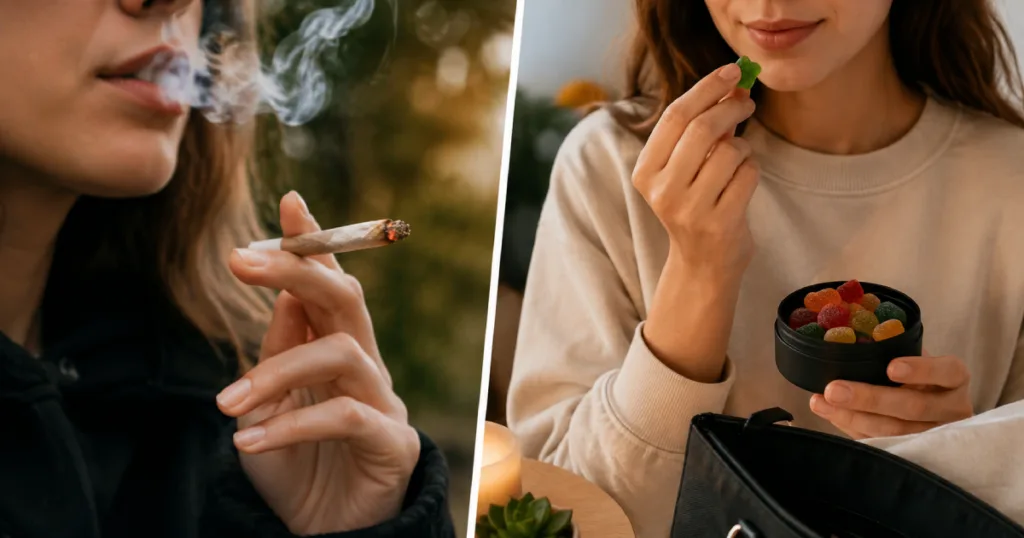
How to Choose Between Edibles and Smoking
There isn’t a single “best” way to consume cannabis.
Instead, consider your goals and lifestyle.
Choose Smoking If You Want:
- Fast-acting effects
- Easier dose adjustment
- A shorter experience
- Immediate feedback
- More flexibility throughout the day
Smoking is often preferred by experienced users who appreciate the ability to control their dose gradually.
Choose Edibles If You Want:
- Longer-lasting effects
- A smoke-free option
- Greater discretion
- Convenient pre-measured servings
- No noticeable cannabis odor
Edibles are especially popular among people who want effects that last for several hours without needing to consume cannabis repeatedly.
Ultimately, the right choice depends on your experience level, schedule, desired duration, and personal preferences.
Why Product Quality Matters
No matter how you consume cannabis, product quality plays a significant role in your overall experience.
High-quality products help provide greater consistency, clearer labeling, and a more predictable dose.
When shopping for cannabis, look for products that offer:
- Clearly labeled THC and CBD content
- Child-resistant packaging where required
- Ingredient transparency for edibles
- Third-party laboratory testing, where available
- Trusted brands with consistent manufacturing practices
- Fresh flowers that have been stored properly
Reliable dispensaries also make it easier to compare different product types and strengths so you can find an option that matches your comfort level.
At Dank Mart, customers can explore a wide selection of premium cannabis products, including flower, pre-rolls, vaporizers, concentrates, and accurately labeled THC edibles from trusted brands. Whether you’re trying cannabis for the first time or you’re an experienced consumer looking to explore new products, choosing quality can help create a more consistent and enjoyable experience.
Final Thoughts: Weed Edibles vs Smoking
When comparing weed edibles vs smoking, there isn’t a universal winner.
Both methods deliver THC, but they provide very different experiences.
Smoking offers:
- Rapid onset
- Easier dose control
- Shorter-lasting effects
- Immediate feedback
Edibles offer:
- Longer-lasting effects
- No smoke exposure
- Greater discretion
- Convenient, pre-measured servings
- A different metabolic pathway that many users describe as producing a stronger overall experience
If you’ve wondered, ed “Does eating weed get you high?”, the answer is yes. Because THC is processed differently during digestion, the effects usually take longer to appear but may last considerably longer than smoking.
If you’re asking, “Are edibles safer than smoking?”, each method has its own advantages and considerations. Edibles avoid inhaling smoke, while smoking allows users to adjust their dose more easily because the effects appear almost immediately.
Whichever method you choose, the keys to a positive cannabis experience remain the same:
- Start with an appropriate dose.
- Buy products from reputable sources.
- Be patient—especially with edibles.
- Consume responsibly.
- Give yourself plenty of time before driving or engaging in activities that require full attention.
Whether you’re interested in premium cannabis flower, flavorful gummies, pre-rolls, concentrates, or vaporizers, Dankmart.co offers a carefully selected range of products from trusted cannabis brands to help you find the option that best fits your preferences and experience level.
Explore the collection at Dank Mart and discover quality cannabis products designed to support a more informed, enjoyable, and consistent cannabis experience.
Frequently Asked Questions
Do edibles get you higher than smoking?
For many people, yes. Because THC is converted into 11-hydroxy-THC during digestion, edibles often produce stronger and longer-lasting effects than inhaled cannabis. Individual experiences vary depending on tolerance, metabolism, dosage, and other personal factors.
How long do edibles take to kick in?
Most cannabis edibles begin working within 30 minutes to two hours. The exact timing depends on factors such as metabolism, food intake, body chemistry, and the specific product consumed.
How long do the effects of edibles last?
Edible effects commonly last 6 to 12 hours, although higher doses may produce lingering effects that extend beyond that timeframe for some individuals.
Is smoking cannabis healthier than eating edibles?
Neither method is risk-free.
Smoking exposes the lungs to combustion byproducts, while edibles eliminate smoke exposure but carry a higher risk of accidental overconsumption because their effects take longer to appear.
The better choice depends on your priorities and personal circumstances.
Can you overdose on cannabis edibles?
Consuming too much THC is not generally considered fatal in healthy adults, but taking a very high dose may result in unpleasant symptoms such as anxiety, confusion, dizziness, nausea, and temporary paranoia.
Starting with a low dose and waiting before consuming more can help reduce the risk of overconsumption.
Are gummies better than smoking?
Neither option is objectively better.
Gummies provide longer-lasting, smoke-free effects with discreet consumption, while smoking offers faster onset and easier dose adjustment.
Your goals and preferences will determine which method is a better fit.
What’s a good edible dose for beginners?
Many experts recommend beginning with approximately 2.5–5 mg of THC and waiting at least two hours before deciding whether additional THC is needed.
Patience is especially important with edibles because delayed onset is one of the most common causes of overconsumption.
Can you smoke cannabis after taking an edible?
Some experienced consumers combine multiple consumption methods, but doing so can significantly increase overall intoxication.
If you’re new to cannabis, it’s generally best to use one method at a time until you understand how your body responds.
Author’s Note: This guide is intended for educational purposes only and should not be considered medical advice. Cannabis laws vary by jurisdiction, and products should only be purchased and consumed where legal. If you are considering cannabis for a medical condition or have concerns about potential interactions with medications, consult a qualified healthcare professional.
References:
Pietrangelo, A. Medically reviewed by Chen, J., MD, MBA. (Updated May 24, 2023). Effects of Cannabis on the Body. Available at: https://www.healthline.com/health/effects-of-cannabis-on-body
Editorial Staff. Edited by Sclar, K. Reviewed by Thomas, S., MD. (Updated September 4, 2025). Joints vs. Edibles: How Marijuana Affects the Body. Available at: https://drugabuse.com/blog/joints-vs-edibles-how-marijuana-effects-the-body/
Alberta Health Services. (n.d.). Using Cannabis and Tobacco Together. Available at: https://myhealth.alberta.ca/Alberta/Pages/Using-cannabis-and-tobacco-together.aspx
Dr. Louisa Degenhardt, Ph.D, AO, FAA, FASSA, FAHMS

About author


Add comment