
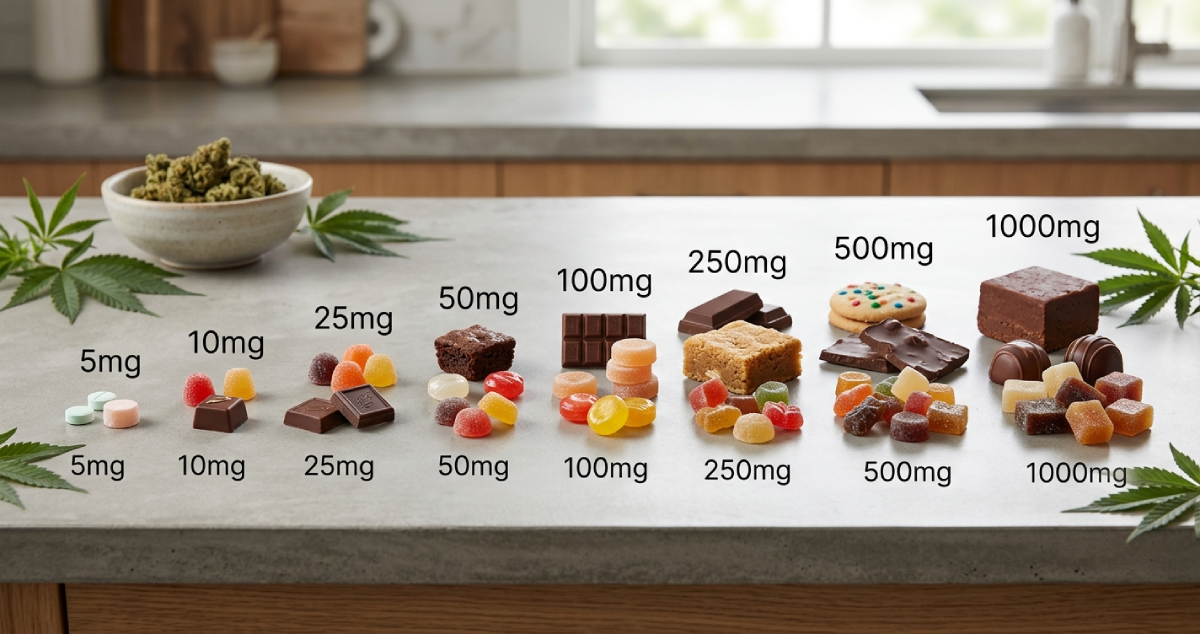
Edible Dosage Guide: From 5mg to 1000mg (Complete THC Edible Dosage Chart)
Cannabis edibles have become one of the most popular ways to enjoy THC. From gummies and chocolates to beverages and baked goods, edibles offer a discreet, smoke-free, and long-lasting cannabis experience.
But one question continues to come up for both beginners and experienced consumers:
How much THC should I take?
Whether you’re looking at a 5mg edible, wondering if a 10mg edible is strong, or trying to understand products labelled 1000mg edibles, choosing the right dosage is one of the most important parts of having a safe and enjoyable experience.
Unlike smoking or vaping cannabis, edibles take longer to work, and their effects can last much longer. Because of this delayed onset, many people accidentally consume more THC than they intended simply because they didn’t wait long enough for the first serving to take effect.
This comprehensive guide explains edible dosages from 5mg to 1000mg, what different THC strengths generally feel like, what factors affect your experience, and how to consume cannabis edibles responsibly.
Whether you’re trying THC for the first time or looking for higher-potency products, this guide will help you make informed decisions.
What Is an Edible Dosage?
An edible dosage refers to the amount of cannabinoids—most commonly delta-9 THC—contained in a cannabis edible.
THC (tetrahydrocannabinol) is the primary psychoactive cannabinoid responsible for the intoxicating effects commonly associated with cannabis.
Edible potency is measured in milligrams (mg).
For example:
- A 5mg edible contains 5 milligrams of THC.
- A 10mg edible contains 10 milligrams of THC.
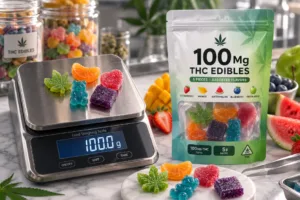
- A package labelled 100mg may contain ten individual 10mg servings.
- A package labelled 1000mg edibles usually refers to the total THC in the entire package—not a single serving.
One of the most important things to check before consuming an edible is whether the listed THC amount applies to:
- one serving
- the entire package
This simple detail can make an enormous difference.
Why Edibles Feel Different Than Smoking Cannabis
Many people are surprised that edibles often feel stronger than smoking—even when consuming a similar amount of THC.
The reason comes down to how your body processes cannabis.
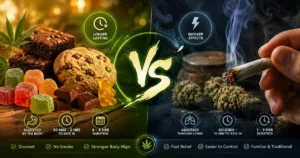
When cannabis is smoked or vaporised, THC enters the bloodstream through the lungs. Effects typically begin within minutes and gradually fade over a few hours.
Edibles follow an entirely different path.
After swallowing an edible, THC passes through your digestive system before being processed by the liver. During this process, THC is converted into 11-hydroxy-THC, a metabolite that may produce stronger and longer-lasting psychoactive effects for many people.
Because digestion takes time:
- Effects usually begin within 30–120 minutes
- Peak effects often occur 2–4 hours later
- Effects commonly last 6–8 hours
- Larger doses may last 10–12 hours or longer
This delayed onset is why patience is so important.
Many unpleasant edible experiences happen because someone thinks the edible “isn’t working” and takes another serving too soon.
What Affects Your Edible Experience?
No two people experience THC the same way.
Even if two people eat the same gummy, their experiences may be completely different.
Several factors influence how edibles affect you.
Cannabis Tolerance
Tolerance is often the biggest factor.
Someone who rarely consumes cannabis may notice significant effects from a 5mg edible, while a regular consumer may require much higher doses.
Tolerance can increase with frequent THC use and may decrease after taking a break.
Body Chemistry
Everyone processes cannabinoids differently.
Genetics, metabolism, digestive function, and liver enzymes all influence how quickly THC is absorbed and how intensely it is felt.
Food Intake
Eating before taking an edible can change how quickly it works.
Some people notice a slower onset after eating a large meal, while taking an edible on an empty stomach may lead to faster absorption.
However, everyone’s digestive system is different.
Product Type
Different edible formats can have slightly different onset times.
Examples include:
- THC Chocolates
- Cookies
- Brownies
- Beverages
- Capsules
Ingredients such as fats and sugars may influence digestion.
Individual Sensitivity
Some people are naturally more sensitive to THC than others.
Previous cannabis experience is helpful, but even experienced consumers occasionally discover that certain products affect them differently.
THC Edible Dosage Chart
The following chart provides a general overview of common edible dosage ranges.
| THC Dose | Typical Experience | Best For |
| 2.5mg | Very mild effects | Microdosing |
| 5mg | Mild intoxication | Beginner |
| 10mg | Noticeable high | Occasional users |
| 20–30mg | Strong effects | Experienced consumers |
| 50mg | Very strong | High tolerance |
| 100mg | Extremely potent | Very experienced consumers |
| 1000mg | Package total (usually multiple servings) | Portion into smaller doses |
Remember that these descriptions are general guidelines—not guarantees.
5mg Edible: A Common Starting Dose
For many adults who are new to THC, a 5mg edible is often considered a sensible place to begin.
Many regulated cannabis markets recognise 5mg as a lower-dose serving because it allows new consumers to evaluate how THC affects them without starting with a large amount.
A 5mg edible may produce:
- Mild relaxation
- Enhanced mood
- Increased appreciation of music or food
- Light body sensations
- Minimal impairment for some people
Some individuals may barely notice 5mg, while others may find it surprisingly effective.
Because individual responses vary, avoid comparing your experience with someone else’s.
Is a 10mg Edible Strong?
One of the most common questions online is:
“Is a 10mg edible strong?“
The answer depends largely on your cannabis experience.
A 10mg edible is one of the most common serving sizes sold in licensed cannabis markets.
For occasional consumers, 10mg often produces clearly noticeable psychoactive effects.
- You may experience:
- Euphoria
- Body relaxation
- Altered perception of time
- Increased appetite
- Dry mouth
- Sleepiness
For beginners, 10mg may feel much stronger than expected.
For experienced consumers, it may feel moderate.
This is why understanding your own tolerance matters far more than comparing dosages with friends.
20mg–30mg Edibles
Once THC reaches the 20–30mg range, effects become substantially stronger for many consumers.
This dosage range is generally better suited to people who already have previous experience with cannabis.
Possible effects include:
- Strong euphoria
- Heavy body relaxation
- Reduced coordination
- More intense sensory perception
- Longer-lasting intoxication
If you’ve never used cannabis before, starting in this range is generally not recommended.
50mg Edibles
A 50mg edible contains a significant amount of THC.
Many consumers purchase products containing 50mg but divide them into multiple smaller servings instead of consuming the entire amount at once.
Consumers with established THC tolerance may choose this dosage.
Beginners should not.
Understanding 100mg Edibles
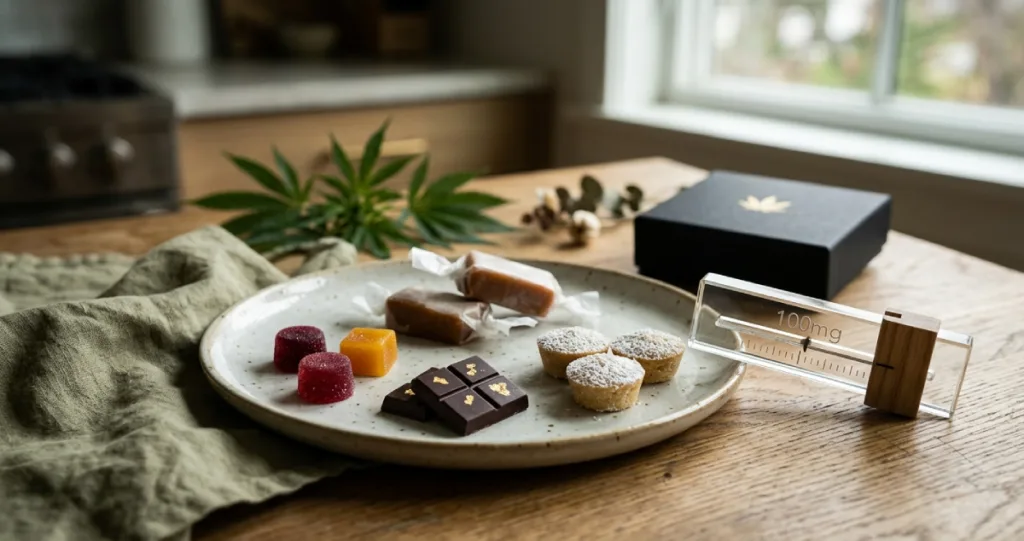
Many jurisdictions limit recreational edible packages to 100mg total THC, commonly divided into ten individual 10mg servings.
Consuming the full 100mg at once would represent a very high THC dose for most people.
Possible effects include:
- Intense intoxication
- Significant impairment
- Very long-lasting effects
- Increased likelihood of unwanted side effects
Always verify whether 100mg refers to:
- one serving
- the entire package
The difference is critical.
What Does 1000mg Mean on Edibles?
Products labelled 1000mg edibles often confuse new consumers.
In nearly all cases, 1000mg refers to the total THC contained within the package, not one serving.
Examples include:
- 100 gummies containing 10mg each
- 50 gummies containing 20mg each
- Multi-piece chocolate bars
- Large baked products are divided into servings
The package may sound intimidating, but what matters most is how much THC you consume in one serving.
Responsible manufacturers clearly label both:
- THC per serving
- THC per package
Should You Ever Eat an Entire 1000mg Edible?
For almost every consumer, the answer is no.
Consuming 1,000mg of THC at one time would likely produce extremely intense and prolonged intoxication.
Possible effects include:
- Severe anxiety
- Confusion
- Difficulty concentrating
- Dizziness
- Increased heart rate
- Extreme drowsiness
- Extended impairment
Some medical cannabis patients may consume larger doses under healthcare guidance, but this is not typical for recreational consumers.
If you purchase 1000mg products, treat them as multiple servings—not one serving.
How Long Should You Wait Before Taking More?
Patience is one of the most important rules of edible consumption.
Many people mistakenly believe an edible isn’t working because they don’t feel anything after 30 or 45 minutes.
In reality, digestion simply takes time.
As a general guideline:
- Wait at least 2 hours before considering another serving.
- Some individuals may require even longer before feeling the full effects.
- Avoid consuming multiple servings while waiting.
Taking additional THC too early is one of the most common reasons people consume more than intended.
What Happens If You Take Too Much THC?
Consuming more THC than intended can be unpleasant, but the effects usually improve with time.
Possible symptoms include:
- Anxiety
- Paranoia
- Dry mouth
- Rapid heart rate
- Drowsiness
- Dizziness
- Poor coordination
- Nausea
If this happens:
- Stay calm.
- Drink water.
- Rest somewhere comfortable.
- Avoid driving.
- Have a trusted friend stay with you if possible.
- Seek medical attention if symptoms become severe or if you are concerned about your safety.
Is 10mg of THCA a Day Too Much?
Another common question is:
“Is 10mg of THCA a day too much?”
Understanding the difference between THC and THCA is important.
THCA (tetrahydrocannabinolic acid) is the naturally occurring form of THC found in raw cannabis.
By itself, THCA is generally considered non-intoxicating.
When cannabis is heated through smoking, vaping, or cooking, THCA converts into delta-9 THC through decarboxylation.
Some products marketed as THCA may ultimately deliver active THC depending on how they are processed or consumed.
Whether 10mg is appropriate depends on:
- the product formulation
- whether THCA has been activated
- Your cannabis experience
- your tolerance
- your intended use
Always read the product label carefully.
Tips for Finding Your Ideal Edible Dosage
Finding your ideal dosage takes time.
Instead of making large jumps, increase slowly if needed.
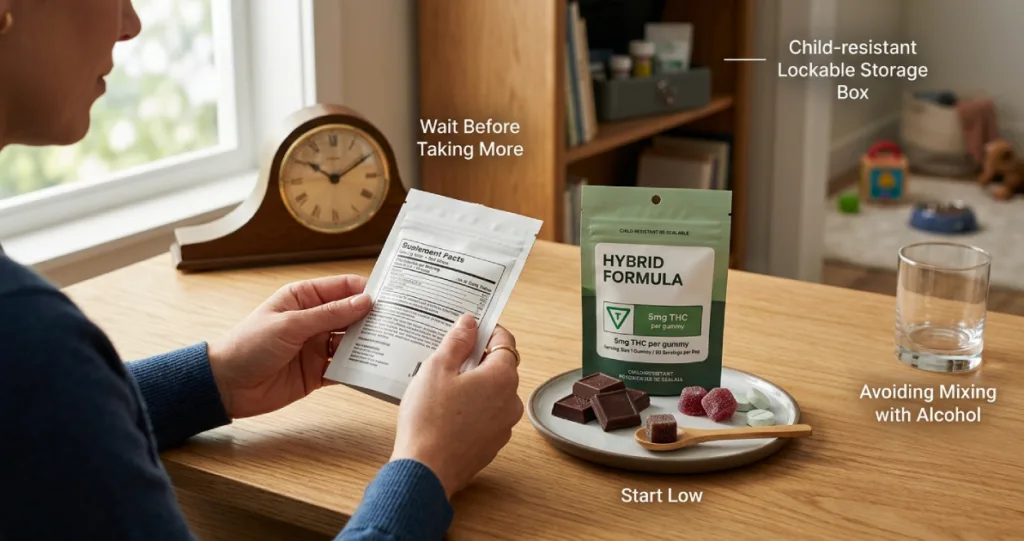
Helpful practices include:
- Start with a low dose if you’re inexperienced.
- Read THC labels carefully.
- Confirm serving size.
- Wait long enough before taking more.
- Avoid mixing THC with alcohol until you understand how each affects you.
- Store edibles away from children and pets.
- Keep products in their original packaging whenever possible.
Small adjustments generally lead to a more predictable experience than taking large amounts too quickly.
Choosing High-Quality Cannabis Edibles
Not every edible is manufactured to the same standard.
When shopping for cannabis products, look for:
- Clearly labelled THC content
- Consistent serving sizes
- Third-party laboratory testing
- Ingredient transparency
- Child-resistant packaging where required
- Batch information
- Reputable manufacturers
These features help consumers understand exactly what they are purchasing.
At Dank Mart, you’ll find a wide selection of cannabis edibles in various THC strengths, from beginner-friendly gummies to higher-potency multi-serving products. Clearly labelled potency information and a diverse product selection make it easier to choose edibles that match your experience level and personal preferences.
Frequently Asked Questions
Is a 5mg edible enough for beginners?
For many adults with little or no THC experience, a 5mg edible is often considered a reasonable starting dose. Individual responses vary, so it’s best to wait before taking more.
Is a 10mg edible considered strong?
A 10mg edible can produce noticeable psychoactive effects, particularly for new or occasional cannabis consumers. Regular users may experience it differently depending on tolerance.
Are 1000mg edibles meant to be eaten all at once?
No. Products labelled 1000mg typically contain many individual servings. Always follow the serving guidance provided on the product label.
How long do edibles last?
Effects often begin within 30 minutes to 2 hours, peak around 2 to 4 hours, and may last 6 to 8 hours or longer, depending on the dose and the individual.
Can I cut an edible in half?
Yes. Many gummies and chocolate bars are designed to be divided into smaller portions, making it easier to control THC intake. Check the manufacturer’s serving guidance whenever possible.
Why didn’t my edible work?
Some people metabolise THC more slowly than others. Food intake, metabolism, tolerance, and product type can all influence onset time. Avoid taking additional THC too quickly.
Can I mix cannabis edibles with alcohol?
Mixing alcohol and THC may intensify the effects for some people. If you’re unfamiliar with how either affects you, it’s generally best to avoid combining them.
Final Thoughts
Understanding edible dosage is one of the best ways to enjoy a more predictable cannabis experience.
For many beginners, a 5mg edible offers a manageable introduction to THC, while a 10mg edible is a common serving size that may produce noticeably stronger psychoactive effects depending on your tolerance. Higher-dose products,s such as 50mg or 100 mg edibles, es are generally better suited to consumers with previous cannabis experience, while products labelled 1000mg edibles almost always contain multiple servings rather than a single dose.
No matter your experience level, taking time to understand THC strength, serving sizes, and onset times can help you make more informed decisions and reduce the chances of consuming more than intended.
If you’re looking for accurately labelled, high-quality cannabis edibles, Dankmart.co offers a broad selection of gummies, chocolates, beverages, and other high-quality THC products in a variety of strengths. With clearly marked potency information and products designed for both new and experienced consumers, it’s easier to find options that align with your preferences and desired experience.
References:
Schroter, R. (Reviewed by Karla Robinson, MD). (Updated September 3, 2024). Can You Overdose on Weed With THC? Available at: https://www.goodrx.com/classes/cannabinoids/can-you-overdose-on-weed-with-thc
Government of British Columbia. (n.d.). Cannabis Edibles: Safe Use Fact Sheet. Available at: https://www2.gov.bc.ca/assets/gov/public-safety-and-emergency-services/public-safety/csu/cannabis-edibles-safe-use-fact-sheet.pdf
Canadian Centre on Substance Use and Addiction (CCSA). (2019). Cannabis: Inhaling vs. Ingesting – Risks and Effects (Infographic). Available at: https://www.ccsa.ca/sites/default/files/2019-06/CCSA-Cannabis-Inhaling-Ingesting-Risks-Infographic-2019-en_1.pdf
Dr. Louisa Degenhardt, Ph.D, AO, FAA, FASSA, FAHMS


About author



Add comment