
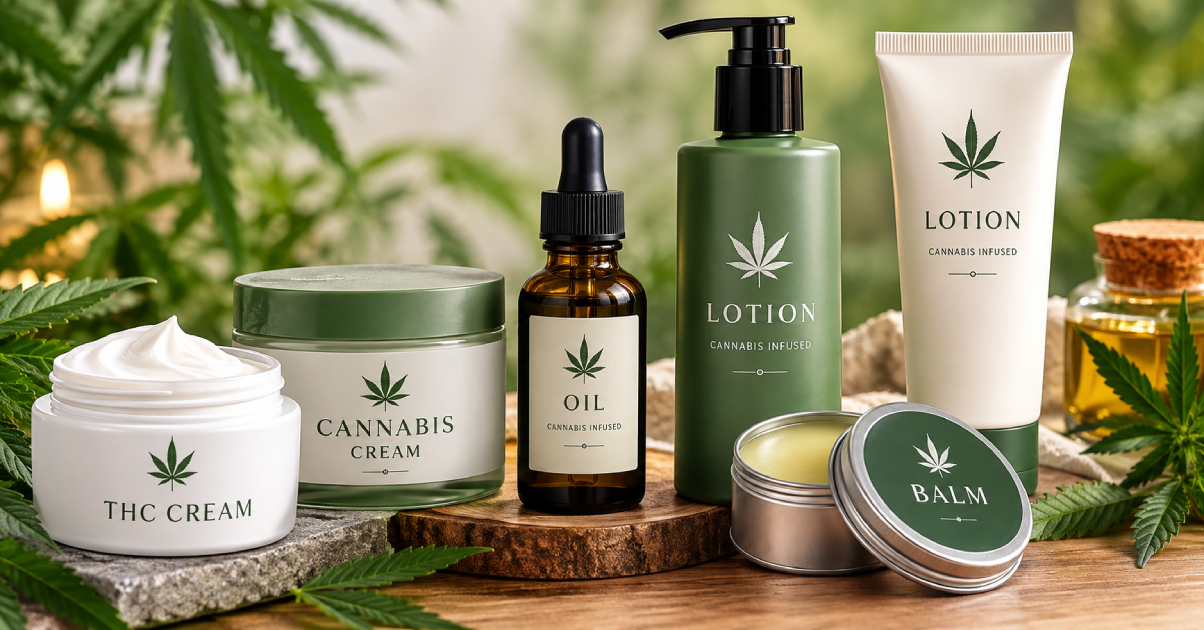
Cannabis Topicals Explained: THC Cream, Cannabis Cream, Oils, Lotions & Balms (Complete Guide)
Cannabis products have evolved far beyond traditional flower and pre-rolls. Today, adults shopping in legal cannabis markets can choose from a wide variety of products, including edibles, concentrates, vape cartridges, tinctures, and an increasingly popular category—cannabis topicals.
Unlike products that are smoked, vaporised, or eaten, cannabis topicals are designed to be applied directly to the skin. These products are available in many forms, including THC creams, cannabis lotions, balms, salves, body oils, roll-ons, and body butters. They appeal to adults who prefer a smoke-free, non-edible way to incorporate cannabis products into their routine.
If you’ve been wondering what makes THC cream different from cannabis oil, whether marijuana cream can produce intoxicating effects, or how to choose a quality topical, you’re in the right place.
This comprehensive guide explains everything you need to know about cannabis topicals—from the ingredients they contain to how they work, the different product types available, and what to look for when shopping in a legal cannabis market.
Whether you’re new to cannabis or simply exploring new product categories, this guide will help you make informed decisions.
What Are Cannabis Topicals?
Cannabis topicals are cannabis-infused products designed for application to the skin rather than being inhaled or consumed orally.
These products combine cannabinoids extracted from the cannabis plant with skincare ingredients such as moisturisers, carrier oils, botanical extracts, and waxes.
Common cannabinoids found in cannabis topicals include:
- THC (tetrahydrocannabinol)
- CBD (cannabidiol)
- CBG
- CBN
Other naturally occurring cannabinoids
Many products also include cannabis-derived terpenes, which contribute to the aroma and are naturally found in cannabis and many other plants.
Unlike inhaled or edible cannabis products, traditional cannabis topicals are generally intended to remain within the outer layers of the skin rather than entering the bloodstream in significant amounts.
Because of this, many adults choose cannabis creams and lotions when they want a topical cannabis product without the experience typically associated with inhaled or edible THC.
What Is THC Cream?
A THC cream is a cannabis-infused topical product formulated with tetrahydrocannabinol (THC) and moisturising skincare ingredients.
The cream is designed to spread easily across the skin while delivering cannabinoids within the topical formulation.
Depending on the manufacturer, THC creams may contain ingredients such as:
- Shea butter
- Cocoa butter
- Coconut oil
- Hemp seed oil
- Aloe vera
- Beeswax
- Vitamin E
- Sunflower oil
- MCT oil
- Cannabis extract
Some formulas also include naturally cooling or warming botanical ingredients like:
- Menthol
- Peppermint
- Camphor
- Eucalyptus
- Lavender
These ingredients are commonly used in many skincare products and help create different textures, scents, and application experiences.
THC creams are available in numerous cannabinoid strengths, ingredient blends, and consistencies, allowing consumers to choose products that match their personal preferences.
What Is Marijuana Cream?
The term marijuana cream is often used interchangeably with THC cream, although it generally refers to any topical product made from cannabis plants that naturally contain THC.
Depending on the formulation, marijuana creams may contain:
- THC only
- CBD only
- Balanced THC and CBD ratios
- Additional minor cannabinoids
Because manufacturers use different extraction methods and cannabinoid blends, it’s always worth reviewing the product label to understand exactly what is included.
What Is Cannabis Cream?
Cannabis cream is a broader term that includes virtually any cream containing cannabinoids derived from the cannabis plant.
Unlike THC cream, cannabis cream doesn’t necessarily indicate which cannabinoids are present.
Products marketed as cannabis cream may contain:
- THC
- CBD
- THC and CBD together
- CBG
- CBN
- Full-spectrum cannabis extract
- Broad-spectrum cannabis extract
- Cannabinoid isolates
As a result, cannabis cream has become one of the largest and most diverse categories within the cannabis topical market.
What Are Cannabis Topicals Made From?
Although formulations vary from one manufacturer to another, most cannabis topicals combine cannabinoids with ingredients commonly found in premium skincare products.
Understanding these ingredients can make it easier to compare products before making a purchase.
Cannabis Extract
Every cannabis topical begins with a cannabis extract.
Manufacturers may use:
- Full-spectrum cannabis extract
- Broad-spectrum extract
- Cannabis distillate
- Isolated cannabinoids
- Live resin-derived extracts (in select products)
The type of extract influences which cannabinoids and terpenes remain in the finished product.
Carrier Oils
Carrier oils help distribute cannabinoids throughout the product while improving texture and skin application.
Popular carrier oils include:
- Coconut oil
- Olive oil
- Sunflower oil
- Hemp seed oil
- Jojoba oil
- MCT oil
- Sweet almond oil
Different oils absorb differently, creating lighter or richer formulations depending on the product’s intended use.
Moisturizing Ingredients
Many cannabis creams focus on skin hydration as much as cannabinoid delivery.
Common moisturising ingredients include:
- Shea butter
- Cocoa butter
- Aloe vera
- Vitamin E
- Glycerin
- Mango butter
- Avocado oil
These ingredients help create smooth, easy-to-apply creams while supporting the overall feel of the product.
Botanical Ingredients
Many premium cannabis topicals include plant-based ingredients selected for fragrance or cosmetic purposes.
Examples include:
- Lavender
- Chamomile
- Peppermint
- Rosemary
- Citrus oils
- Eucalyptus
Some products combine multiple botanical extracts to create distinctive scent profiles.
Types of Cannabis Topicals
One of the biggest advantages of cannabis topicals is the wide variety of product formats available.
Although all are applied directly to the skin, each offers a slightly different experience.
THC Cream
Creams have a rich consistency that spreads easily and often include moisturising ingredients, making them popular for everyday skincare routines.
Cannabis Lotion
Lotions are generally lighter than creams and tend to absorb more quickly.
Many people prefer lotions because they leave less residue while covering larger areas of skin with ease.
Cannabis Oil
Cannabis-infused oils typically contain carrier oils blended with cannabis extracts.
They glide easily across the skin and are often selected by people who prefer massage-style application.
Cannabis Balm
Balms usually contain beeswax or other waxes that create a thicker texture.
Their consistency makes them easy to apply in smaller amounts without excessive spreading.
Cannabis Salve
Salves are semi-solid products that resemble balms but may contain different wax and oil combinations depending on the manufacturer.
Roll-Ons
Roll-on applicators provide a convenient way to apply cannabis topical products directly to the skin with minimal mess.
Many people appreciate the portability of roll-on bottles for use while travelling or on the go.
Body Butter
Body butters are among the richest topical products available.
They typically contain higher concentrations of moisturising ingredients such as shea butter and cocoa butter, creating a luxurious texture.
How Do Cannabis Topicals Work?
Human skin is much more than a protective barrier—it is a complex organ made up of multiple layers, specialised cells, and receptors that interact with naturally occurring compounds in the body.
Researchers continue studying the body’s endocannabinoid system (ECS), a signalling network involved in regulating many normal physiological processes. Scientific research has identified cannabinoid receptors within the skin, leading to ongoing interest in how cannabinoids interact with skin physiology.
When a traditional cannabis topical is applied, the cannabinoids are generally intended to remain within the outer layers of the skin rather than entering the bloodstream in significant amounts.
This distinction is one of the key differences between cannabis creams and products that are inhaled or consumed orally.
Exactly how a topical product behaves depends on several factors, including:
- The formulation
- The type of cannabinoids used
- The carrier ingredients
- The concentration of cannabinoids
- Whether the product is a traditional topical or a transdermal formulation
Understanding this distinction is important when choosing a cannabis topical, particularly if you’re comparing creams, lotions, oils, or patches.
Will THC Cream Get You High?
One of the most common questions people ask before trying a cannabis topical is whether THC cream can produce a “high.”
For most traditional cannabis topicals, the answer is generally no.
Unlike inhaled cannabis or THC-infused edibles, traditional creams, lotions, balms, and salves are formulated to work on the skin’s surface and outer layers rather than delivering cannabinoids into the bloodstream in significant amounts.
Because of this, most adults who use a traditional THC cream should not expect the intoxicating effects commonly associated with smoking or consuming THC.
However, there is one important exception worth understanding.
Traditional Topicals vs. Transdermal Cannabis Products
Although they may look similar, traditional cannabis topicals and transdermal cannabis products are formulated differently.
Understanding the difference can help you choose the product that best matches your preferences.
Traditional Cannabis Topicals
Traditional topicals include products such as:
- THC cream
- Cannabis lotion
- Cannabis balm
- Cannabis salve
- Cannabis body butter
- Cannabis massage oil
These products are intended for application to the skin and generally remain within the outer layers rather than delivering cannabinoids into the bloodstream.
For this reason, they are not typically intended to produce intoxicating effects.
Transdermal Products
Transdermal products are engineered differently.
Instead of remaining near the skin’s surface, transdermal patches and certain transdermal gels are specifically formulated to allow cannabinoids to pass through the skin and enter the bloodstream.
Because of this design, some transdermal THC products may produce systemic effects, depending on the formulation, cannabinoid content, and dosage.
Always read the product packaging carefully to determine whether a product is a traditional topical or a transdermal formulation.
THC Cream vs. CBD Cream
THC cream and CBD cream are often grouped because they’re both cannabis topicals, but they contain different cannabinoids.
| THC Cream | CBD Cream |
| Contains tetrahydrocannabinol (THC) | Contains cannabidiol (CBD) |
| Available where THC products are legally sold | Availability depends on local regulations |
| May contain THC only or blended cannabinoids | Usually CBD-focused |
| Traditional creams generally are not intoxicating | Non-intoxicating |
Some manufacturers also produce balanced formulas that combine both THC and CBD within the same topical product.
When comparing products, always review:
- cannabinoid content
- milligrams per container
- ingredient list
- third-party testing information
THC Cream vs. Cannabis Oil
Although both products are applied directly to the skin, they differ considerably in texture and formulation.
| THC Cream | Cannabis Oil |
| Thick consistency | Lightweight consistency |
| Often contains shea butter or aloe | Usually contains carrier oils |
| Leaves minimal shine | May feel slightly oily |
| Absorbs at a moderate rate | Spreads very easily |
| Popular for skincare routines | Popular for massage applications |
Neither option is necessarily better.
The ideal choice depends on:
- personal preference
- desired texture
- ingredient profile
- application style
Some consumers even keep both products on hand for different situations.
THC Cream vs. Cannabis Lotion
Many people use the terms interchangeably, but creams and lotions are formulated differently.
Cannabis Cream
Cannabis creams generally contain:
- richer moisturizers
- thicker consistency
- more body butter
- Higher oil content
Creams often remain on the skin slightly longer and provide a richer skincare experience.
Cannabis Lotion
Lotions usually contain:
- higher water content
- lighter consistency
- quicker absorption
- easier full-body application
Many adults prefer lotions during warmer weather because they absorb rapidly and feel less heavy.
Cannabis Balm vs. Cannabis Salve
These two products are among the thickest cannabis topicals available.
Although manufacturers use the names differently, both typically contain:
- beeswax
- plant oils
- cannabis extract
- botanical ingredients
Balms generally have a firmer consistency, while salves may feel slightly softer depending on the formulation.
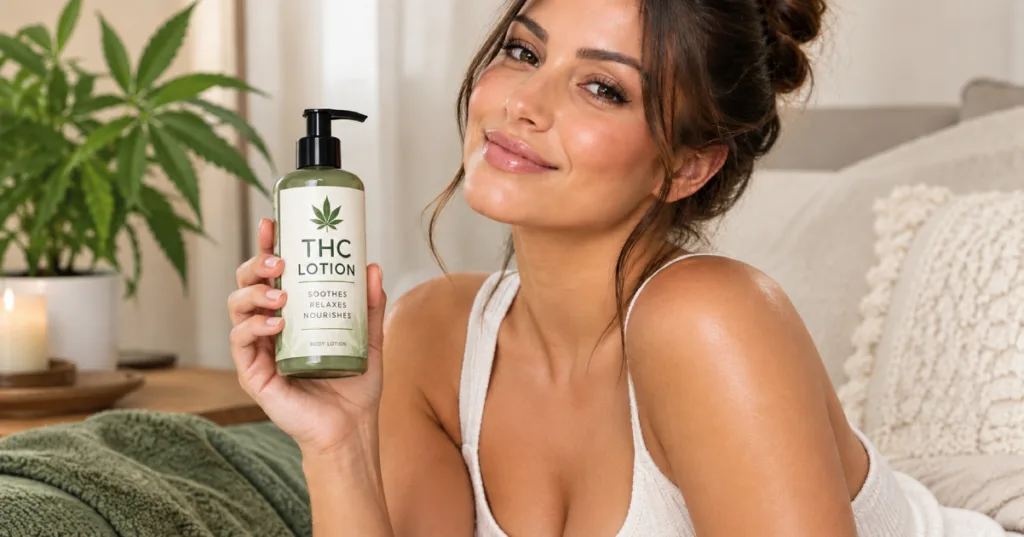
Applying cannabis cream is simple, but following a few basic steps can improve the overall experience.
1. Clean the Skin
Wash the intended application area with mild soap and water.
Dry thoroughly before applying the product.
2. Read the Label
Every manufacturer provides different instructions.
Check:
- suggested application method
- storage recommendations
- ingredient list
- expiration date
3. Apply a Small Amount
A little product often goes a long way.
Start with a modest amount and spread it evenly across the desired area.
4. Massage Into the Skin
Use gentle circular motions until the cream has been absorbed.
This also helps distribute the product evenly.
5. Wash Your Hands
Unless your hands were the intended application area, wash them after applying cannabis cream.
This helps avoid accidentally transferring product to your eyes or other sensitive areas.
How Often Can You Apply THC Cream?
Application frequency varies depending on the specific product.
Always follow the manufacturer’s instructions.
Factors that may influence how often someone chooses to apply a topical include:
- product consistency
- cannabinoid concentration
- skin type
- individual preference
If you’re trying a cannabis topical for the first time, beginning with a small amount allows you to become familiar with the product.
How Long Does THC Cream Last?
There are two different questions people often ask:
- How long does the cream stay on the skin?
- How long does the unopened product remain usable?
On the Skin
Most creams remain on the skin for several hours, although this varies depending on:
- skin type
- weather
- perspiration
- product ingredients
- amount applied
Reapplication schedules differ from one product to another.
Shelf Life
When stored properly, many cannabis creams remain usable for one to two years.
Always check:
- expiration date
- packaging recommendations
- storage instructions
Products that contain more natural ingredients may have shorter shelf lives than highly stabilised formulations.
How Should Cannabis Topicals Be Stored?
Proper storage helps preserve both texture and overall product quality.
For best results:
- Store in a cool, dry location.
- Keep containers tightly sealed.
- Avoid direct sunlight.
- Keep away from excessive heat.
- Do not leave products inside a hot vehicle.
- Store out of reach of children and pets.
Extreme temperatures can affect consistency, making creams thinner or causing balms to become excessively firm.
Can Cannabis Topicals Show Up on a Drug Test?
This is another question many consumers ask before purchasing THC cream.
Traditional cannabis topicals are generally considered unlikely to result in a positive drug test because they are not typically designed to deliver cannabinoids into the bloodstream in significant amounts.
However, several factors should be considered:
- Formulations vary by manufacturer
- Transdermal products are different from traditional topicals
- Research continues to evolve
- Individual circumstances differ
If workplace drug testing is a concern, it’s best to review your employer’s policies and speak with the product manufacturer or a qualified healthcare professional before using any THC-containing product.
Are Cannabis Topicals Waterproof?
Most cannabis creams and lotions are not fully waterproof.
Activities such as:
- swimming
- showering
- heavy perspiration
- frequent hand washing
may reduce the amount of product remaining on the skin.
If the product washes away, reapplication may be appropriate according to the manufacturer’s instructions.
Can You Travel With THC Cream?
Travelling with cannabis products depends entirely on local laws.
Before travelling:
- Review the cannabis regulations where you’re departing from
- Check the laws where you’re arriving
- Understand airline and transportation policies
- Avoid assuming products are legal simply because they’re topical
Crossing state or national borders with THC-containing products may have legal implications, even when cannabis is legal in both locations.
Are Cannabis Topicals Legal?
Cannabis laws vary significantly across the United States and other countries, making it important to understand the regulations where you live before purchasing any cannabis product.
Depending on your location, cannabis may be available through:
- Adult-use (recreational) cannabis programs
- Medical cannabis programs
- Both adult-use and medical markets
Neither
Products containing THC must comply with the laws of the jurisdiction where they are sold. These regulations often govern:
- Maximum THC content
- Packaging requirements
- Product testing
- Labeling standards
- Age restrictions
- Retail licensing
Before purchasing a THC cream or any other cannabis topical, verify that it is legal in your state or province and buy only from licensed retailers operating within applicable regulations.
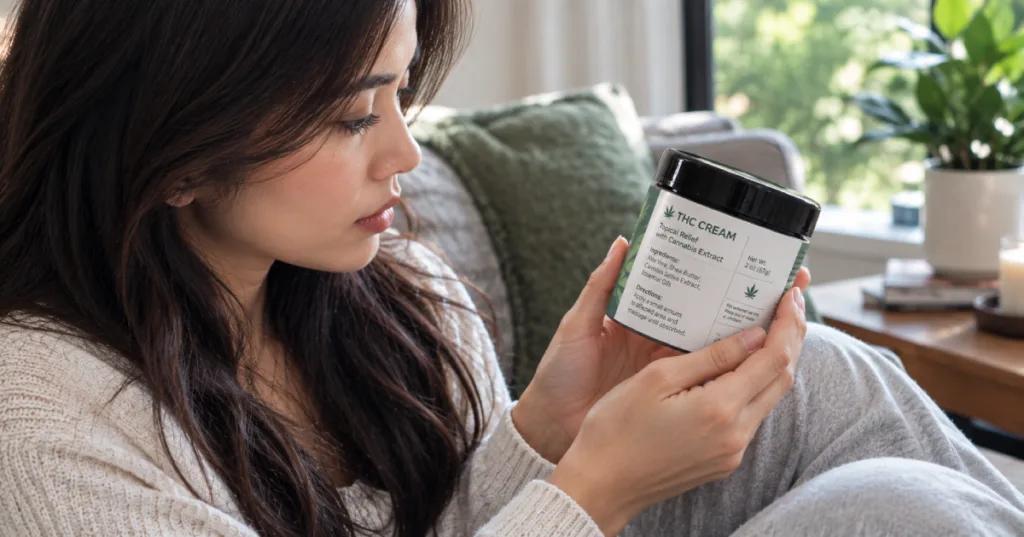
How to Read a Cannabis Topical Label
Not all cannabis creams are formulated the same way.
Learning how to read a product label can help you compare options more confidently and understand exactly what you’re purchasing.
Here are some of the most important details to review.
Cannabinoid Content
The label should clearly list the cannabinoids contained in the product.
Examples include:
- THC
- CBD
- CBG
- CBN
Some products contain only one cannabinoid, while others combine several into a balanced formula.
Total Cannabinoids
Many manufacturers list the total amount of cannabinoids in the container, often measured in milligrams (mg).
For example:
- 250 mg THC
- 500 mg CBD
- 1:1 THC: CBD ratio
This information makes it easier to compare products across different brands.
Ingredients
Quality products provide complete ingredient transparency.
Look for clearly identified ingredients rather than vague descriptions.
Premium formulas often contain:
- shea butter
- aloe vera
- coconut oil
- hemp seed oil
- jojoba oil
- beeswax
- vitamin E
Batch Number
Licensed cannabis products commonly include a batch or lot number.
This allows manufacturers to trace production runs if necessary.
Third-Party Testing
One of the best indicators of product quality is independent laboratory testing.
Reputable brands often verify:
- cannabinoid content
- residual solvents
- pesticides
- heavy metals
- microbial contaminants
Buying products that have undergone third-party testing provides additional transparency and confidence.
Expiration Date
Always check the expiration date before purchasing.
Although cannabis creams often remain stable for one to two years when stored properly, fresher products typically provide the best texture and consistency.
Choosing a Quality THC Cream
With so many products available today, selecting the right cannabis topical can feel overwhelming.
Fortunately, a few simple considerations can help narrow your options.
Buy From Licensed Retailers
Licensed cannabis retailers operate under regulations requiring product testing, labelling, and quality standards.
Purchasing from reputable dispensaries helps reduce the likelihood of receiving improperly labelled or low-quality products.
Look for Transparent Labels
Quality brands clearly identify:
- cannabinoid profile
- ingredient list
- batch information
- manufacturer details
- recommended storage
Transparency is often a sign of a manufacturer that values consistency and consumer education.
Review the Ingredient List
Many people focus only on THC content.
However, the skincare ingredients matter just as much.
Premium creams often include moisturising ingredients like:
- shea butter
- cocoa butter
- aloe vera
- vitamin E
- jojoba oil
Choosing ingredients that match your personal skincare preferences can improve your overall experience.
Consider Texture
Different products feel very different.
Ask yourself:
Would you prefer:
- a lightweight lotion?
- a rich cream?
- a massage oil?
- a firm balm?
- a portable roll-on?
Texture is largely a matter of personal preference.
Compare Brand Reputation
Established cannabis manufacturers often provide:
- educational resources
- detailed labeling
- consistent formulations
- responsive customer service
Reading product descriptions carefully can help you identify brands committed to quality.
THC Cream Buying Checklist
Before purchasing your next cannabis topical, use this quick checklist.
✔ Purchased from a licensed retailer
✔ Third-party lab tested
✔ Clearly labelled cannabinoid content
✔ Transparent ingredient list
✔ Batch number listed
✔ Expiration date included
✔ Child-resistant packaging
✔ Manufacturer information available
✔ Proper storage instructions provided
✔ Product matches your preferred texture
Checking these items can make comparing products much easier.
Common Ingredients Found in Cannabis Topicals
Many cannabis creams combine cannabinoids with premium skincare ingredients.
Here are some of the most common components you’ll encounter.
Shea Butter
Known for its rich texture, shea butter is widely used in moisturisers and body creams.
Cocoa Butter
Cocoa butter contributes a smooth consistency while adding a naturally pleasant aroma.
Aloe Vera
Aloe vera is commonly included because of its lightweight texture and compatibility with many skincare formulations.
Hemp Seed Oil
Although hemp seed oil contains little to no cannabinoids, it is frequently used as a nourishing carrier oil.
Coconut Oil
One of the most popular carrier oils in cannabis products, coconut oil creates a smooth application while blending well with cannabinoids.
Beeswax
Beeswax provides structure in thicker products like balms and salves.
Vitamin E
Vitamin E is frequently included in cosmetic products because it helps maintain product stability while supporting skin-conditioning formulations.
Jojoba Oil
Jojoba oil absorbs easily and is commonly found in premium skincare products.
Common Mistakes to Avoid
Even experienced cannabis consumers occasionally make mistakes when purchasing or using topicals.
Here are some of the most common ones.
Assuming Every Topical Is the Same
Creams, lotions, balms, oils, and transdermal products all behave differently.
Reading the label helps prevent confusion.
Ignoring the Ingredients
The cannabinoids are only part of the formula.
Carrier oils, moisturisers, and botanical ingredients all contribute to the product’s texture and overall experience.
Confusing Traditional Topicals With Transdermal Products
This is one of the most common misunderstandings.
Traditional creams generally stay within the outer layers of the skin.
Transdermal products are formulated differently and may deliver cannabinoids through the skin.
Buying From Unverified Sources
Licensed dispensaries typically sell products that have undergone regulatory testing and labelling requirements.
Purchasing from reputable retailers helps improve transparency.
Forgetting Proper Storage
Heat and direct sunlight may affect product consistency over time.
Always follow the storage recommendations printed on the packaging.
Can You Make Your Own Cannabis Cream?
Some cannabis enthusiasts enjoy creating homemade topicals using infused oils and cosmetic ingredients.
A simple homemade recipe may combine:
- coconut oil
- beeswax
- shea butter
- cannabis-infused oil
- essential oils
- vitamin E
While making your own cream can be an enjoyable project, homemade products often vary considerably in consistency and cannabinoid concentration.
Commercially manufactured products generally provide:
- standardized formulations
- clear labeling
- measured cannabinoid content
- consistent texture
- regulated manufacturing practices
For many consumers, these qualities make professionally produced topicals the more convenient choice.
Why Many Adults Choose Cannabis Topicals
Every cannabis consumer has different preferences.
Some adults prefer cannabis topicals because they offer an alternative to smoking, vaping, or consuming edibles.
Cannabis creams and lotions are often appreciated because they are:
- easy to incorporate into an existing skincare routine
- smoke-free
- vapor-free
- available in many formulations
- offered in a wide variety of scents and textures
- available with different cannabinoid profiles
With so many options available today, finding a product that matches your personal preferences has become easier than ever.
Exploring Cannabis Beyond Topicals
Cannabis topicals are just one part of today’s diverse cannabis market.
Depending on your interests and preferred consumption methods, you may also want to explore other categories available from licensed dispensaries.
Popular cannabis products include:
- Premium cannabis flower
- Pre-rolls
- Vape cartridges
- Disposable vapes
- Live resin
- Hash
- Wax concentrates
- Shatter
- THC gummies
- Cannabis edibles
- Infused beverages
- Tinctures
Each category offers a unique experience, allowing adult consumers in legal markets to choose products that best fit their individual preferences and lifestyles.
At Dankmart.co, you’ll find a carefully curated selection of premium cannabis products from trusted brands, including Cannabis flower, THC concentrates, pre-rolls, THC edibles, Weed Vapes, and cannabis topicals. Whether you’re exploring THC creams for the first time or expanding your cannabis collection, Dank Mart makes it easy to browse high-quality products from licensed producers.
References:
Leafwell. (n.d.). Cannabis Topicals: What They Are and How They Work. Available at: https://leafwell.com/blog/cannabis-topicals
Hess, C., Krämer, M., & Madea, B. (January 22, 2017). [Article]. Available at: https://www.sciencedirect.com/science/article/abs/pii/S0379073817300130
THC Health. (n.d.). Cannabis Products: Topicals. Available at: https://www.thchealth.com/cannabis-products/topicals/
Dr. Louisa Degenhardt, Ph.D, AO, FAA, FASSA, FAHMS
About author


Add comment