
What Does Sativa Do? Effects, Benefits, Risks & When to Use It (2026 Guide)
Ever wondered why some cannabis strains make you feel energized and creative, while others leave you relaxed and ready for sleep?
If you’ve heard the phrase “sativa gives you energy,” you’re not alone—but that’s only part of the story.
In reality, the effects of cannabis are more complex than simply “sativa vs indica.” Factors like THC levels, terpene profiles, and your individual body chemistry all play a role in how a strain makes you feel.
In this complete guide, you’ll learn:
- What sativa really is
- How it affects your mind and body
- The science behind its effects
- When to use it (and when not to)
- Potential risks and side effects
- How to choose the right sativa strain
Whether you’re new to cannabis or just looking to make smarter choices, this guide will help you understand what sativa actually does—and how to use it responsibly.
What Does “Sativa” Mean?
Cannabis sativa is one of the main classifications of the cannabis plant, alongside indica cannabis and hybrid cannabis varieties.
Traditionally, sativa plants are:
- Tall and thin with narrow leaves
- Grown in warm climates
- Slower to flower than indica strains
But for most users, what matters isn’t how the plant looks—it’s how it feels.
In modern cannabis culture, “sativa” usually refers to strains that produce:
- Energizing effects
- Mental stimulation
- Uplifting or euphoric moods
However, it’s important to understand that these effects aren’t guaranteed. The label “sativa” is a general guide—not a strict rule.
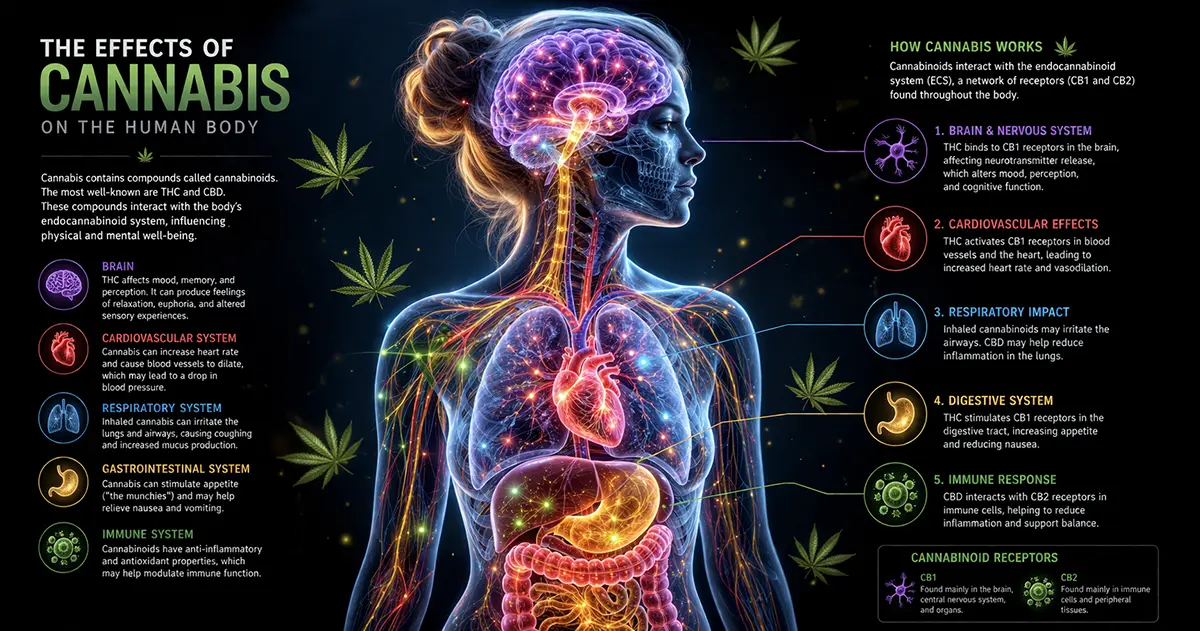
How Sativa Affects Your Brain and Body
To understand what sativa does, you need to look beyond the label and into the compounds inside the plant.
Cannabis contains hundreds of active compounds, but three play the biggest role:
1. THC (Tetrahydrocannabinol)
THC is the main psychoactive compound in cannabis. It interacts with your brain’s endocannabinoid system, influencing:
- Mood
- Memory
- Perception
- Focus
Higher THC levels are typically responsible for the “high” feeling associated with sativa strains.
2. CBD (Cannabidiol)
CBD is non-psychoactive and may help balance THC’s effects. Most sativa strains tend to have:
- Higher THC
- Lower CBD
This imbalance contributes to the more stimulating, cerebral experience.
3. Terpenes (The Real Game-Changer)
Terpenes are aromatic compounds that influence how a strain feels.
Common sativa-associated terpenes include:
- Limonene → Mood boost, stress relief
- Pinene → Alertness, focus
- Terpinolene → Uplifting, energetic effects
👉 This is why two “sativa” strains can feel completely different. The terpene profile often matters more than the label.
Common Sativa Effects (What You’ll Actually Feel)
While experiences vary, most users report the following effects when using sativa strains:
1. Increased Energy
Sativa is often described as a “daytime strain” because it can:
- Boost alertness
- Reduce fatigue
- Increase motivation
Many people use sativa instead of caffeine for a more natural-feeling lift.
2. Mental Stimulation & Creativity
One of the most well-known sativa effects is its impact on the mind.
Users often report:
- Faster thinking
- New ideas or perspectives
- Enhanced creativity
This makes sativa popular among:
- Writers
- Artists
- Musicians
- Entrepreneurs
3. Uplifted Mood
Sativa strains are commonly associated with:
- Euphoria
- Happiness
- Reduced stress
Some users find them helpful for improving mood or managing mild depressive feelings.
4. Increased Sociability
Sativa can make you feel:
- More talkative
- More engaged in conversations
- More comfortable in social settings
This is why it’s often used at gatherings or events.
5. Mild Physical Relaxation (Without Sedation)
Unlike indica strains, sativa usually doesn’t cause:
- Heavy body effects
- “Couch-lock”
- Strong drowsiness
Instead, it provides a lighter, more functional experience.
6. Appetite Stimulation
Like most cannabis, sativa can increase appetite—though usually less intensely than indica.

When Should You Use Sativa?
Because of its energizing and stimulating effects, sativa is best suited for daytime use.
Ideal situations include:
- Working or studying
- Creative projects
- Socializing
- Running errands
- Outdoor activities
- Exercise
If your goal is productivity or creativity, sativa is often the better choice.
When You Should Avoid Sativa
Sativa isn’t ideal for every situation.
You may want to avoid it if:
- You’re trying to sleep
- You’re prone to anxiety
- You’re sensitive to THC
- You need deep physical relaxation
In these cases, indica or CBD-dominant strains may be better options.
Sativa vs Indica vs Hybrid (What’s the Difference?)
| Feature | Sativa | Indica | Hybrid |
| Mental Effect | Energizing | Calming | Mixed |
| Body Effect | Light | Heavy | Variable |
| Best Time | Daytime | Nighttime | Depends |
| Risk | Anxiety (high THC) | Drowsiness | Mixed |
👉 Important: Modern research suggests that cannabinoid and terpene profiles matter more than these labels.
Popular Sativa Strains to Know
If you’re exploring sativa, here are some well-known strains:
Sour Diesel
- Fast-acting
- Energizing
- Strong mental stimulation
Green Crack
- Focused energy
- Great for productivity
- Fruity flavor
Jack Herer
- Balanced mental clarity
- Creative boost
- Widely loved classic
Super Lemon Haze
- Mood-boosting
- Citrus flavor
- Uplifting effects
Durban Poison
- Pure sativa
- Clear-headed energy
- Great for daytime tasks
👉 Always remember: effects can vary based on growing conditions and batch quality.
Potential Risks and Side Effects of Sativa
While sativa has many benefits, it’s not risk-free.
Common Side Effects
- Anxiety or paranoia (especially high THC)
- Increased heart rate
- Dry mouth and eyes
- Dizziness
- Reduced focus at high doses
Who Should Be Careful?
- Beginners
- People prone to anxiety
- Those sensitive to THC
Pro Tip:
Start low and go slow—especially if you’re new.
How to Choose the Right Sativa Strain
Not all sativa strains are created equal.
Here’s how to choose wisely:
1. Check THC Levels
- Beginners: Look for lower THC (5–10%)
- Experienced users: Higher THC may be fine
2. Look at Terpenes
- Limonene → mood boost
- Pinene → focus
- Terpinolene → energy
3. Read Lab Results
Always choose lab-tested products for safety and consistency.
4. Ask Experts
Reputable cannabis dispensaries like Dank Mart can help guide you based on your goals and tolerance.
What to Expect When Trying Sativa (Step-by-Step)
Before
- Choose a comfortable environment
- Eat a light meal
- Set an intention (focus, creativity, etc.)
During
- Start with a low dose
- Wait:
- 15–30 minutes (smoking/vaping)
- Up to 2 hours (edibles)
- Observe your mood and energy
After
- Effects typically last 2–6 hours
- You may feel:
- Inspired
- Reflective
- Slightly tired afterward
Stay hydrated and rest if needed.
Common Myths About Sativa
Myth 1: “Sativa always gives energy”
Not always. Effects depend on cannabinoids and terpenes.
Myth 2: “Indica vs sativa is all that matters”
In reality, chemical composition matters more.
Myth 3: “Sativa is better for everyone”
Some people actually feel anxious or overstimulated.
FAQ: Sativa Effects Explained
What does sativa feel like?
Most people describe it as uplifting, energetic, and mentally stimulating—but effects vary by strain and dose.
Does sativa make you anxious?
It can, especially if the THC level is high or if you’re sensitive to cannabis.
Is sativa good for beginners?
Yes, but start with low THC strains and small doses.
Is sativa better for daytime use?
Generally yes, due to its energizing effects.
How long do sativa effects last?
Typically 2–6 hours depending on how it’s consumed.
Final Thoughts: Should You Try Sativa?
If you’re looking for a cannabis experience that’s:
- Energizing
- Creative
- Uplifting
…then sativa may be a great option.
But the key is understanding that cannabis affects everyone differently. What works for one person may not work for another.
Start slow, pay attention to how you feel, and choose high-quality, lab-tested products.
At Dank Mart, the goal is to help you explore cannabis safely and confidently. With a wide selection of carefully sourced strains, you can find options that match your lifestyle—whether you’re looking for focus, creativity, or a better daytime experience.
Disclaimer
This article is for informational purposes only and does not constitute medical advice. Always consult a qualified professional before using cannabis, especially if you have underlying health conditions.
References:
Robertson, K., Medically reviewed by F. Aremu, PharmD. (2021, February 26). Cannabis 101: A Guide to Sativa Strains. Available at: https://www.healthline.com/health/sativa-strains
Ng, T., Gupta, V. (2023, November 12). Tetrahydrocannabinol (THC). National Library of Medicine, National Center for Biotechnology Information. Available at: https://www.ncbi.nlm.nih.gov/books/NBK563174/
Science Direct. (2022). Cannabidiol. Available at: https://www.sciencedirect.com/topics/neuroscience/cannabidiol
- Johnson. Medically reviewed by E. Theisen, RN, MSN, AGPCNP-BC. (2020, March 6). What to Know About Terpenes. Medical News Today. Available At: https://www.medicalnewstoday.com/articles/what-are-terpenes
Dr. Louisa Degenhardt, Ph.D, AO, FAA, FASSA, FAHMS


About author




Add comment