

What Do Shrooms Do to Your Brain? Effects, Timeline, Risks, and What Current Research Reveals
Psilocybin mushrooms—often called “magic mushrooms” or simply “shrooms”—have become one of the most talked-about subjects in modern neuroscience and mental health research. Scientists, healthcare professionals, and curious consumers alike are exploring how psilocybin affects the brain, why it changes perception, and what researchers are discovering about its potential therapeutic applications.
Questions such as “What do shrooms do to your brain?”, “How long do the effects last?” and “Are shrooms being studied for mental health conditions?” have become increasingly common as public interest grows and scientific research expands.
While psilocybin remains a controlled substance in many jurisdictions, researchers around the world continue investigating its effects on mood, cognition, consciousness, and brain function under carefully supervised conditions.
In this guide, we’ll explore what psilocybin is, how it interacts with the brain, what current research tells us, potential risks, and why scientists believe these compounds may play an important role in future mental health treatments.
What Are Shrooms?
Shrooms are mushrooms that contain naturally occurring psychedelic compounds called psilocybin and psilocin.
Psilocybin itself is biologically inactive until it is metabolised by the body. After consumption, psilocybin is converted into psilocin, the compound primarily responsible for the psychological and neurological effects associated with psychedelic experiences.
These mushrooms have been used for centuries in various cultural, ceremonial, and spiritual contexts. Today, they are the subject of extensive scientific investigation as researchers attempt to better understand their effects on the human brain.
More than 180 mushroom species are known to contain psilocybin, although potency varies significantly between species and individual specimens.
How Does Psilocybin Affect the Brain?
To understand what shrooms do to your brain, it’s helpful to first understand the role of serotonin.
Serotonin is a neurotransmitter involved in regulating mood, memory, learning, emotional processing, sleep, and perception. Psilocin, the active metabolite of psilocybin, interacts primarily with serotonin receptors known as 5-HT2A receptors.
These receptors are widely distributed throughout the brain, particularly in regions involved in:
- Consciousness
- Self-awareness
- Emotional regulation
- Decision-making
- Sensory processing
- Learning and memory
When psilocin binds to these receptors, it temporarily changes how information flows through the brain.
Researchers believe this altered communication contributes to many of the cognitive and perceptual effects associated with psilocybin.
Brain Networks and Psilocybin
One of the most fascinating discoveries in psychedelic research involves changes in large-scale brain networks.
Under normal circumstances, the brain operates through specialised networks that communicate with one another in structured ways.
One network receiving particular attention is the Default Mode Network (DMN).
The DMN is active during:
- Self-reflection
- Daydreaming
- Internal dialogue
- Thinking about the past
- Imagining the future
Studies using functional MRI scans suggest that psilocybin may temporarily reduce activity within the DMN while increasing communication between brain regions that do not normally interact as strongly.
Researchers believe these changes may contribute to:
- New perspectives on thoughts and experiences
- Increased cognitive flexibility
- Enhanced emotional processing
- Altered sense of self
- Feelings of interconnectedness
While researchers continue studying these effects, many believe this temporary shift in brain connectivity may help explain why some individuals report profound personal insights during psychedelic experiences.
Why Do Perceptions Change?
One of the most recognisable effects associated with psilocybin is altered perception.
Research suggests these changes occur because the brain processes sensory information differently under the influence of psilocin.
People may report:
- Enhanced colours and visual contrast
- Increased appreciation of music
- Changes in perceived patterns and shapes
- Altered perception of time
- Stronger emotional responses
- Heightened awareness of surroundings
Importantly, perception changes vary significantly from person to person.
Factors that may influence the experience include:
- Individual biology
- Mental state
- Expectations
- Environment
- Previous experiences
- Dosage
Because every brain is unique, no two experiences are exactly alike.
What Happens During the Experience?
Psilocybin experiences are often described as occurring in several stages.
Initial Effects
The earliest effects may include:
- Increased awareness
- Mild changes in perception
- Emotional sensitivity
- Altered thought patterns
Some individuals describe feelings of curiosity or anticipation during this phase.
Peak Effects
The most noticeable changes often occur several hours after onset.
This period may involve:
- Enhanced sensory perception
- Strong emotional experiences
- Deep introspection
- Altered sense of time
- Changes in self-perception
The intensity varies widely depending on numerous factors, including individual sensitivity.
Gradual Return to Baseline
As psilocin is metabolised and eliminated from the body, brain activity gradually returns to its typical patterns.
Many people report feeling reflective, thoughtful, or emotionally affected even after the most noticeable effects have subsided.
What Researchers Have Learned About Neuroplasticity
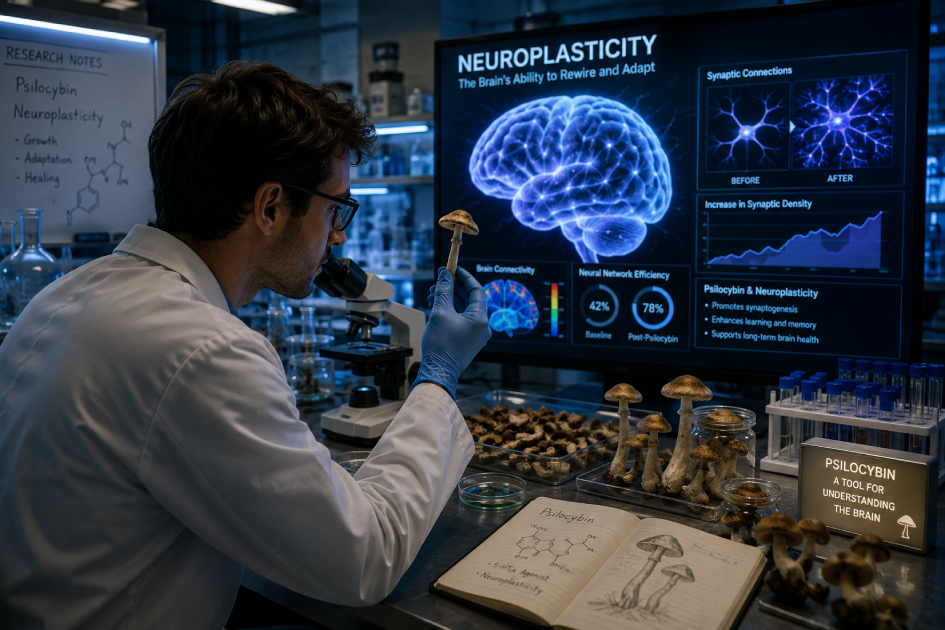
One of the most exciting areas of modern psychedelic research involves neuroplasticity.
Neuroplasticity refers to the brain’s ability to adapt, reorganise, and form new neural connections.
Laboratory studies suggest that psychedelic compounds may temporarily increase biological processes associated with learning and adaptation.
Researchers are investigating whether these effects could contribute to therapeutic outcomes observed in clinical trials.
Although promising, scientists emphasise that additional research is necessary before drawing definitive conclusions about long-term neurological benefits.
Are Shrooms Being Studied for Mental Health?
Yes.
Over the past decade, interest in psilocybin-assisted therapy has expanded dramatically.
Researchers have explored its potential role in helping individuals experiencing:
- Major depressive disorder
- Treatment-resistant depression
- Anxiety associated with serious illness
- Substance use disorders
- Obsessive-compulsive symptoms
- Existential distress
Some early clinical trials have reported encouraging results when psilocybin is administered under carefully controlled medical supervision.
These studies typically involve:
- Extensive participant screening
- Professional psychological support
- Controlled dosing environments
- Structured integration sessions
Researchers stress that outcomes observed in clinical settings cannot automatically be generalised to unsupervised use.
The therapeutic environment itself often plays a significant role in treatment outcomes.
Why Researchers Are Interested in Depression
Traditional antidepressants often require daily administration and may take weeks to produce noticeable improvements.
Psilocybin-assisted therapy has attracted attention because some clinical studies have reported meaningful changes after a limited number of supervised sessions.
Scientists continue investigating:
- How long do potential benefits last
- Which individuals may benefit most
- Optimal treatment protocols
- Long-term safety considerations
Although findings remain preliminary, many experts view psychedelic research as one of the most promising developments in mental health science in recent decades.
Can Shrooms Cause Long-Term Brain Damage?
One of the most common concerns involves potential long-term effects on brain health.
Current research has not demonstrated evidence that psilocybin causes direct structural brain damage in healthy adults under studied conditions.
However, several important limitations remain:
- Long-term research is ongoing.
- Individual responses vary.
- Certain populations may face greater risks.
- Existing studies often involve carefully controlled environments.
Scientists continue monitoring participants in long-term follow-up studies to better understand safety outcomes.
Potential Risks and Side Effects
Although research often focuses on therapeutic possibilities, psilocybin is not risk-free.
Potential short-term effects may include:
Psychological Distress
Some individuals experience:
- Anxiety
- Confusion
- Fear
- Panic
- Emotional overwhelm
These experiences are sometimes referred to as challenging psychological reactions.
Impaired Judgment
Changes in perception and thinking can affect decision-making and awareness of surroundings.
Increased Heart Rate
Temporary increases in heart rate and blood pressure have been observed in some individuals.
Nausea or Gastrointestinal Discomfort
Some participants report stomach discomfort or nausea.
Most short-term effects resolve as the substance leaves the body.
Who Should Be Especially Cautious?
Researchers generally recommend additional caution for individuals with:
- A personal history of psychotic disorders
- Schizophrenia spectrum conditions
- Bipolar disorder
- Certain severe psychiatric conditions
- Significant cardiovascular concerns
Because individual circumstances vary, healthcare professionals are best positioned to assess potential risks.
The Importance of Set and Setting
Researchers often emphasise the concepts of set and setting.
Set
“Set” refers to:
- Expectations
- Mood
- Emotional state
- Mindset
Setting
“Setting” refers to:
- Physical environment
- Social surroundings
- Overall sense of safety and comfort
Many experts believe these factors significantly influence how individuals experience psychedelic effects.
This is one reason clinical research environments place substantial emphasis on preparation and support.
Common Misconceptions About Psilocybin
Myth: Psilocybin Permanently Alters Your Brain
Current evidence does not support the claim that psilocybin permanently damages healthy brains.
Researchers continue studying long-term effects, but existing findings do not indicate widespread structural harm.
Myth: Everyone Has the Same Experience
Experiences vary dramatically.
Biology, psychology, environment, and expectations all influence outcomes.
Myth: More Research Means All Questions Are Answered
While scientific interest has grown significantly, many important questions remain unresolved.
Researchers continue investigating safety, effectiveness, mechanisms, and long-term outcomes.
Frequently Asked Questions
Is Psilocybin Legal?
Legal status varies by country, state, province, and municipality.
Laws continue evolving in some regions as research expands.
Always consult local regulations and official government resources.
Are Researchers Still Studying Psilocybin?
Yes.
Major institutions, including Johns Hopkins University, Imperial College London, and numerous academic medical centres,s continue conducting research.
Does Psilocybin Affect Everyone the Same Way?
No.
Responses vary substantially based on individual factors.
Why Is Scientific Interest Growing?
Researchers are interested in understanding how altered brain connectivity, neuroplasticity, and emotional processing may contribute to therapeutic outcomes.
What the Future of Psilocybin Research May Look Like
The next decade is likely to bring substantial advancements in psychedelic science.
Researchers are exploring:
- New treatment models
- Long-term safety data
- Brain imaging findings
- Mental health applications
- Therapeutic best practices
While many questions remain unanswered, scientific interest continues to expand as researchers seek a deeper understanding of how these compounds interact with the brain.
Final Thoughts: What Do Shrooms Do to Your Brain?
Understanding what shrooms do to your brain begins with understanding how psilocybin interacts with serotonin receptors and influences communication between different brain networks.
Research suggests that psilocybin temporarily changes patterns of neural connectivity, perception, emotional processing, and self-reflection. These effects have made the compound one of the most studied psychedelics in modern neuroscience.
Although researchers continue investigating both potential benefits and risks, current evidence suggests that psilocybin represents an important area of scientific exploration with implications for neuroscience, psychology, and mental health treatment.
At Dankmart.co, we believe informed consumers make better decisions. As scientific understanding of psychedelics continues to evolve, staying informed through credible research, trusted educational resources, and evidence-based information remains the best way to understand this rapidly developing field.
Disclaimer: This article is for educational purposes only and does not constitute medical, legal, or mental health advice. Always consult qualified healthcare professionals regarding medical concerns and consult local laws regarding regulated substances.
References:
Doctrow, B., PhD (2024, August 13). How Psychedelic Drugs Alter the Brain. National Institutes of Health. https://www.nih.gov/news-events/nih-research-matters/how-psychedelic-drugs-alter-brain
Gazerani, P. (2025). The Future of Psychedelics: Advances in Psychedelic-Assisted Therapies and Their Implications. Brain Research. https://www.sciencedirect.com/science/article/pii/S0006899325002021
Davis, K., FNP. (2025, March 25). What Are Magic Mushrooms? Medically reviewed by Alex Nguyen, PharmD, RPh, CPh. Medical News Today. https://www.medicalnewstoday.com/articles/308850


About author



Add comment